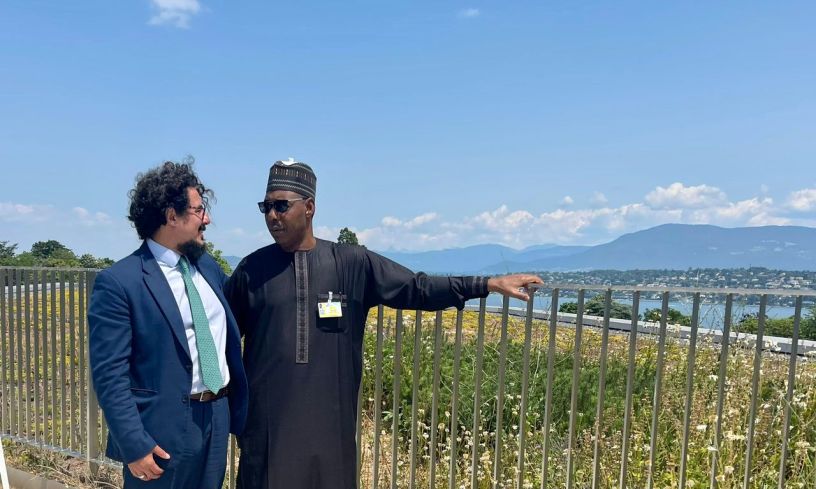
By Abdulkareem Haruna
The United Nations Development Programme (UNDP) recently welcomed Borno State Governor, Professor Babagana Zulum, to Geneva, Switzerland, for crucial discussions on the resettlement and livelihoods of internally displaced persons (IDPs).
Thursday’s meeting centered on IDP solutions, emphasizing government leadership, community-driven approaches, and voluntary return, relocation, and integration. The UN Secretary-General expressed keen interest in adopting Borno State’s successful humanitarian model.
Held at the Centre International De Conference (CICH) and hosted by the Office of the Special Adviser, William Chemaly, the event showcased the Borno Model – a non-kinetic strategy focused on counter-insurgency efforts and addressing humanitarian crises for over a decade.
Governor Zulum highlighted the achievements of his administration’s innovative approach, the “Borno Model,” in addressing the humanitarian situation in Borno State.
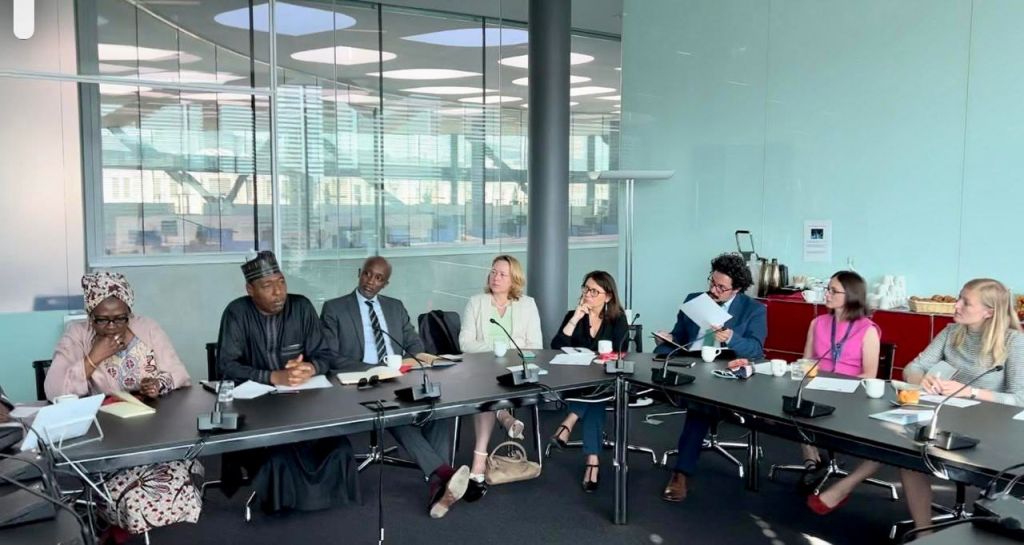
Prior to this meeting, Zulum participated in a Strategic Country Update on North East Nigeria, hosted by the renowned Graduate Institute, University of Geneva.
The governor engaged with over 20 academics, humanitarian, peace, security, and development actors, think-tanks, and researchers, exploring Borno’s practical experiences with the Boko Haram crisis and the non-kinetic approach’s effectiveness.
UNDP Resident Representative in Nigeria, Mohamed Yahya, and the Nigerian Ambassador to Geneva, both spoke at the event, presenting Nigeria’s stance.
Zulum also attended a meeting at the UN Palais, hosted by Raouf Mazou, Assistant High Commissioner Operations at the United Nations High Commission on Refugees. Accompanying the governor were Borno’s focal person for the World Bank’s Multisectoral Recovery and Peace Building Project, Babazanna Abdulkarim, Principal Secretary at the Governor’s Office, Barrister Mustapha Busuguma, and the Governor’s high-level associate on Sustainable Development Partnership and Humanitarian Support, Dr. Mairo Mandara.
 The Humanitarian Times