By Abdulkareem Haruna
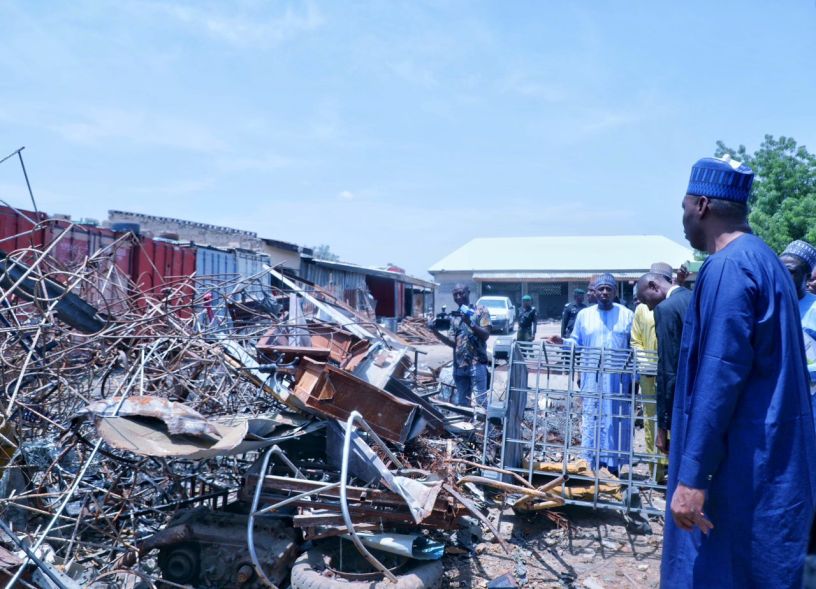
Borno State Governor, Babagana Zulum, has imposed an indefinite ban on metal scavenging activities across the entire 27 local government areas of Borno State.
The governor’s ban has two main objectives: to prevent further killings of scavengers by Boko Haram insurgents in certain local government areas and to put an end to the theft of public and private property. However, while the ban addresses these issues, it might also result in significant unemployment challenges for those who rely on scavenging and sales of scraps as their primary source of income.
“Within the last five years, many people were killed as a result of metal scavenging; that has informed the government of Borno State to investigate such nefarious activities,” Governor Zulum said during the announcement of the ban on Monday in Maiduguri.
Metal scavenging has become synonymous with economic sabotage, according to Governor Zulum. He pointed out that the scavengers are notorious for destroying both public and private properties, particularly in areas where Boko Haram activities have forced residents to flee.
He said the state government has suffered substantial financial losses, estimated to be in billions of naira, due to the activities of these scavengers.
Professor Zulum said the ban on metal scavenging extends to all forms of informal and unregulated metal recovery activities, including the dismantling, collection, and transportation of scrap metals. Governor Zulum warned that the state government would work to enforce the ban rigorously and crack down on any individuals or groups found violating the directive.
While the ban is undoubtedly a drastic measure, it reflects the government’s commitment to prioritizing the safety and security of its citizens. However, the long-term implications of this decision remain uncertain.
It is essential for the government to develop alternative livelihood opportunities for those who heavily rely on metal scavenging for their survival. Furthermore, efforts must be made to address the root causes of insecurity, such as the activities of Boko Haram insurgents, to ensure a sustainable solution to this pressing issue.
The scrap metal sales has been a multi billion naira enterprise within the informal sector of the state. The sales of scavenged metals has employed hundreds of youngsters.
To support the effectiveness of the ban, comprehensive measures should be implemented. This includes increasing security presence in vulnerable areas, promoting public awareness campaigns to discourage participation in metal scavenging, and exploring alternative livelihood opportunities for those affected by the ban.
As the ban takes effect, it is imperative for the government to closely monitor the situation and evaluate its impact on both security and the local economy. It is hoped that this decisive action will serve as a deterrent to criminal elements and contribute to the restoration of peace and stability in Borno State. The success of this measure will depend on the collaboration between the government, security agencies, and the affected communities to ensure its proper implementation and long-term sustainability.
 The Humanitarian Times