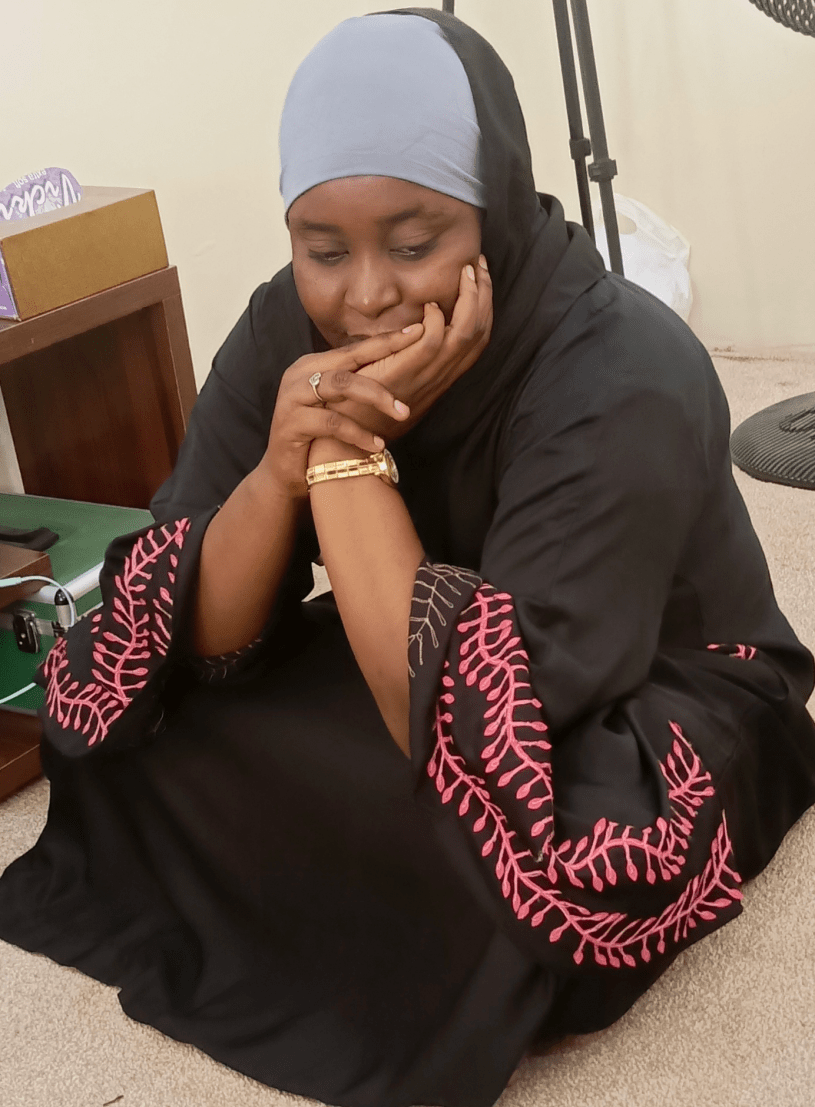
By Fatima Kambar Adam
Fatima, a mass communication graduate from the University of Maiduguri, now works as a freelance language translator after she lost her job at Translators Without Borders (TWB), where she worked for about two years. Before she joined TWB, the young woman, currently in her 20s, had a stint with Dandal Kura Radio International for about four years. Though a reluctant on-air personality, Fatima was considered one of the best at DCA and radio programming. Recently she was at The Humanitarian Times office for a job hunt. But she came with a perception. She doesn’t like the media profession. All she wants is something not journalistic. Her reason. She finds it tough writing news or articles. So, how do you handle her case? So we said. Dear Fatima, kindly write down in 500 words an essay about why you don’t like journalism. And in 30 minutes, she wrote this below.
“I was the kind of person that didn’t like to talk much when I found myself studying mass communication. I applied for public administration, and I got admission to the mass communication department at the University of Maiduguri. I didn’t know anything about it until I first attended a lecture on radio production, and the lecturer said in his next class, we should all come along with our pocket radio. At that point, I realized journalism was a course given to me to study.
Hmmm! I didn’t care, though; all for me was to study. I just needed a degree certificate, but I have no passion for any field.
I tried my best to study and practice what they taught us in class just for me to pass my exams and proceed to the following courses, and I have done my best to complete it successfully with a second-class lower division. Alhamdulillah.
Immediately when I was done, I got a vacant position as a radio journalist at Radio Dandal Kura International. On my first day at the station, I built up the courage and told the admin officer that I wouldn’t say I liked reporting and I won’t mind if they gave me an offer of a position available apart from reporting.
He said if I were a duty continuity announcer DCA, I must produce a weekly radio program, or I would go to the field daily to interview and make a radio report for airing! I quickly accepted to be a DCA because I’m the kind of person that doesn’t like to talk much in public. I’m shy of public eyes and don’t like to stress outside looking for interviewees because journalists often face many challenges like denial of information or getting someone to interview.
Besides that, I always see myself as the kind of person that thinks I don’t write in good English, likewise in communicating. That’s why I always prefer to do radio programs in either Hausa or Kanuri.
When I was at Dandal Kura Radio International, I was one of the best radio presenters at that time because I enjoyed staying alone without people staring at me while doing my job. I was usually alone in the studio, entertaining my listeners. Whenever I was not sure of anything I was saying, I was trained to apologize to my listeners as soon as possible.
After four good years of being on-air personnel, I became a Kanuri translator, and I realized it’s the best option for my kind, that doesn’t like talking much! I kept translating from English to Kanuri at Translators Without Borders, and I later became a translator on demand because there was no funding. After that, I realized I had to move forward in terms of building my career in the place that I was comfortable with; I decided to be a language services provider, which I was trained by my senior colleague At TWB, Anita.
I’m now patiently working freelance and waiting to be a good project manager on language translation who would be providing qualitative language services on demand.”
 The Humanitarian Times