By Abdulkareem Haruna
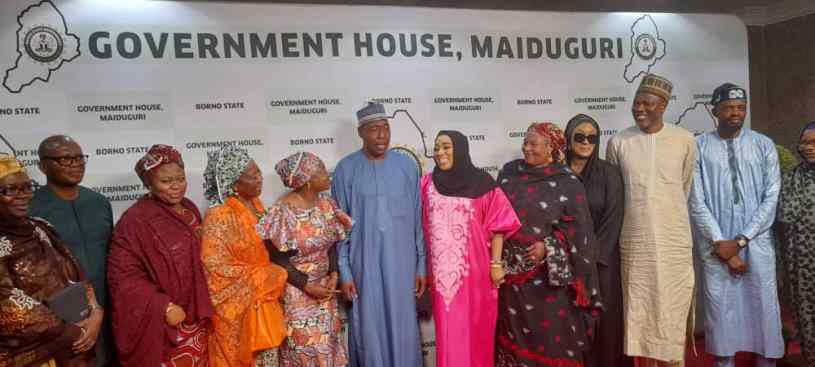
MAIDUGURI, Nigeria — Minister of Humanitarian and Poverty Alleviation, Dr Betta Edo, praised the Governor of Borno State for his proactive and committed approach to humanitarian services during her first official visit outside of Abuja since her swearing-in.
Edo commended the governor for his hands-on approach, stating, “You go to the toughest places to ensure that people receive the services that are due to them, and you can verify that the right people are the ones benefiting from whatever it is given.”
Governor Zulum commended the minister for her passion and commitment towards realizing the core mandate of the president, even as he promised continued support for the ministry and the federal government.
He noted that the job of the humanitarian ministry is enormous giving the massive number of displacement recorded and enormous resources needed to evacuate the IDPs and refugees.
“The job of this ministry is very wide,” Zulum notified the minister. Even if we relocate all the IDPs to their ancestral homes, we need to support them so that they can begin to earn their means of livelihood by themselves. But the transition from humanitarian to sustainable solution are all under the purview of your own ministry.
On the issue of refugee management, Zulum informed the moister that Nigeria has over 200,000 refugees in Niger, about 60,000 living in the Republic of Cameroon, and about 24,000 in the Republic of Chad.
“We must work together to repatriate these refugees,” Zulum said. Even as he warned that, “this is not an easy task; it is a huge task, because they need shelter, they need food and non-food support. And above all, the place where we are returning them has to be secured.”
The Minister also highlighted the governor’s role in overcoming the insurgency in Borno, stating that there’s no part of the state under any other authority outside the Nigerian government. She praised the infrastructure and peace in the camps on the outskirts of town, starkly contrasting the typical stories about Borno state.
Edo outlined her ministry’s primary job as improving the partnership between the federal government of Nigeria and those who want to get maximum results. She emphasized the need to prevent a humanitarian crisis, reintegrate Nigerians into their communities, and move from giving them fish to teaching them how to fish.
The Minister also addressed the issue of poverty, stating that the President is committed to pulling the 70 million Nigerians living below the poverty line out of poverty, in line with his seven-point agenda and the first Sustainable Development Goal.
Edo announced plans to create a humanitarian hub in every local government in Nigeria, targeting interventions down to the grassroots and monitoring the implementation at that level. She wanted to move away from “Abuja Air Condition interventions” and towards practical, on-the-ground solutions.
The Minister also discussed the need to clean the social register, a dynamic list of impoverished people who can benefit from government intervention. She revealed that a team would be coming in a few days to work with the governor to clean it up through a verification process and then expand it.
Edo concluded her speech by asking for the governor’s leadership at the state level, stating, “We believe that if you give us that support, we will listen to you and will learn. We will work hand in hand with you to achieve results.”
The Minister’s visit to Borno State marks a significant step in the government’s efforts to address humanitarian issues and poverty in Nigeria. With a focus on practical solutions and partnerships, the Ministry of Humanitarian and Poverty Alleviation is poised to impact the lives of millions of Nigerians significantly.
The minister had earlier visited the Shehu of Borno who she paid homage to and deliver her mission statement and the vision of the president, Bola Tinubu, even as she said all cannot be achieved without the prayers, support and guidance of the royal father.
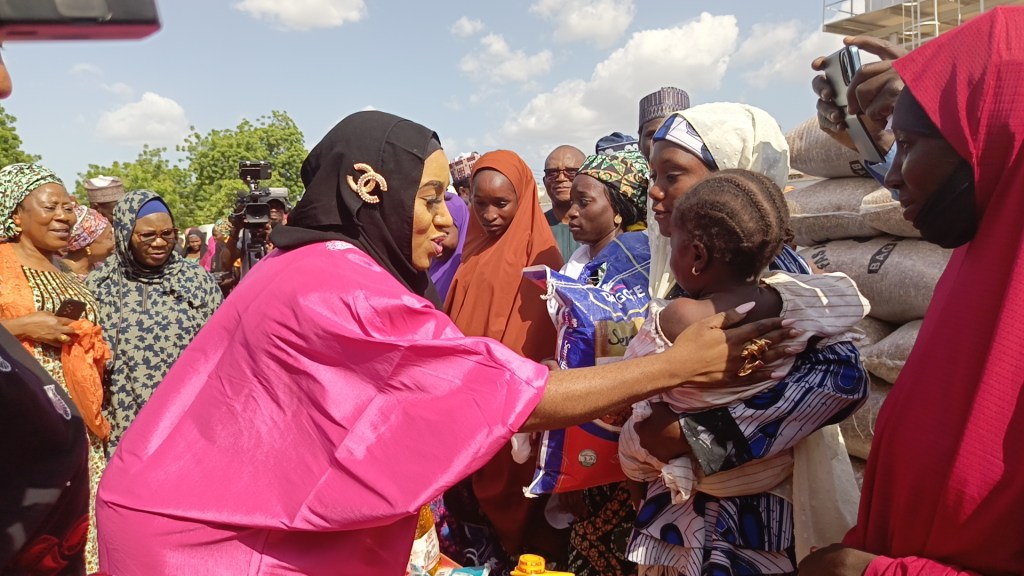
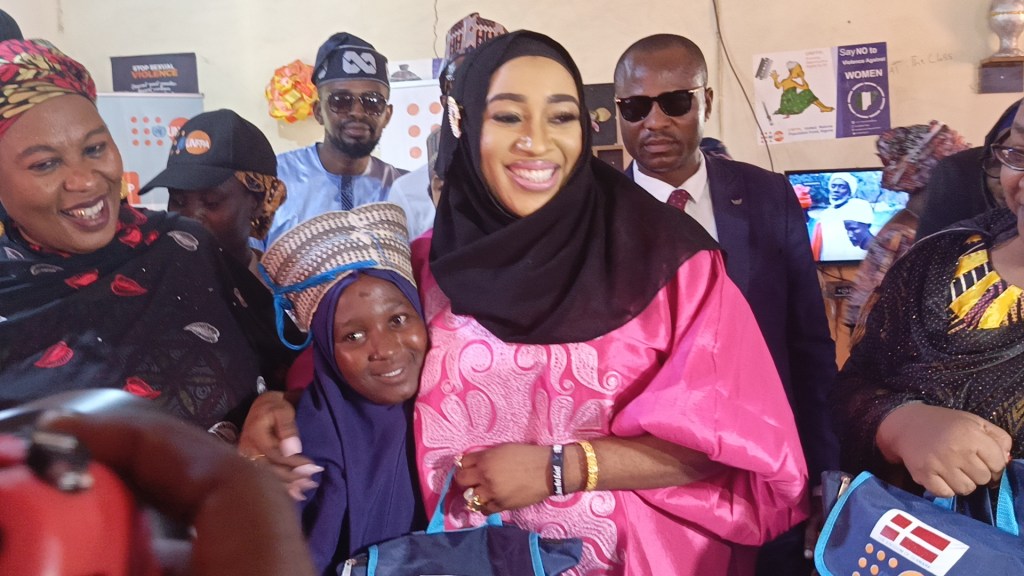
The highlight of her outing was at the Bulumkutu transit camp rehabilitation center for repentant Boko Haram and their family, where she delivered palliative food to the inmates. She had a robust interaction with the men and women and assured them of government support to rehabilitate them and integrate them into the larger society fully.
 The Humanitarian Times