By Abdulkareem Haruna
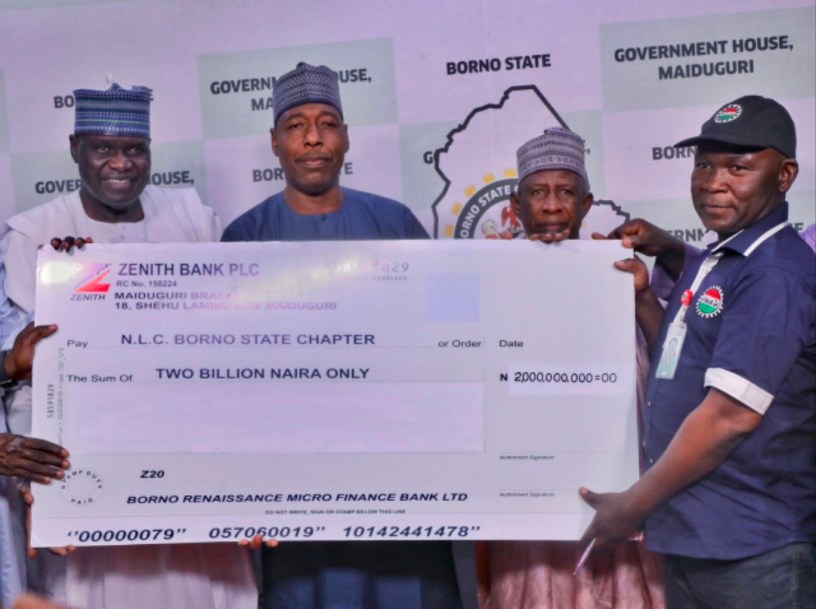
Governor Babagana Umara Zulum’s recent initiatives in Borno State, including the allocation of a N2 billion interest-free loan to workers, increased gratuity payments, and enhanced transportation, are strategic moves that not only foster a harmonious relationship between the government and workers but also stimulate the local economy.
These measures are particularly crucial in the wake of the fuel subsidy removal, which has increased the cost of living for many Nigerians, and the ongoing insecurity that has disrupted livelihoods, especially farming.
The N2 billion interest-free loan is a direct intervention that will inject liquidity into the hands of workers. This initiative will not only alleviate the immediate financial burden caused by the fuel subsidy removal but also stimulate economic activity. As workers use these loans to meet their needs or invest in small businesses, there will be an increase in demand for goods and services, which can spur economic growth at the local level.
The decision to increase gratuity payments is another significant move that will have a positive economic impact. By doubling the monthly allocation for gratuity payments, the government is ensuring that more retired workers receive their due benefits.
This action not only boosts the income of retirees but also increases their purchasing power, which can further stimulate the local economy.
The allocation of 30 buses for workers’ transportation is a strategic intervention that addresses the immediate impact of the fuel subsidy removal. By subsidizing transportation costs, the government is effectively reducing the financial burden on workers, allowing them to have more disposable income. This initiative also indirectly supports the local transportation sector, which has been hit hard by the fuel subsidy removal.
Moreover, these initiatives are likely to foster a more cordial relationship between the government and workers. By responding to the demands of the NLC, the government is demonstrating its commitment to addressing workers’ concerns, which can lead to increased trust and cooperation between the two parties.
In a region plagued by insecurity that has disrupted farming and other sources of livelihood, these initiatives provide alternative means of income and support for workers. The interest-free loans, in particular, can be used to start or expand small businesses, providing an alternative source of income for those who have been unable to farm due to insecurity.
In conclusion, Governor Zulum’s initiatives are a comprehensive approach to mitigating the effects of the fuel subsidy removal and the ongoing insecurity in Borno State. By directly supporting workers and stimulating economic activity, these measures can lessen hardship, promote a cordial relationship between the government and workers, and contribute to the overall economic resilience of the state.
 The Humanitarian Times