By Abdulkareem Haruna
Nigerian lunar researcher and scientist, Salihu Buba Zubairu, has made a significant breakthrough in the field of lunar drift against the Gregorian Calendar.
Despite the lack of recognition at home, his work is being celebrated at the international level. Amazon has recently published a second edition of his book – an ebook version – which has earned credibility and a prominent place on the platform’s shelves.
Zubairu’s book, “Scientific Observation of Harmonic Drift in Lunar Dates Against Gregorian Calendar,” is a meticulously researched work that explores the intricacies of lunar movement and its impact on the lunar calendar. This calendar has been a foundational template for countless cultures, including the Chinese, Jews, and Muslims.
The book delves into the complexities of Islamic lunar dating, where the sighting of the new crescent moon plays a pivotal role in shaping events. It confronts the enduring controversy surrounding moon sightings, particularly in Nigeria, where weather and visual impairments challenge the reliability of naked-eye observations.
However, Zubairu’s work goes beyond historical insights. It presents a groundbreaking scientific approach to overcome the hurdles posed by weather and visual difficulties. The book explores the critical alignment points between the lunar and Gregorian calendars, all through the lens of rigorous scientific analysis.

The second edition of the book introduces the concept of harmonic drift as the underlying cause of discrepancies in lunar calendars. Zubairu ingeniously incorporates this anomaly into the lunar calendar, aligning it more closely with reality. His work harnesses the power of harmonic dynamics to ensure precision and accuracy, resulting in a lunar calendar that stands as a scientific suggestion for projecting lunar dates over the years.
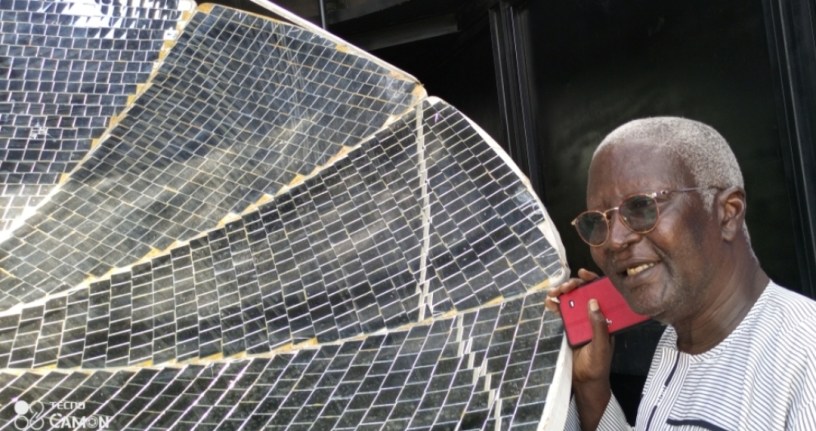
Zubairu, a leading technologist at the University of Maiduguri, is also a distinguished member of the National Moon Sighting Committee in Nigeria, and offers a fresh perspective on lunar calendars and their alignment with the Gregorian system through his scientific approach and meticulous research.
 The Humanitarian Times