By Abdulkareem Haruna
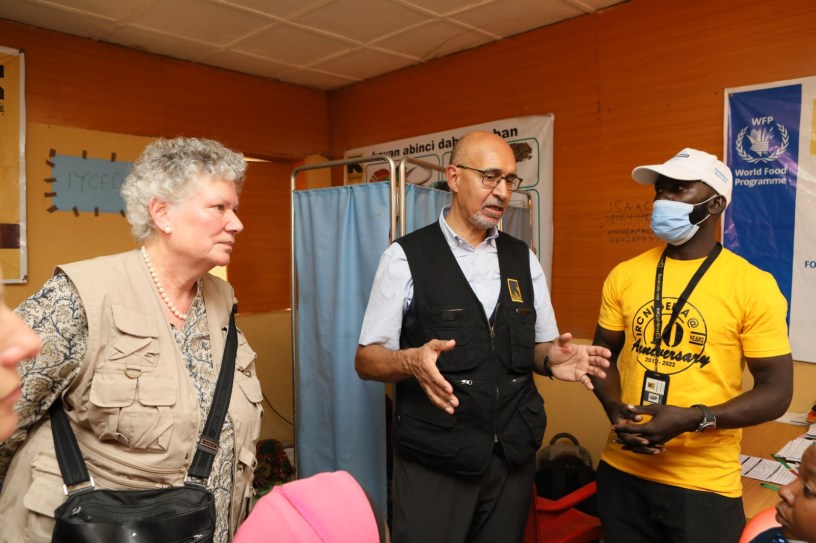
In the heart of northeast Nigeria, the International Rescue Committee’s (IRC) top officials, Angela Mariana Fraley and Harlem Desir, were confronted with a stark reality.
They had embarked on an assessment tour of internally displaced persons (IDP) camps in northern Borno state, and their findings painted a grim picture of a region grappling with escalating humanitarian needs amidst dwindling resources.
Fraley, the Senior Vice President and General Counsel of the IRC voiced her concerns during an evening gathering hosted by the IRC. She shared her experiences at the IDP camps, recounting the overcrowded resettlement centers and the struggle against pervasive food insecurity.
Despite their best efforts, the shrinking budgets are making it increasingly challenging for the non-profit humanitarian group to meet the daily needs of the IDPs.
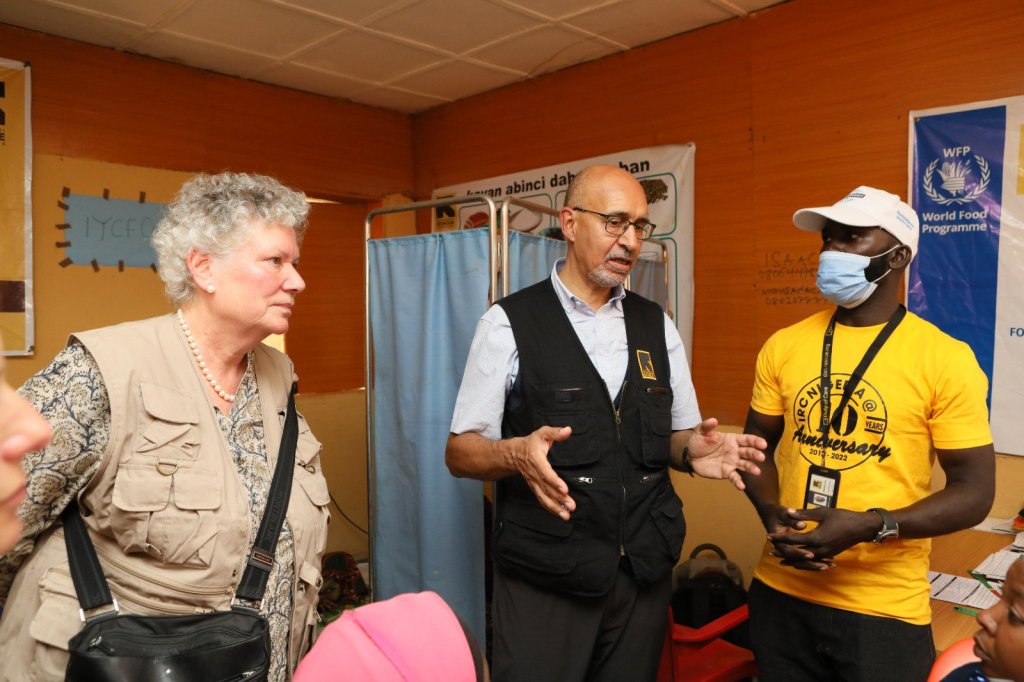
Although the IRC’s child nutrition programs have been successful, Fraley noted, “Our officials are struggling with adults exploiting Ready-to-Use Therapeutic Foods (RUTFs) meant for children, a clear indication of the pervasive food insecurity among beneficiaries.”
She also lamented the overcrowded state of many of the camps for IDPs, indicating that the conditions fall woefully short of acceptable standards.
She sounded a note of caution on the Nigerian government’s and the humanitarian circle’s desire to shift from a humanitarian phase to development, stating that the situation in the deep fields is far from ready for such a transition.
“We do have to shift from humanitarian to development, but we cannot let people die in the process. That is not what our missions are,” Fraley said, pointing out the potential dangers of a hasty shift without the necessary budget growth at the developmental agencies.
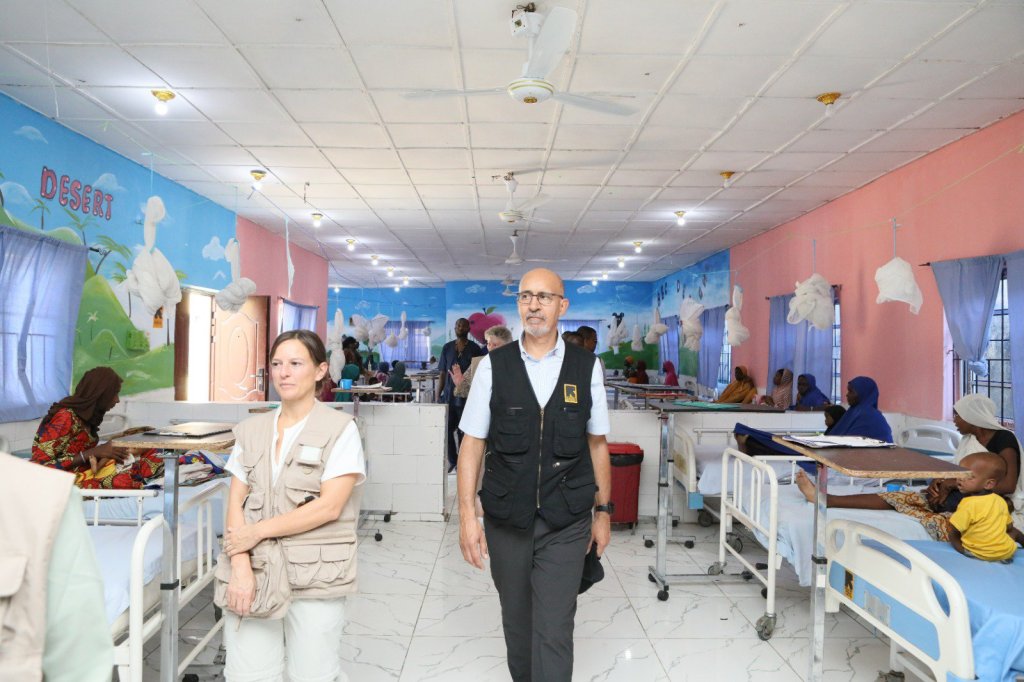
Desir, the Senior Vice President of IRC Europe, echoed Fraley’s concerns. In his reaffirmation of the IRC’s commitment to supporting communities affected by conflict and violence, he highlighted the organization’s crucial work in towns like Monguno. Despite the abduction of a staff member last year, the IRC continues to expand operations, providing essential services such as access to clean water, support for pregnant women, and educational services.
“We are helping, not only for the people to survive, but also to prepare for the future to recover,” Desir said.
“I was very impressed by the work of the International Rescue Committee organisation, by our colleagues. They decided to continue to work in Monguno even after one of our staff was abducted last year, but he was finally released. And they decided that not only, do we have to stay, but we have to extend our support to the population in three different camps. And it is also the case here. Whereas there are people, where there is need of our support in access to water, clean water, what we call WASH, there is need for support of women who are pregnant and those we have to deliver,” the VP IRC Europe said.
“And so our work here in Nigeria is very important and this visit, I’m sure give us this information that we need to advocate towards donors in Europe, in the United States to continue to support Nigeria”
Reflecting on the IRC’s decade-long humanitarian work in Nigeria, Babatunde Anthony Ojei, the Country Director, acknowledged the organization’s commitment to addressing Nigeria’s increasing needs despite financial and security challenges. He said, “The funding for humanitarian response has been steadily declining for the past three years, with further reductions likely next year.” He further expressed his concerns about the security challenges, which have made some regions inaccessible.
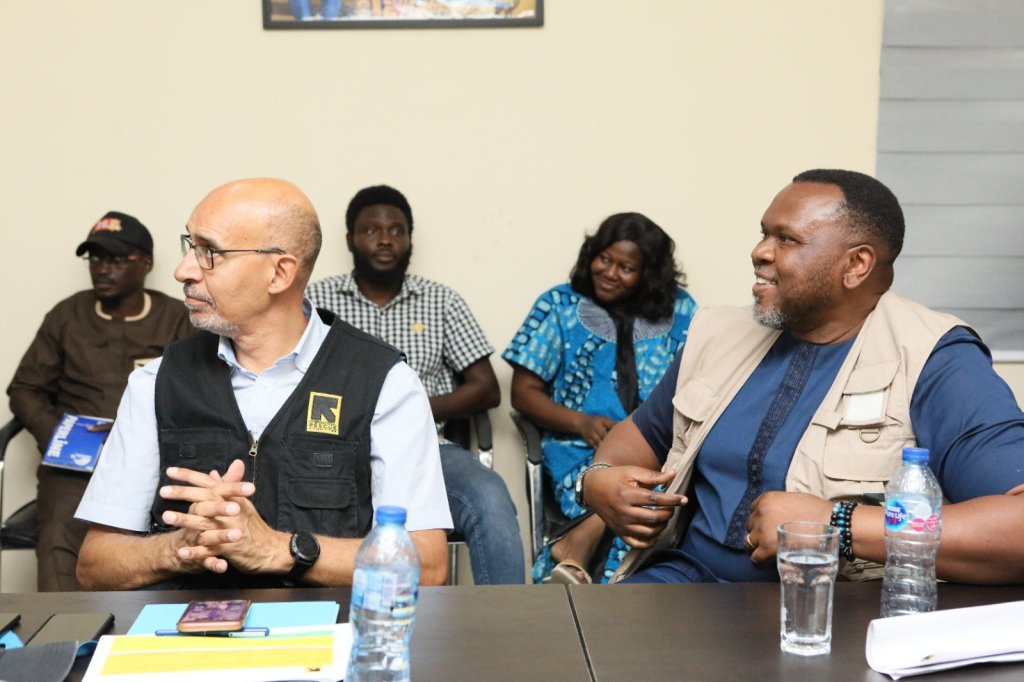
Despite these obstacles, Ojei affirmed the IRC’s dedication to its mission in Nigeria, responding to emergent needs and crises as they arise.
He emphasized, “If you look at the humanitarian response plan since the last three years, it has continued to be on the decline and there’s also the high possibility that it is likely going to decline next year, and yet the needs are rising.”
He thus echoed the call to increase funding to respond to these needs across all states and the country.
 The Humanitarian Times