𝑩𝒚 𝑨𝒃𝒅𝒖𝒍𝒌𝒂𝒓𝒆𝒆𝒎 𝑯𝒂𝒓𝒖𝒏𝒂
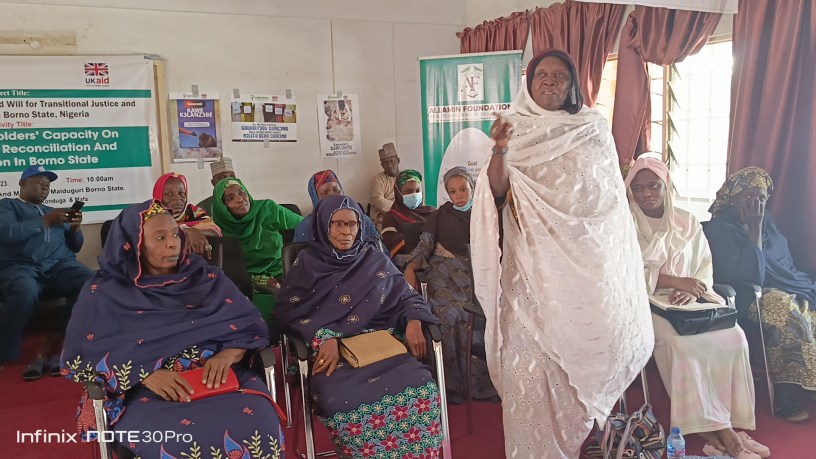
Participants at a one-day workshop on transitional justice and its role in peacebuilding in post-conflict reconciliation in Nigeria’s northeastern Borno state have critiqued some of the current strategies for reintegrating former terrorists.
The participants, representing various sectors of the community in Borno and Jere local governments, expressed these views at a workshop titled “Strengthening Capacities and Will for Transitional Justice and Reconciliation in Borno State, Nigeria”.
The event was organized by the Maiduguri-based non governmental Allamin Foundation for Peace and Development (AFPD), with financial backing from UKaid. The participants argued that genuine reconciliation could only be achieved if the community played a leading role in the reconciliation process.
Hamsatu Allamin, the Executive Director of AFPD, inaugurated the training session and encouraged community stakeholders to openly discuss their concerns, offer concrete suggestions, and put forward valuable recommendations for the successful implementation of transitional justice and reconciliation for lasting peace and development in Borno state.
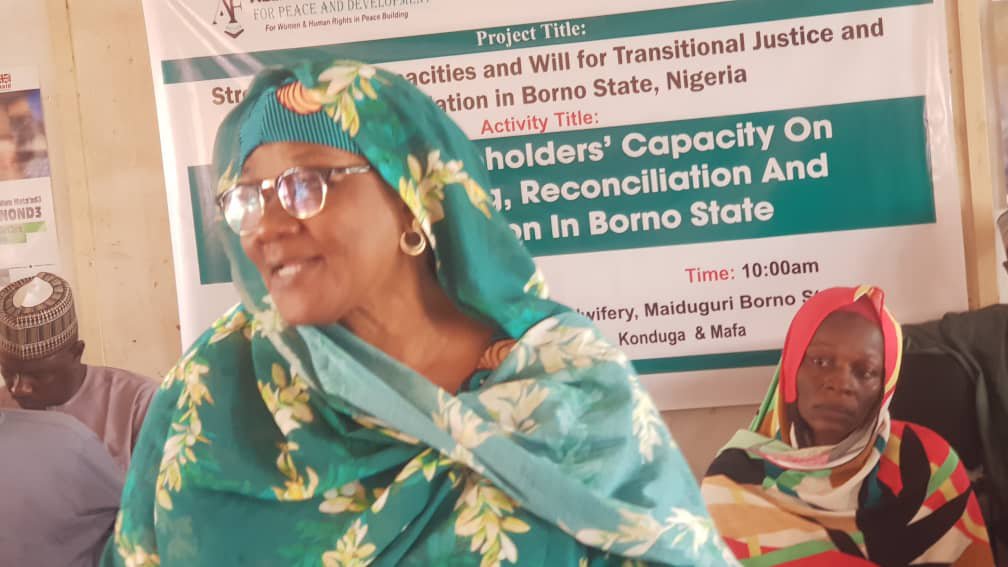
Allamin noted that the workshop’s goal was to explore effective ways to ensure justice for victims and residents of communities across the state that have been affected by the insurgency over the previous 14 years.
Attendees emphasized the necessity of a community-led approach to reconciliation and reintegration, which they claimed has been absent in the government’s ongoing process.
Ba’Bulama, a village head, and participant, recounted a situation with a reintegrated former Boko Haram member that highlighted the need for the government to consider local decisions.
Hadiza Grema, another participant, also stressed the importance of educating former Boko Haram members on the need for humility and respect towards those who have accepted them back into the community.
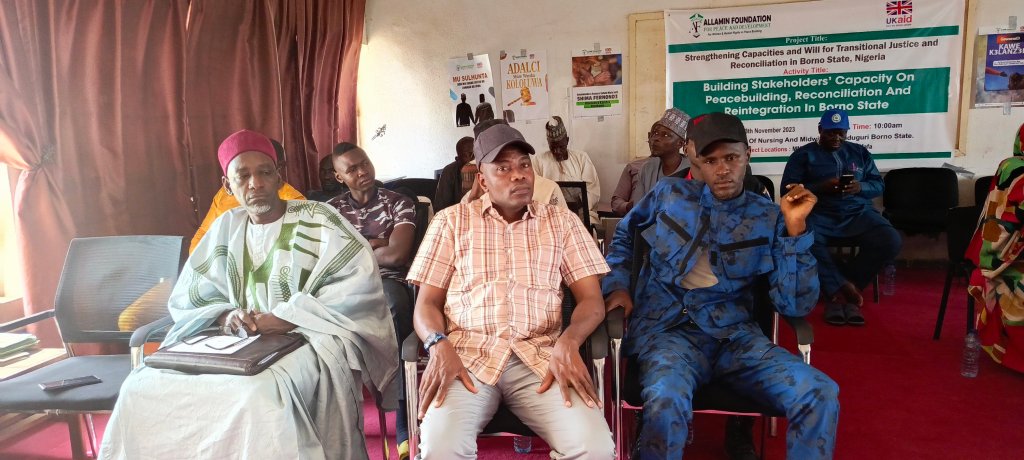
Dr. Lawan Balami, the workshop’s facilitator, emphasized the importance of community leaders in the reconciliation process and the need for community-based dispute resolution.
He stated, “We are empowering the communities with basic knowledge about how they can key in without the government support or integration at the community level things that they can do to support successful reintegration and reconciliation with ex-combatants.”
Balami also highlighted the need to transition from a humanitarian situation to stabilization in a region where the security situation has been ongoing and grievances are high.
“We have been eliciting those responses from the community dialogues that we have been having, and we keep on trying to innovate new ways to address some of these concerns and trying to preach the messages of reconciliation and peace,” he added.
 The Humanitarian Times