By Abdulkareem Haruna
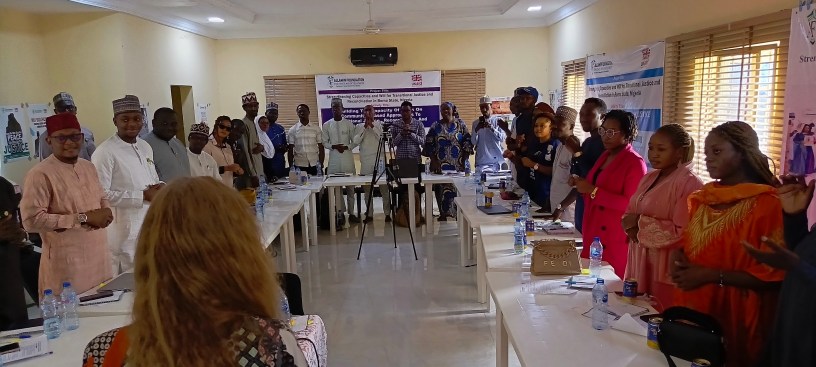
MAIDUGURI, Nigeria – The Allamin Foundation for Peace and Development (AFPD), a Non-Governmental Organization based in Maiduguri, launched a two-day workshop on Monday, Nov.13, to empower members of the Civil Society Organization (CSO) with a comprehensive understanding of the transitional justice system (TJS).
This comes as the northeast region ventures into a crucial phase of transitioning from conflict to stability, particularly in reintegrating repentant Boko Haram terrorists.
Hamsatu Allamin, CEO of AFPD, emphasized the importance of CSOs in advancing the transitional justice system and the need to equip them with the necessary skills for advocacy and creating awareness about the TJS. She encouraged participants to maximize the learning opportunities provided by the workshop.
The workshop, facilitated by Samuel Orahii, Project Manager of AFPD, is aimed at fostering reconciliation, promoting transitional justice, and enabling the reintegration of children, vulnerable groups, and repentant actors within their communities. It focused on a survivor-centered approach, stressing the importance of community involvement in the justice and reconciliation process.
“So, the primary aim of today’s engagement is to equip civil society actors with the skills they need to promote reconciliation, advocate for transitional justice, and support the reintegration of children, vulnerable groups, and repentant individuals in their communities,” he said.
“Indeed, transitional justice is a collective approach, heavily reliant on the engagement of civil society organizations, communities, and key stakeholders. Numerous recommendations have been made on how to navigate this process, particularly in the realm of traditional transitional justice. In these instances, the process of transitioning — justice and reconciliation — starts from the community and ascends to the government, not the other way around. This approach is focused on putting survivors at the center, ensuring their opinions are heard and respected. It’s not about making decisions for survivors without their involvement.
“Through these discussions and engagements, we hope to establish strategies that can lead to the institutionalization of truth and reconciliation commissions, similar to those implemented in other countries. Our ultimate goal is to facilitate holistic healing and trauma relief within our region.”
The two-day workshop, attended by 30 civil society organizations, covered various aspects of transitional justice, community-based strategies, reconciliation, and integration.
Saudamini Siegrist, a UNICEF consultant from the US, also facilitated a session during the training. She expressed her support for the work of reintegration and reconciliation for children and women, emphasizing that UNICEF is eager to support the civil society actors and the affected communities.
“And we’re very, very anxious and hopeful to work with civil society actors,” she said. “And this is a huge opportunity to learn about the work that is going on and to try and find ways that we can help support the agenda for reconciliation for transitional justice belonging to those communities.
“And to this, you know, this population that’s affected. So, our role here is to support that work in any way that we can and to also advocate and build capacity for the participation and protection of children in those processes of reconciliation,” Tiegrist said.
One of the participants, Sussan Tanwie, from Sirri Care, an NGO working in Maiduguri, said the workshop enhanced her understanding of the transitional justice system and its application in large-scale conflict situations. She particularly appreciated the focus on the inclusion of women and children in the TJS, especially in addressing sexual and gender-based violence within the framework of transitional justice.
“What stood out for me was the matter of incorporating women and children into the TJS, particularly regarding sexual and gender-based violence. I’m curious about the steps taken to tackle SGBV issues within the TJS framework while maintaining confidentiality and avoiding additional harm to survivors,” she said.
 The Humanitarian Times