By Abdulkareem Haruna
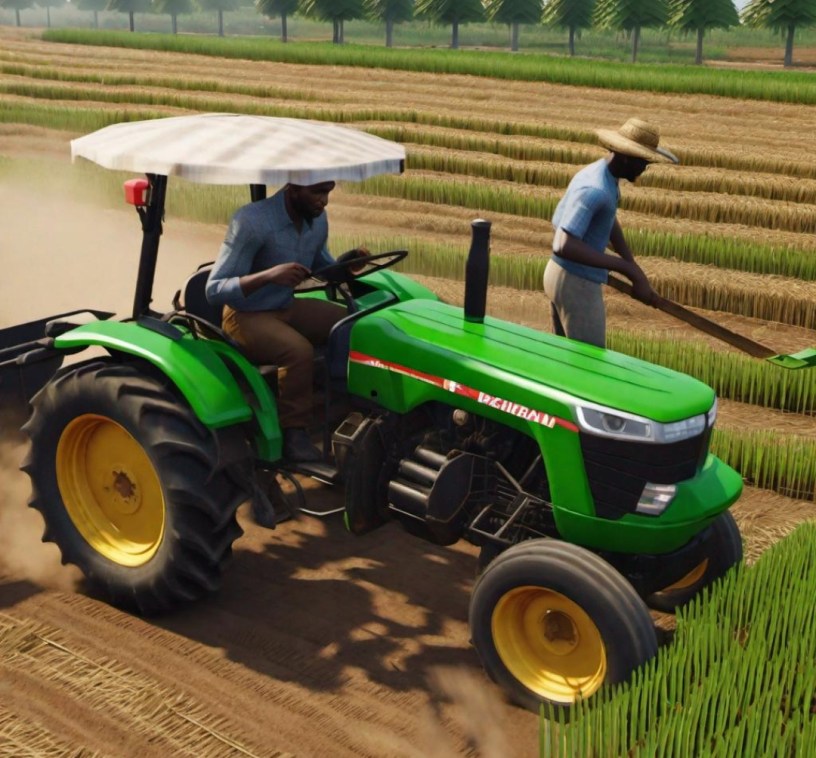
In a decisive move to bolster Nigeria’s agricultural sector, Minister of Agriculture and Food Security, Senator Abubakar Kyari, announced the country’s goal to produce 2,000 tractors domestically each year.
This initiative, he asserts, will boost food production, create jobs, particularly for women and youth, and address food and nutrition security concerns across the nation.
This ambitious goal was revealed in a meeting with a delegation from renowned agricultural machinery manufacturer, John Deere, led by its Vice President, Jason Braintley. Also present were key figures from Flour Mills Nigeria and Tata Africa Services, indicating a potential collaboration of significant players in the agriculture and associated industries.
The tractor production plan is a follow-up to a strategic meeting between Nigeria’s Vice President Kashim Shettima and John Deere officials at the recent World Food Prize Foundation held in Iowa. The government’s role in this initiative will be to provide an enabling environment for affordable tractor acquisition, thus promoting all-year-round farming.
However, the challenges Nigeria faces cannot be underemphasised. Current statistics show that there are only about 50,000 tractors in operation for a population of approximately 200 million people. Furthermore, a large proportion of Nigeria’s farming area is still manually cultivated, indicating a significant gap in mechanisation. The International Food Policy Research Institute (IFPRI) suggests that Nigeria is still in the early stages of agricultural mechanisation, with progress in power-intensive operations moving at a slow pace.
In terms of global comparisons, Nigeria’s mechanization efforts fall behind, ranking 132nd out of 188 countries based on the number of tractors, as reported by the Food and Agricultural Organization (FAO) and the United Nations. Notably, countries with smaller economies, such as Serbia & Montenegro, Pakistan, and Uzbekistan, possess far greater tractor numbers.
While Nigeria’s target of producing 2,000 tractors annually may seem modest in light of these statistics, it signifies a crucial step forward in the government’s commitment to improving agricultural efficiency, creating employment opportunities, and ensuring food security.
The initiative also presents a valuable opportunity to attract further domestic and foreign investment in agricultural mechanization, which is pivotal for Nigeria’s progress and economic growth.
The successful implementation of this plan would require a comprehensive strategy that addresses not only tractor production but also factors such as access to financing, infrastructure development, training programs, and the establishment of robust support systems for farmers. By addressing these challenges, Nigeria can lay a solid foundation for a vibrant and sustainable agricultural sector.
The domestic production of tractors holds several potential benefits for Nigeria. Firstly, it would reduce the country’s reliance on imported agricultural machinery, thereby conserving foreign exchange reserves and promoting self-sufficiency. Additionally, local production can lead to job creation and the development of a robust manufacturing industry, with potential for technological advancements and innovation in agricultural machinery.

However, it is crucial to acknowledge the magnitude of the task at hand. Nigeria’s agricultural sector faces various challenges, including limited access to finance, inadequate infrastructure, and a lack of technical expertise. Overcoming these obstacles requires a coordinated effort from the government, private sector, and relevant stakeholders.
To ensure the success of the tractor production plan, close collaboration with existing agricultural cooperatives is essential. Identifying cooperatives in need of support and providing them with access to affordable tractors can significantly enhance their productivity and contribute to the overall goal of agricultural mechanization.
Furthermore, the government should prioritize the identification of crops that are most suitable for mechanization. This would optimize the utilization of the tractors and maximize their impact on agricultural productivity. Adequate training programs for tractor operators and mechanics should also be implemented to ensure the efficient and safe operation of the machinery.
While the target of 2,000 tractors per year is commendable, it must be seen as a starting point rather than a definitive solution to Nigeria’s agricultural mechanization challenges. Efforts should be made to continuously assess and evaluate the progress of the initiative, identifying areas for improvement and scaling up production capacity over time.
Nigeria’s plan to produce 2,000 tractors is indeed a significant step towards agricultural mechanization, offering great potential for the country’s agricultural sector. The initiative aims to address the tractor deficit, leading to increased food production, job creation, and improved food security. However, its success hinges on the implementation of comprehensive strategies encompassing financing, infrastructure development, training, and robust support systems for farmers.
It is the opinion of The Humanitarian Times that with concerted efforts and sustained commitment, Nigeria can pave the way for a vibrant and modernized agricultural sector that contributes to the nation’s overall development and prosperity.
 The Humanitarian Times