By Abdulkareem Haruna
The Maiduguri-based non governmental organization, Allamin Foundation for Peace and Development (AFPD), organized a one-day training in Maiduguri, Borno state, for former detainees recently released from Operation Safe Corridor facility. The training focused on rebuilding, self-esteem, confidence, and income generation activities.
The training was in line with the ‘Strengthening of the Jire Dole Network (of Victims and Survivors)
and Allamin Foundation (Phase 2) funded by OSIWA.
Hamsatu Allamin, the founder and executive director of AFPD, stated that the training aims to help former inmates of Operation Safe corridor (OSC), a military project focused on the deradicalization of repentant terrorists, overcome challenges during the reintegration process following their certified release from the OSC.
AFPD has identified some freed repentant terrorists and many of those who were wrongly arrested and detained by the military, who are genuinely struggling to reintegrate and lead normal lives for the training. The training aims to help them overcome fears, diminished self-confidence, and build trust.
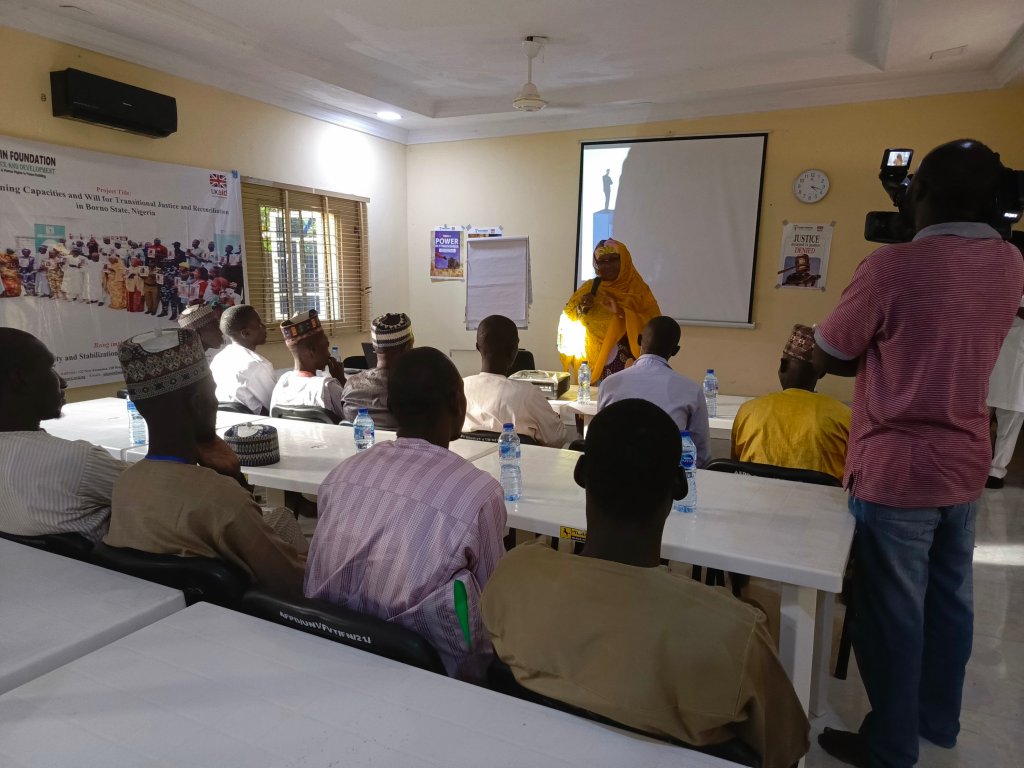
The training took place at the Hajja Manga Memorial Centre, the main conference hall situated within the AFPD office complex. During the session, 45 selected ex-combatants shared their experiences on how they are working to gain the trust and confidence of members in their former communities.The repentant terrorists during the one day training at AFPD Office, Maiduguri
One of the participants who expressed regret for his actions after spending years in a military facility, shared that he returned to his previous vocation as a barber, even though he had to incorporate elements of community service in the business.
“I had no one to help me, so with the little money available to me, I bought my clippers and other barbering equipment and set up my salon under a tree where I offered my services at a highly subsidized rate,” he said.
“I don’t blame the members of my community if they don’t trust me, but I know I have repented, and it is my responsibility to regain their trust. To achieve this, I had to charge about half the price of what other barbers charge per haircut. Since I am skilled at my work and offered my services at a lower price, people started coming to me, and gradually they began to see me as a friend and a caring neighbor. Over time, everyone began to appreciate my service and sent their children to get haircuts at my stand.”
Another participant shared that soon after his return, he apologized to his former friends, family, and neighbors. He began participating in good deeds such as taking care of the neighborhood mosque and assuming the role of the Caller to Prayer.
“As a result of these actions, people began to rebuild the trust they had in me. Even on the days when they don’t hear me calling the prayers, some of them would come to our house and ask after my well-being. This brings me joy as I have become an accepted member of my community.”
Another participant who said he was wrongly accused of complicity in the acts of violent extremism stated that his involvement in community development activities such as clearing blocked drainages, managing refuse dumps, and providing vigilance services over the years has allowed him to integrate and be accepted by his community.
“Today, I am not only invited to participate in social events, but I am also one of the trusted residents to whom money is entrusted when it is being raised to support a celebrant.”
The training facilitator, Mohammed Abdullahi, encouraged the former terrorists to strengthen their self-confidence by doing what they believe is right, even in the face of mockery or criticism; by being willing to take risks and go the extra mile to achieve greater things; and by admitting their mistakes and learning from them.
Allamin Foundation officials said they have well over 300 of such deradicalised combatants and those who were victims of false accusation and wrong detainment who have registered with the foundation seeking to be capacitated on how to navigate their challenges of being integrated into their respective communities.
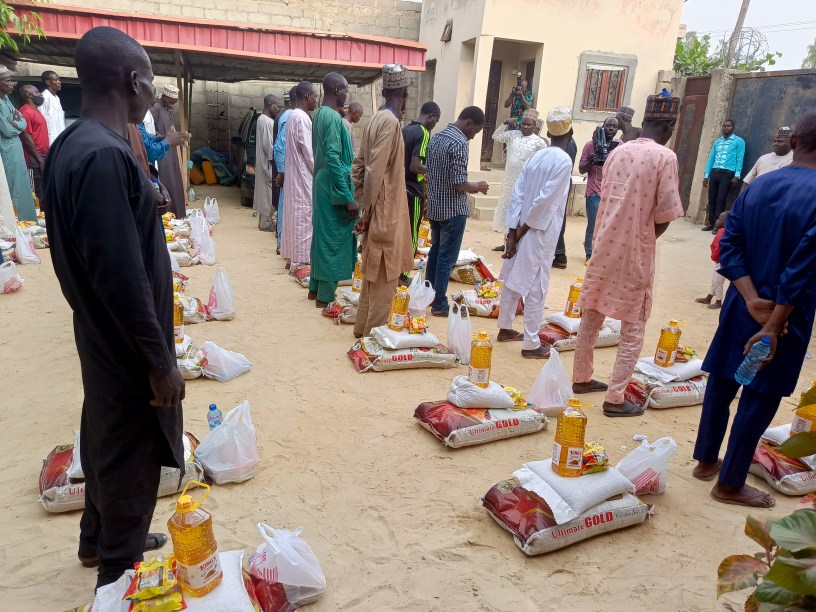
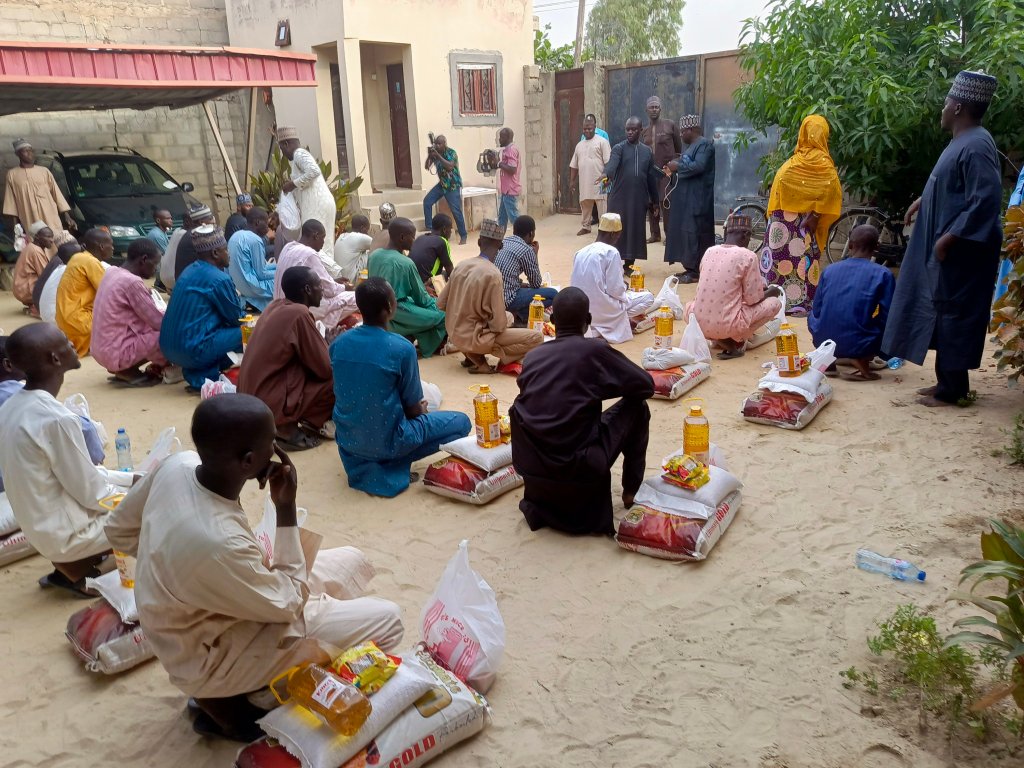
At the close of the one day training, each of the 45 attendees received cash amounting to N40,000 to initiate a small-scale trade. Additionally, each of them were provided with food items including 25kg of rice, a 2-liter jar of cooking oil, two sachets of seasoning cubes, 2 kilograms of beans, and a packet of salt to take home.
 The Humanitarian Times