By Abdulkareem Haruna
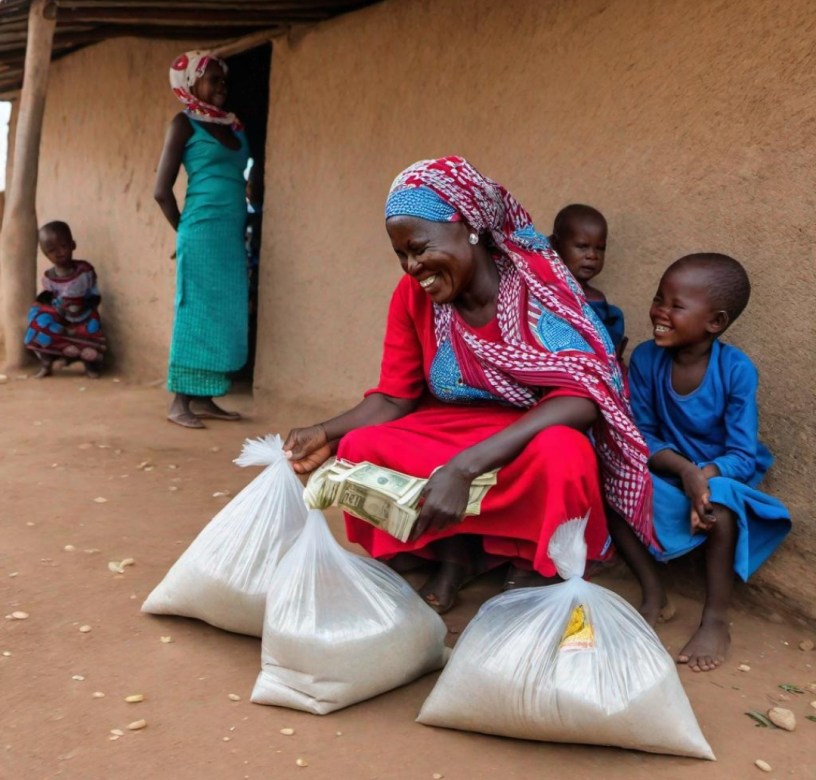
For eight long years, Amina, like thousands of others, has lived in the shadow of the Boko Haram insurgency which once gripped and sacked the town of Monguno in Nigeria’s Borno State.
The insurgency displaced her and many others, forcing them to rely on scant resources and the kindness of others.
“We’ve been living in constant fear and uncertainty,” Amina said. “We were displaced, we lost our homes, our livelihoods. But we clung on to hope.”
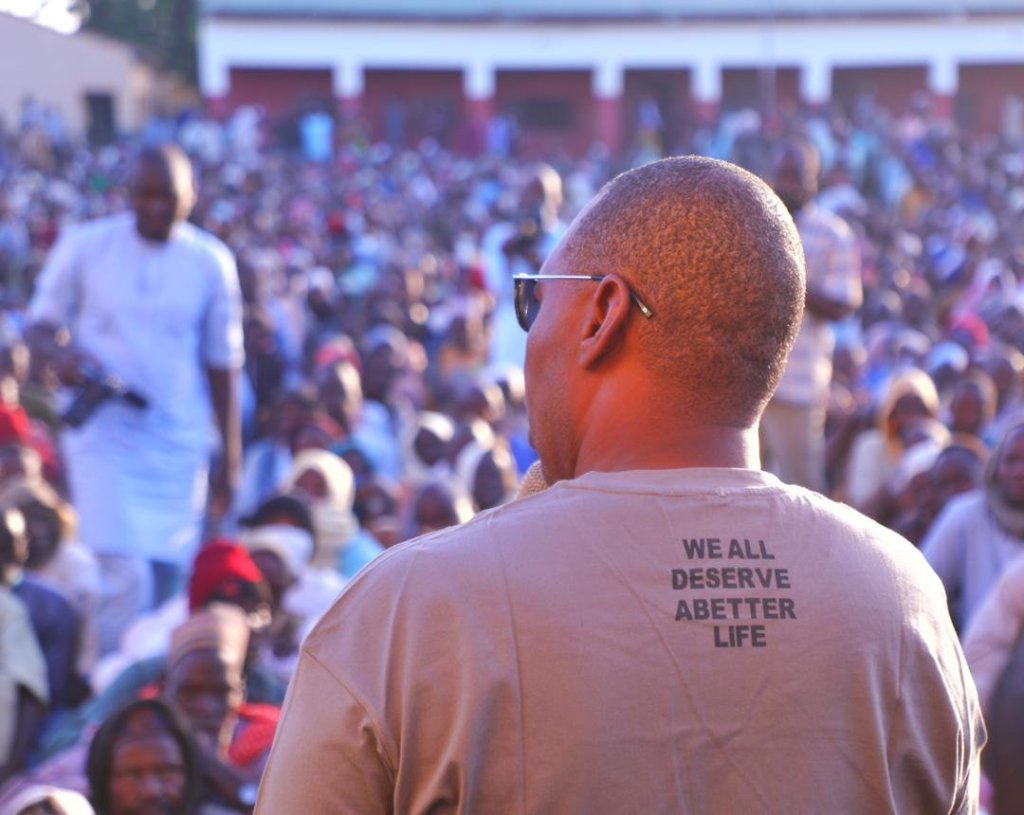
The hope she spoke of was delivered this week by Borno State Governor Babagana Umara Zulum who personally supervised the distribution of N275 million in cash, food items, and clothing to 95,000 residents in Monguno.
“Monguno is one of the Local Government areas severely devastated by Boko Haram insurgents. The population here is huge and they have limited access to agricultural land. For this reason, we decided to provide palliatives to all residents living in Monguno,” Zulum said.
During the distribution, 55,000 women, including Amina, were each given N5,000 and a wrapper, while 40,000 male heads of households received 25kg of rice and 10kg of beans.
“I never thought this day would come,” said Musa Abubakar, a father of six, as he received his share of the aid. “The rice and beans will feed my family for a month. It’s a lifeline.”
This aid did not come alone. Zulum acknowledged the support from the Northeast Development Commission (NEDC), the National Emergency Management Agency (NEMA), and the Nigerian Customs Service. He also expressed gratitude to President Bola Tinubu and Vice President Kashim Shettima for supporting Borno state with additional rice supplies.
Zulum promised that the palliative distribution will continue throughout his tenure to support communities severely affected by the Boko Haram insurgency.
As the distribution concluded, Amina, her face aglow in the fading light, offered a poignant reflection: “This assistance isn’t just about the money or the food. It’s about the fact that we’re not forgotten, that our plight matters. Today, I dare to dream of a better tomorrow for my children.”
In a town once ravaged by insurgency, these are more than just supplies — they are tangible symbols of resilience and hope, a promise that even in the darkest times, help can and will come.
 The Humanitarian Times