By Abdul Kareem
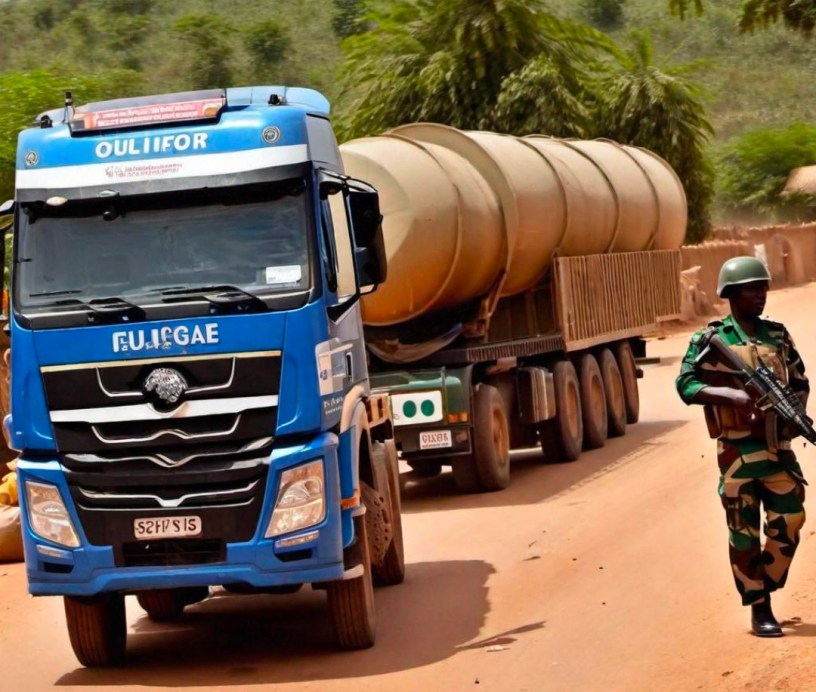
MAIDUGURI, Nigeria (ThT) – The tragic death of Mohammed Bello, a truck driver allegedly killed by a soldier at a military checkpoint on the Maiduguri-Ngamboru Ngala road, has left residents of Borno State, northeast Nigeria, in mourning.
The incident unfolded when Bello refused to succumb to a bribe demand from a soldier stationed at a checkpoint near the Nigeria-Chad borders. It is lamentably common for security agencies to solicit bribes from drivers, despite their official duty of inspecting for illegal weapons and contraband.
The callous act has ignited widespread condemnation and fervent calls for justice, prompting the Borno State government to pledge resolute action. Governor Babagana Zulum, represented by Secretary to the Borno State Government, Bukar Tijjani, expressed his profound anguish, denouncing the incident as a “heinous act committed against an innocent individual.”
Governor Zulum emphasized the significant impact of this incident on the already fragile security situation in the state, vehemently demanding accountability and stringent measures to prevent future occurrences.
“The loss of Mohammed Bello, a humanitarian transport driver, strikes a blow to our collective humanity and our collective endeavor to rebuild a sense of safety in our state,” Tijjani declared.
“We will not let this injustice go unanswered. The Borno government is actively engaging with military authorities to ensure that the culprits face the full force of the law and to safeguard the imperative of unhindered movement, crucial for our recovery from the insurgency.”
Ahmad Musa, Secretary of the National Union of Road Transport Workers (NURTW) in Borno, provided a harrowing account of the incident. According to Musa, the altercation erupted when soldiers demanded illicit payment from Bello, who staunchly maintained that his cargo comprised authorized humanitarian aid, cleared by army headquarters. The ensuing refusal escalated into a confrontation that tragically culminated in Bello’s untimely demise.
Acknowledging the gravity of the situation, the Army, through Acting Deputy Director of Army Public Relations 7 Division, Lieutenant Colonel Ajemusuyake Jingina, stressed the need for accountability.
“We are fully committed to ensuring justice for Mr. Bello and are working closely with NURTW to achieve a peaceful resolution,” Jingina asserted.
“The Division unequivocally condemns unprofessional conduct and will relentlessly pursue a thorough investigation into this incident.”
The civil society has also expressed vehement condemnation for the killing of Mohammed Bello. Ahmed Shehu, a regional head of the Network of the Civil Society, stated, “This incident has not only caused immense sorrow but also underscored the dire need for professionalism at military checkpoints.”
“We implore the authorities to swiftly and justly respond to this tragic event, with the hope that it instigates lasting systemic changes and prevents future loss of life.”
 The Humanitarian Times