By Abdul Kareem
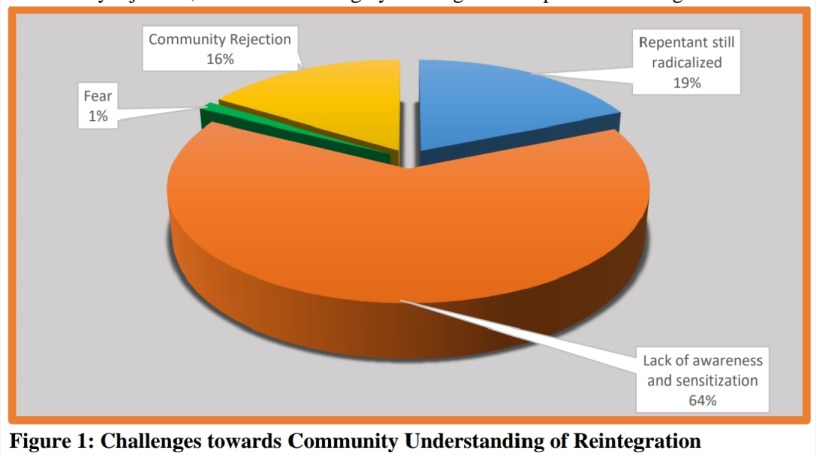
MAIDUGURI, Nigeria — In a revealing assessment of the Borno State community’s awareness and acceptance of reintegration efforts, the Peace Ambassadors Centre for Humanitarian Aid and Empowerment (PACHE) has put out a survey indicating that 64% of residents are poorly informed or entirely unaware of the government’s attempts to reintegrate former Boko Haram militants in their communities.
The Perception Survey on Reintegration and Reconciliation, was conducted in partnership with the British Council, targeted perceptions within Maiduguri Metropolitan and Konduga Local Government Areas of Borno State, a region that has been at the epicenter of the Boko Haram insurgency.
The CEO of PACHE, Ambassador Ahmed Shehu, said the survey aimed to provide policymakers with a granular understanding of the community’s attitudes towards the controversial reintegration process with a view to forging a sustainable approach to the entire reintegration process.
Employing a combination of Focus Group Discussions (FGD) and Key Informant Interviews (KII), the survey captured a nuanced picture of the community’s feelings, revealing deep-seated discontent and a range of other emotions that reflect the complexity of reintegrating former combatants back into the society they once terrorized.
In the report, presented by the lead researcher, Dr Shaibu Jibrin, an associate professor Faculty of Agriculture, Borno State University, various respondents voiced concerns over the potential for radicalization, fear of reprisal attacks, and a general sense of community rejection toward the repentant militants. In addition to these fears, the survey identified a lack of proper sensitization and awareness about the reintegration process as a significant obstacle, contributing to the widespread misunderstanding and skepticism within the community.
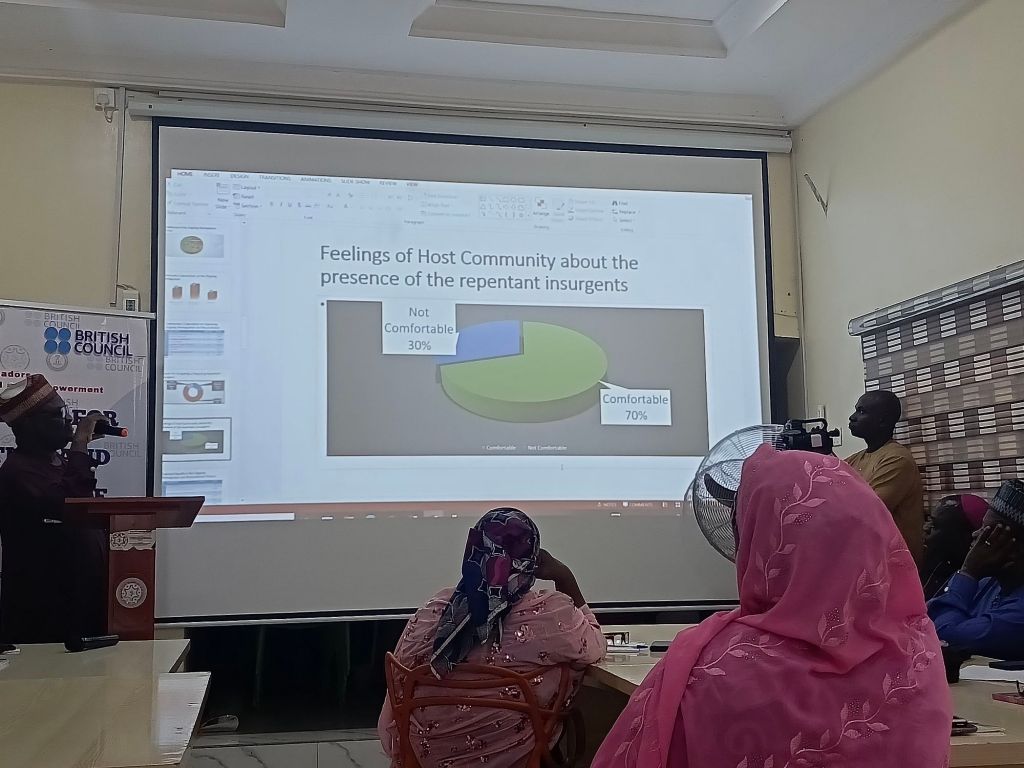
Despite these challenges, the survey revealed that “unconditional acceptance” of repentant insurgents was the majority stance among participants. However, this acceptance was not universal, as a portion of the community expressed “conditional acceptance”, contingent upon the successful rehabilitation and guarantees of non-recurrence of violent behavior.
Respondents’ expectations from the reintegration process, the survey revealed, were varied but converged on the desire for sustainable peace and more robust efforts from the government and stakeholders to overcome the current challenges and barriers.
Diverse perspectives were also noted on the potential risks of reintegration, including the fear of recidivism among repentant individuals, and the broader impact this might have on the security situation in Borno State.
The findings of the survey have led to a series of recommendations aimed at improving the reintegration and reconciliation process. Among these, enhancing the government’s role in “leading and coordinating initiatives and fostering deeper engagements with stakeholders at all levels” were seen as crucial. The survey also emphasized the need for bolstered community support, along with strategic interventions by donor agencies and international organizations.
Recommendations include the promotion of economic empowerment and educational programs, as well as the provision of mentorship and psychosocial support for those reintegrating.
“These measures aim to address the underlying issues of economic deprivation and educational deficits that often contribute to vulnerability and radicalization,” Shehu said.
The survey’s outcomes also underscore the importance of tailored interventions that are sensitive to the community’s concerns, and that build trust and confidence in the reintegration initiatives.
By addressing the highlighted issues, the PACHE and its partners hope to foster a more informed and accepting environment, facilitating a smoother transition for former insurgents and contributing to the long-term goals of peace and stability in Borno State.
“This Perception Survey on Reintegration and Reconciliation in Borno State has provided invaluable insights for policymakers and critical stakeholders, shedding light on the complex dynamics at play within communities affected by the Boko Haram conflict.
In particular, the study calls for comprehensive awareness campaigns to educate the community about the goals and processes of reintegration, emphasizing transparency and consistent communication.
Such campaigns, according to the study, “could involve local leaders, religious figures, and community influencers, who play a critical role in shaping public opinion and facilitating acceptance.”
The survey also highlights the potential benefits of involving reintegration program participants in community service and development projects, which could help to rebuild trust and demonstrate their commitment to peace and societal improvement.
Additionally, the creation of “safe spaces for dialogue between former combatants and community members” is recommended to promote understanding and reconciliation.
The need for continuous monitoring and evaluation of reintegration efforts was another key point raised by the survey, to ensure that the programs are responsive to the evolving needs of the community and the returnees. This, the survey said “would include tracking the long-term outcomes for those who have been reintegrated, with a focus on preventing recidivism and ensuring the safety and security of the community.”
Furthermore, the survey suggests that addressing the broader socio-economic factors that contribute to extremism is vital for the success of the reintegration process. This includes “tackling unemployment, poverty, and lack of access to education”, which are often exploited by extremist groups to recruit vulnerable individuals.
The survey’s recommendations also extend to “the need for legal frameworks that support the reintegration process, providing clear pathways for repentant insurgents to be absolved of their past actions and to be legally recognized as having returned to civilian status.”
“This would help to mitigate the legal uncertainties that can complicate the reintegration process,” Dr…. said.
The Perception Survey on Reintegration and Reconciliation in Borno State offers a sobering but hopeful perspective on the challenges and opportunities that lie ahead in the effort to heal the wounds of conflict and foster lasting peace.
”By taking into account the voices of the community and addressing their concerns with targeted, informed interventions, there is a path forward towards reconciliation and the successful reintegration of former combatants into society,” the CEO PACHE said.
As Borno State and the broader Nigerian government continue to navigate the complex post-conflict landscape, The Humanitarian Times hopes that the insights from this survey will play a crucial role in shaping future policies and initiatives which can be transformed into a new chapter of unity and progress for the people of Borno State.
Attendees at the validation of the perception survey in Borno state, representing various sectors, praised PACHE and its partner, the British Council, for conducting the survey. They believe that the survey will significantly assist the government and relevant stakeholders in effectively coordinating the reintegration process.
 The Humanitarian Times