By Abdul Kareem
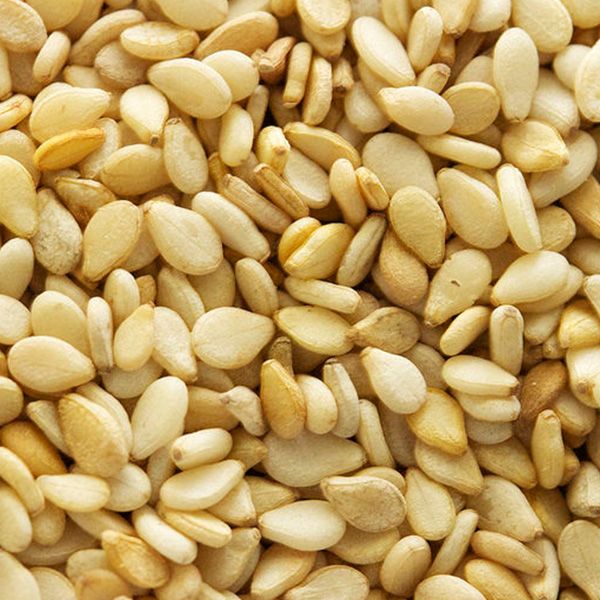
A vision of prosperity is taking root, ‘one sesame seed at a time,’ on the vast arid plains of Borno State. Governor Babagana Zulum is on a mission to redefine the narrative of a region once beleaguered by insurgency. His dream is to transform it into an agricultural goldmine capable of feeding its people and exporting its surplus.
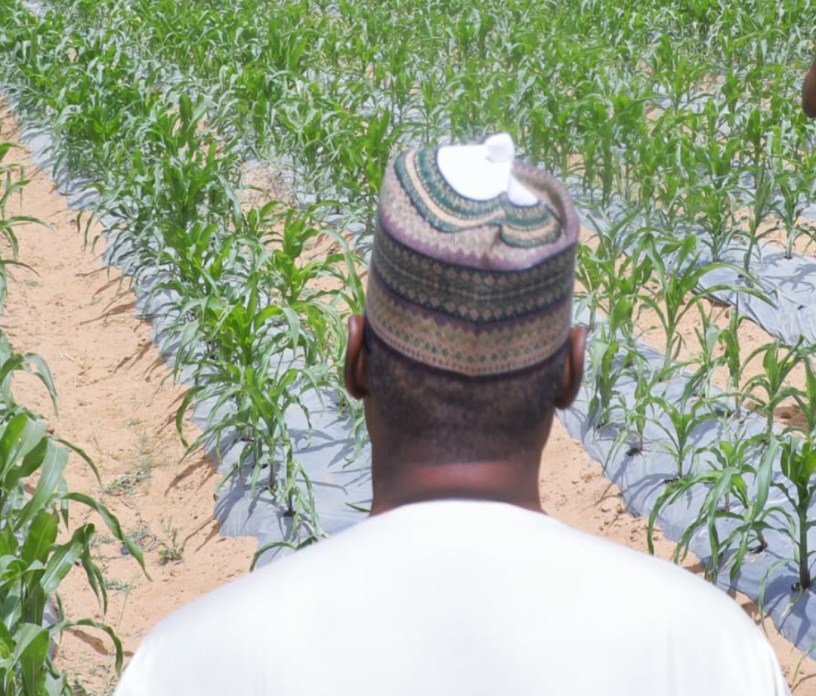
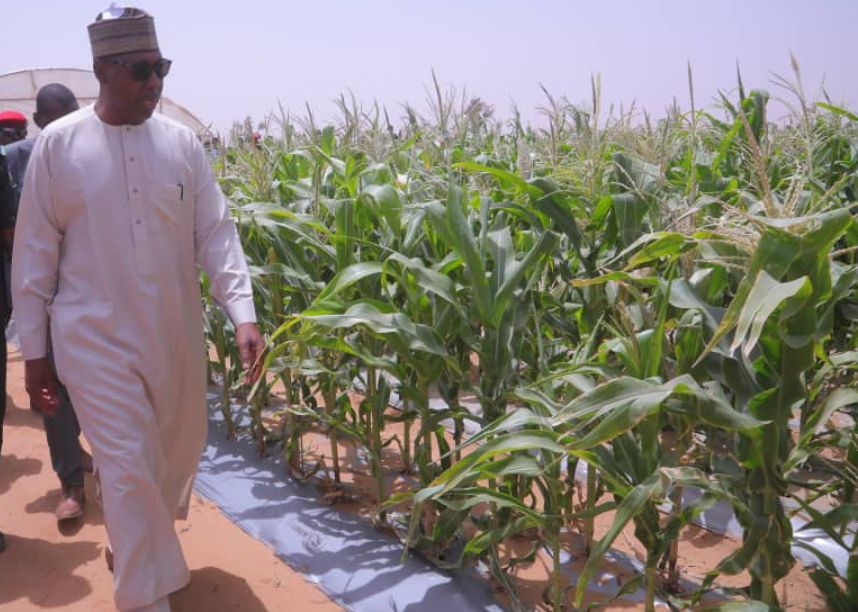
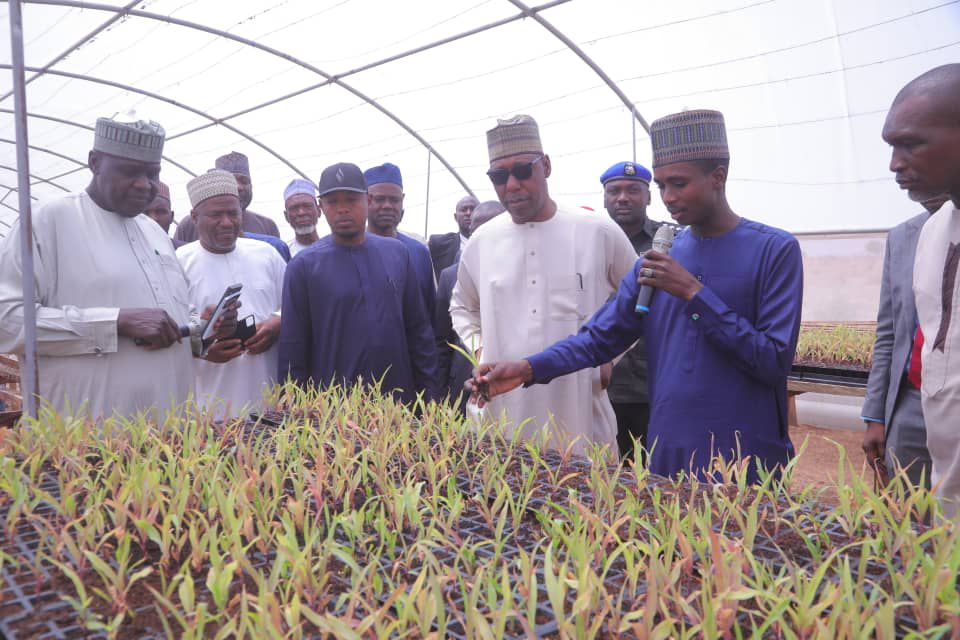
Governor Zulum was filled with optimism as he toured the Koiri irrigation farm, a manifest of his administration’s commitment to swing the state’s economy towards sustainable agriculture. This pilot drip irrigation scheme is not merely a plot of land; it’s the forerunner of Borno’s economic renaissance.
Under the scorching sun, the Koiri scheme, a modest 20 hectares of land, stands as a symbol of what the future holds for Borno. Here, through the innovative drip irrigation technology, 364 tons of maize and sesame are envisaged to be harvested in a single crop cycle. But Zulum’s ambition doesn’t settle for a single harvest; with plans to run three cycles annually, the scheme is set to yield over 1,092 tons of these crops each year.
In a bold statement of intent, Governor Zulum stated “Let’s carefully put things in order; Borno State will start exporting sesame and other cash crops shortly.” It’s a declaration that’s not only about food production but also about laying the foundation for economic diversification and resilience.
The governor’s dedication to investing in irrigation agriculture is a strategic move to combat the region’s climatic challenges. By harnessing the power of irrigation, Borno can overcome its dependence on unpredictable rainfall patterns and take control of its agricultural destiny.
“We will provide the political will needed to achieve food sufficiency,” Zulum assured, signaling his commitment to this transformative agenda.
Yet, the governor is not content with small-scale success. In a move to escalate the agricultural drive, he has ordered the expansion of the scheme to 300 hectares, with 100 hectares earmarked for each senatorial zone. This expansion is not just about increasing crop yields; it’s about creating jobs, supporting local communities, and building a robust, self-sustaining economy.
The announcement comes on the heels of a significant investment in agricultural technology by the previous administration of his benefactor, Governor Kashim Shettima (now vice president of Nigeria), which procured approximately 10,000 drip irrigation kits. With these resources at hand, Governor Zulum is poised to cultivate at least 1,000 hectares after the upcoming rainy season, pushing Borno closer to the goal of becoming an export state.
What makes Governor Zulum’s vision particularly poignant is the context in which it unfolds. Borno State, historically known for the insurgency it has faced, is now looking toward a future of abundance and prosperity. The state’s journey from being a battleground to becoming an agricultural beacon is a powerful narrative of resilience and hope.
As Borno State takes these decisive steps towards agricultural excellence, it stands as a model for other regions facing similar adversities. Zulum’s approach is not just about cultivating crops; it’s about cultivating hope. It’s a message that adversity can be the seed from which opportunity sprouts, provided there is a will to nurture it.
What we must appreciate here is that the potential impact of Borno’s agricultural transformation extends far beyond the state’s borders. By positioning itself as an export state, Borno can significantly contribute to Nigeria’s overall economic health. Sesame, for instance, is a high-demand commodity on the global market, prized for its oil-rich seeds. By tapping into this lucrative crop, Borno could attract international investments and partnerships, further bolstering its economic standing.
The environmental aspect of this agricultural revolution cannot be overlooked either. Drip irrigation is a water-efficient method that maximizes crop yield while minimizing waste. In a region like Borno, where water is a precious commodity, the adoption of such sustainable farming practices is crucial.
However, the road to transformation is fraught with challenges. Borno’s harsh climate, security concerns, and the need for skill development among farmers are hurdles that must be overcome. The success of Governor Zulum’s vision will hinge on the state’s ability to address these issues head-on, ensuring that the agricultural sector has the infrastructure, security, and skilled workforce it needs to thrive.
The government’s role is pivotal, but so is the involvement of the private sector. Public-private partnerships can be a catalyst for agricultural development, providing the expertise, funding, and innovation necessary to elevate Borno’s agricultural sector to international standards.
As Governor Zulum looks out over the verdant fields of the Koiri irrigation farm, his vision is clear. With the right mix of political will, investment, and community engagement, Borno State can indeed become a bastion of agricultural exports. It’s a vision that doesn’t just aim to change the landscape of the state but also seeks to transform the lives of its people, ushering in a new era of growth and stability.
As the world watches, Borno is not just rising from the ashes of conflict; it is aspiring to reach the heights of agricultural excellence, one sesame seed at a time.
 The Humanitarian Times