
By Abdul Kareem
As persons displaced by the Boko Haram insurggency begin to return to their liberated communities in Borno, northeast Nigeria, stakeholders in the humanitarian sector are intensifying efforts to ensure that these areas are free from the deadly threat of landmines and unexploded ordnance.
The initiative comes in response to tragic past incidents where returning residents have fallen victim to neglected improvised explosive devices (IEDs).
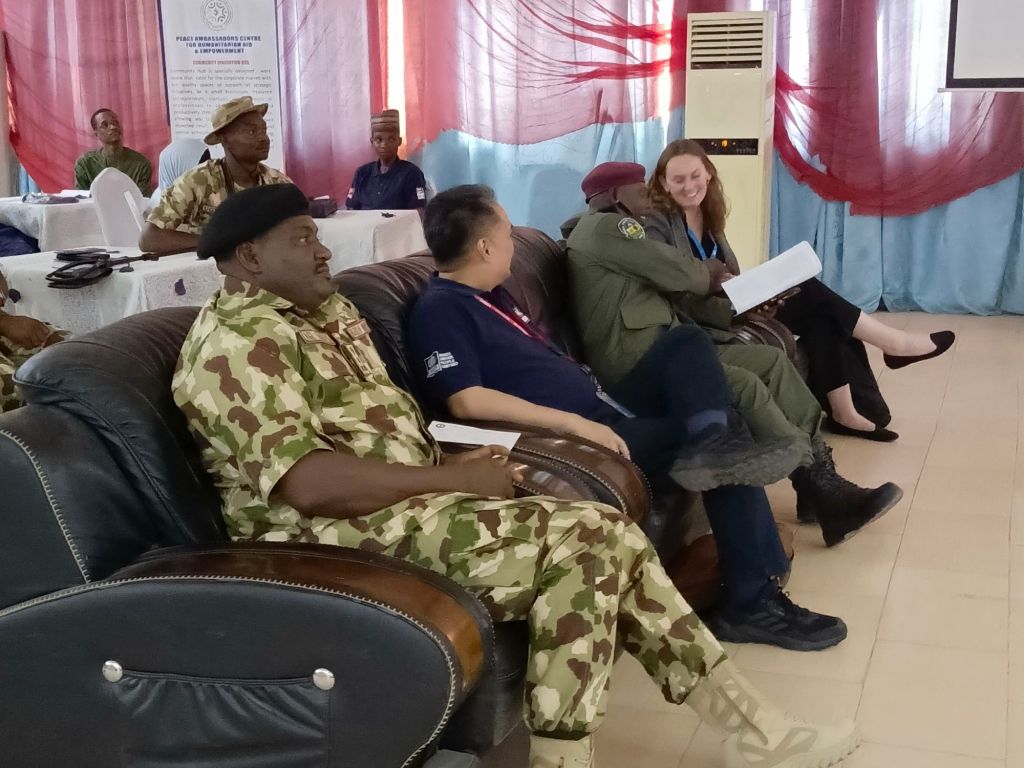
At a conference organized by UNMAS on Wednesday to mark International Mine Action and Awareness Day 2024, public officials, military, civil defense, and NGO representatives convened to strategize on safeguarding returnees in the northeast. Past experiences have shown the critical need for meticulous clearing of landmines to protect the lives of unsuspecting civilians returning to their homes.
Brig-Gen AG Haruna, GOC of the 7 Division, pointed to the past as a reminder of why such efforts are essential.
“Recognizing that knowledge is the first line of defense, we have initiated comprehensive training programs aimed at equipping law enforcement and security personnel with the emphasis to detect, mark, and recover explosive devices, to serve as protectors of peace with utmost competence,” he stated at the conference themed “Protecting Lives, Building Peace.”
The diligent work of the 7 Division engineers brigade in mine clearance was highlighted as a significant step towards ensuring a safe return for IDPs.
“The engineers brigade have over the years worked tirelessly to clear explosive devices and unexploded ordnance on roads and reclaimed lands, allowing children to play and adults to farm without fear in risk areas,” Haruna detailed.
Musa Boyi, commandant of the NSCDC in Borno State, represented by an anti-bomb officer, emphasized the importance of education to mitigate the risk of IEDs. He noted that activities are underway to increase awareness among the population, especially in educating children and adults on the dangers of touching unfamiliar objects.
The permanent secretary of the Ministry for Reconstruction, Rehabilitation and Resettlement, commended the conference’s timeliness, which coincides with government plans to facilitate the safe relocation of more IDPs to their ancestral homes. To assist in these efforts, the anti-bomb squad of Nigeria police provided guidance on six signs to be wary of in mine-risk areas.
Assayyidi Yusuf is not a Project Coordinator with CENSCOPE, the lead organisation in planing the International Mine Action and Awareness Day, spoke emphatically about the importance of International Mine Awareness Day in a recent panel discussion.
“Today marks not just a day on the calendar but a crucial call to action, It is also a day for raising awareness about the dangers of landmines is a continuous effort that requires our undivided attention and commitment.”
Yusuf underscored the importance of community resilience in the face of such dangers, especially for internally displaced persons (IDPs) who are preparing to return to their hometowns.
“While the government plays a pivotal role in the resettlement of IDPs, it cannot have a presence in every area,” he commented. “That’s why it’s vital for us to bolster the self-reliance of these communities. They need to be able to ensure their own safety, independent of government aid.”
Emphasizing the need for education and behavioral change, Yusuf pointed out the crucial role of local knowledge in dealing with explosive remnants of war. “It’s about more than just avoiding dangerous areas; it’s about fostering a culture of safety and awareness,” he said. “Our people must be taught that these remnants are not toys—they’re deadly, and they should be treated with the utmost caution.”
He mentioned the progress already made through cooperative efforts. “This initiative is a collective endeavor,” Yusuf remarked. “Every organization involved in mine action is here today, showing their commitment to the cause.”
Yusuf highlighted the proactive measures being taken to prepare IDPs for their eventual return. “Education and sensitization efforts are ongoing, even while these individuals are still in displacement camps,” he explained. “They’re learning to recognize the signs of danger and understand the risks posed by landmines and IEDs.”
“We’ve closed a significant gap in safety measures, yet we’re aware that our work is far from complete. Our unwavering commitment to this cause is a clear indication of our determination to continually strengthen the resilience of these communities before they reintegrate into their native homes.”
A female participant and one of the thousands of IDPs capacitated with the knowledge of mine awareness said “We have given enough knowledge to thread our communities with caution and awareness on how to detect possible land mines and undetonated explosives by ourselves.”
The high point of the auspicious occasion was a practical demonstration Session on the detection of land mines and other undetonated dangerous IEDs by the police bomb squad, as well as a panel session by a selection of stakeholders led by the Civil Society and humanitarian actors.
 The Humanitarian Times