By Abdul Kareem
Borno State Governor,
Babagana Zulum has defended the strategic distribution of food aid amidst the continuing Boko Haram crisis, stressing that palliative distribution has never been his administration’s priority.
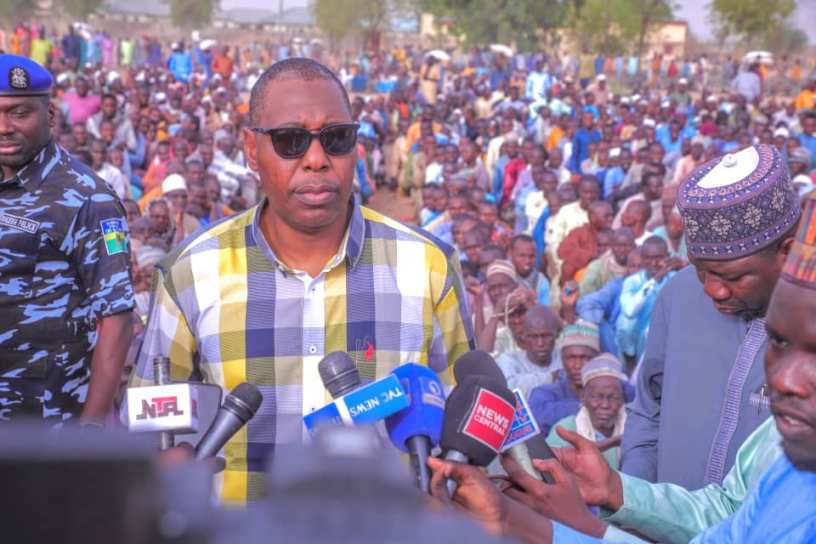
Addressing journalists, today, in Gajiram, the headquarters of Nganzai local government area, the governor stressed that his administration’s approach was a careful balance aimed at both meeting urgent needs and fostering recovery.
Governor Zulum articulated his stance on the necessity of food palliatives for those most affected by the insurgency. However, he underscored that this was part of a broader vision for resilience and growth across key sectors, including healthcare, education, and infrastructure.
“Our objective is not to create a cycle of dependency, but to revive the community’s self-sufficiency, especially in agriculture,” Zulum explained.
“While we provide immediate support to the worst-hit areas, we’re equally committed to setting the stage for lasting change.”
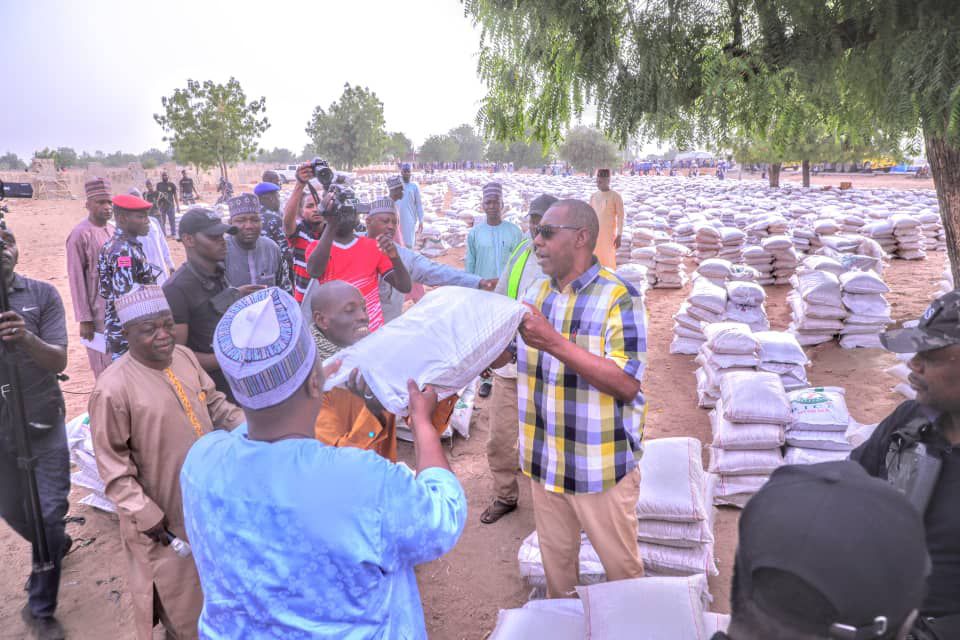
During the weekend, the governor oversaw the distribution of essential food and non-food items, alongside a cash assistance program amounting to N25 million, targeting over 25,000 families in desperate need.
With 10,000 male household heads each receiving a bag of rice and maize grain, and 15,000 families benefiting from additional financial support and clothing, Zulum highlighted the collaborative effort with the federal government and the North East Development Commission (NEDC) that made the distribution possible.
“We are grateful for the 15,000 bags of rice donated by the NEDC, complementing our own contribution of maize, wrappers, and cash,” Governor Zulum acknowledged, extending his thanks to President Bola Ahmed Tinubu and the commission’s management.
The distribution event was a concerted effort, with the participation of key local representatives, including Engr Bukar Talba and Sheikh Ali Gajiram, along with Honourable Commissioners and Special Advisers.
Governor Zulum’s remarks resonate with his vision of a Borno rising from the ashes of conflict, where short-term relief seamlessly integrates with the long-term goal of self-sufficiency and development, which are well encapsulated in his 25 years Borno Development Plan and ten years strategic response that would turn the state to a world class society.
In the last five years under Governor Zulum, the Borno State government has spent billions of naira providing food palliatives to internally displaced persons (IDPs) and individuals affected by the 14-year Boko Haram conflict. Economists have pointed out that the significant funds allocated by the state to non-productive sectors like palliative distribution could have been utilized to transform the state into a model of development within the country.
 The Humanitarian Times