By Rukaiyatu Idris
Borno state has faced numerous challenges over the years, ranging from insecurity to economic hardship. The over a decade long conflict has left a lasting scar on the century-built peace in the state and other parts of the country.
The poor utilization of youths as key actors toward achieving a harmonious society is one of the gaps identified by a youth-led initiative in Borno state.
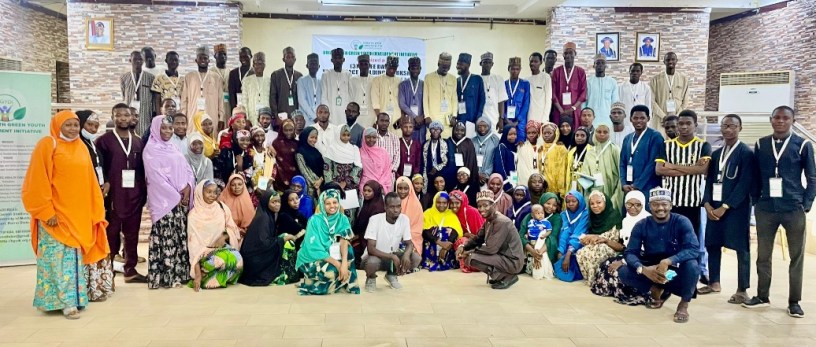
Breath with Green Youth Development Initiative (BGYDI) with support from Leadership Effectiveness Accountability Professionalism (LEAP) Africa took a giant step to redress the issue by flagging off a three days capacity building workshop for 100 youths with the theme; Empowering Youth for Sustainable Peace and Security in the Conflict Stricken Community, which started Tuesday, 4th June, 2024
The Co-Founder, Breath with Green Youth Development Initiative, Muktar Adamu stated that the organization “is a non profit, youth-led organization with specific focus on sustainable development, with a core value to foster transparency, accountability and teamwork.”
Why peace building?
Adamu explained the initial objectives of the workshop, noting the reason why youths are targeted. “The workshop is to ensure that youths get sufficient knowledge of peace-building and for them to have the capacity to give back to their communities as the state is still reviving from the conflict,” he said.
A Conflict Management Consultant, Usman Abba Zannah, who facilitated the first session, took the participants through conflict management and the initials that helps individuals on how to avoid conflict and spread peace especially in a society where conflict has existed.
“This region has experienced a series of conflict, to the extent that people are growing to normalize it, so it is important for us to raise awareness and continue to give youth the opportunity to take part in decision making in the areas of peace building, which is only achievable if the youths have good understanding of their relevance in the process,” he said.
The conflict management consultant emphasized the need for the participants to extend local initiatives, participate in peace building processes and have the ability to quickly identify conflict and curb conflict within their communities as they are now regarded as peace ambassadors.
The training was also attended by the Editor in Chief of The Humanitarian Times, Abdulkareem Haruna, who took the about 100 participants through the topic ‘Leveraging Media for Peace-building and Conflict Resolution: The Role of Media in Conflict Resolution’.
Take-Home for participants
The participants from academic and humanitarian spaces, described the training as one of its kind with regards to their experiences.
Aisha Grema Umara, noted that “this is the first peace building workshop she has attended and it stands out for her as she was able to make sense of certain issues in her community and how to address them.
“I have gained more insight into how I can strategically manage several types of conflict, particularly among families, and people in the community because these are the most prevalent which I often encounter,” she testified.
The knowledge of peace building is not the only take-home for Aisha, as she also identifies a new skill on how to reconcile disputing parties through effective dialogue.
Also, Charles Henry of Initiative for Education and Development, explained how the training empowered him with proficiency in peace building.
“Before the training, I used to think that conflict only meant attacks in the community. However, through this training, I’ve come to realize that there are various forms of conflict, such as intrapersonal, interpersonal, organizational, and community peace building. I have learned that as an individual, I can play a role in promoting peace within my community,said Charles, who also indicated his plans to step-down the knowledge to the members of his organization.
“I will share the knowledge from this workshop with my colleagues, and together we would work towards implementing a peace building focused project at our community level.” He explained.
The 2-day training sessions were interactive, as participants asked questions that further triggered meaningful conversations.
Development, News, Peacebuilding
BGYDI Trains 100 Youths on Peace Building in Borno
 The Humanitarian Times