
By Abdul Kareem
In a region plagued by deep poverty aggravated by years of violent conflict from Boko Haram, the emergence of widespread chronic kidney disease severely impacts residents’ life expectancy.
With chronic kidney disease (CMD) reaching epidemic proportions, the Yobe state government in Northeast Nigeria is pioneering a unique approach to combat this silent killer.
A recent study published by Africa Journal Online showed that the prevalence of CKD is high in Northern districts of Yobe State, Northeast Nigeria. The report indicated that the disease origin is “unknown” and recommended further studies “to define environmental or cultural factors that contribute to the high prevalence in this region.”
“The administration of Governor Mai-Mala Buni has recently launched a program that not only offers free dialysis to patients but also invests in groundbreaking research aimed at uncovering the root causes of the disease,” Bego Abdullahi, Yobe’s commissioner for Information said.
The statistics are alarming: Yobe State University Teaching Hospital in Damaturu conducts over 60 free dialysis sessions weekly, according to Professor Baba-Waru Goni, the Chief Medical Director (CMD) of the hospital.
Each session, “costing N50,000”, is a lifeline for patients who would otherwise be unable to afford the treatment.
“We conduct at least 60 dialysis sessions a week here at the Yobe State University Teaching Hospital,” said Professor Goni. “Government has to bear that cost because there is no way an individual or a family already struggling with the financial devastation that goes with renal failure can afford this.”
This initiative has been a beacon of hope for many, including 45-year-old Musa Ibrahim, who had all but given up on life. “I thought I was finished,” Ibrahim said, his voice quivering with emotion as he spoke to this reporter on his sick bed. “The pain was unbearable, and the cost of dialysis was beyond my reach. But then, the state government stepped in. They are saving my life.”
Ibrahim’s story is reinforced by that of Fatima Yusuf, a mother of three who was also diagnosed with kidney failure a year ago. “When the doctors told me about my condition, I felt as if the ground had swallowed me up,” she recalled. “I couldn’t imagine how I would afford the treatment. But now, with the free dialysis sessions, I have hope again. I am grateful to the government of Yobe under the kind leadership of Governor Mai-Mala Buni and the medical team in this hospital for this life saving intervention.”
Researching the root cause
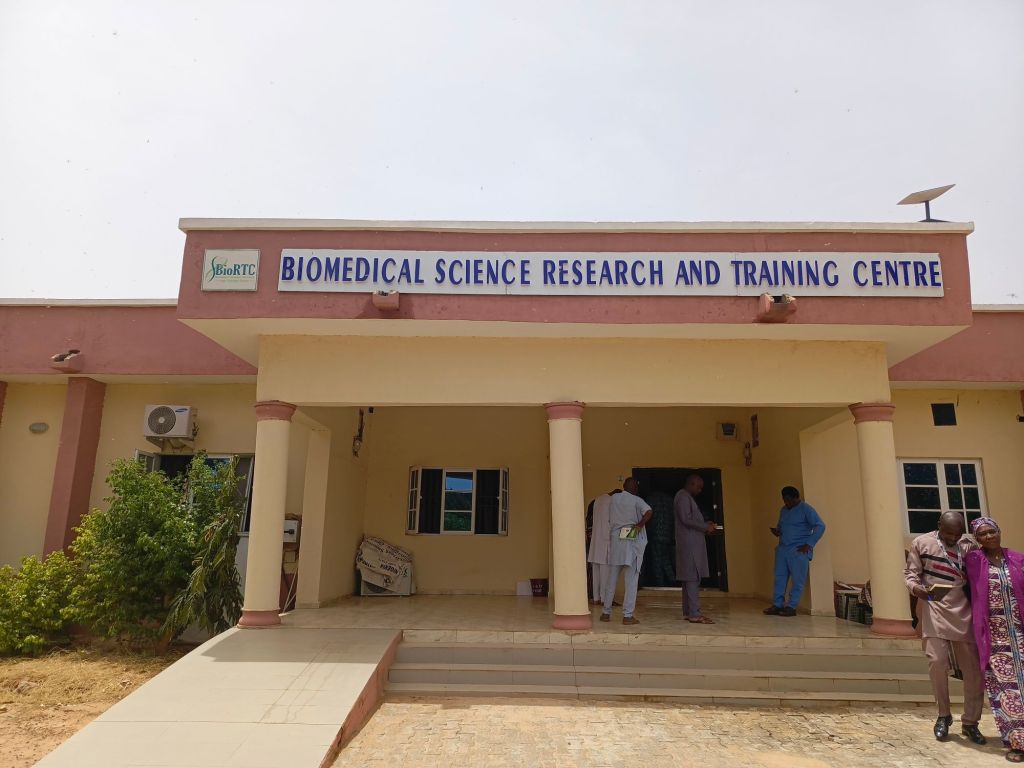
The impact of the state government’s initiative goes beyond providing immediate relief. The Yobe State University has established the Biomedical Science, Research and Training Center, where a consortium of foreign-trained medical scientists is delving into the causes of the kidney disease epidemic.
“We are conducting pioneering research to understand why kidney disease is so prevalent in our region,” said Professor Bawu Goni, CMD of the University Teaching Hospital.
“This research is crucial because it offers the potential to not only treat but also prevent this devastating disease in the future.”
The initiative has garnered praise from medical professionals and patients alike. “The state government’s commitment is unprecedented and has set a new standard for healthcare intervention,” said Dr. Goni. “By offering free dialysis and investing in essential research, we are not just managing the crisis but actively seeking to eradicate it.”
The Yobe state government said it has invested over a billion naira in equipment and personnel capacity development to enable it establish the BioRTC -a center of research that will provide solutions to local problems.
He said the equipment valued at over N1 billion, were acquired with the support or the Yobe State government, through grants and donations secured through a US-based Mahmoud Bukar Maina, a British-Nigerian neuroscientist, educator, and researcher, at the University of Sussex in the United Kingdom. Originally from Yobe state Dr Mahmoud’s research is focused on the cellular and molecular pathogenesis in Alzheimer’s disease.
Dr Mahmoud who spoke with Premium Times via zoom from the US said “the nature of uncommon medical gadgets at the center drives the research.”
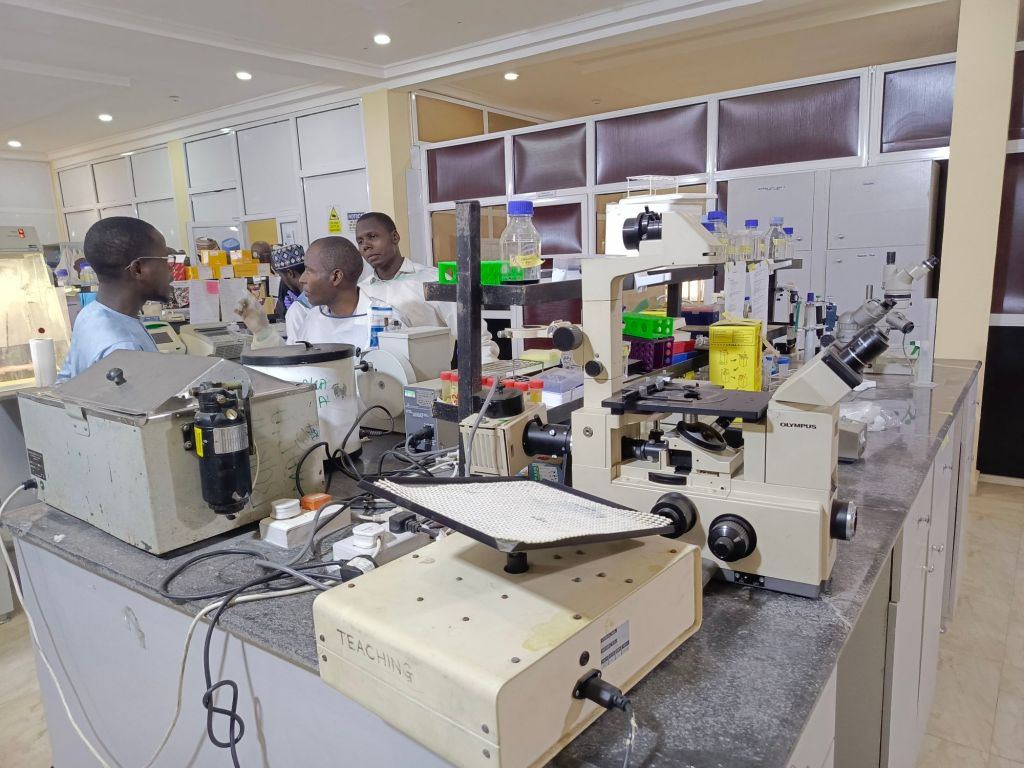
“What we have at the BioRTC include state of the earth equipment like Applied Biosystems, 7300 Real-Time PCR system, jeZeiss Laser Scanning Confocal Microscopes 780 and 700, LI-COR Odyssey imaging “ full tissue culture suite, Cellular biobank, Nikon Eclipse Microscope 50i with fluorescence, Bio-Rad Mini-Protean System, UVP BioDoc-It imaging systems and others.”
Officials at BioRTC stated that some of the equipment has clinical significance due to its capability to visualize detailed cellular structures and perform live cell imaging. These features aid in observing dynamic processes within cells in real time.
“Multicolor Fluorescence Imaging allows for the simultaneous visualization of multiple fluorescent markers, which is essential for complex biological studies like cancer research, neuroscience, and developmental biology,” stated the researchers at the center.
“Additionally, the Full Tissue Culture Suite, which supports Drug Testing and Development, enables the screening of potential drugs on cultured cells, thereby speeding up the development of new therapies.”
Professor Kawuwa, the head of the center, informed Premium Times that following approval from the Yobe state government, Dr. Mahmoud, who supervises the works at BioRTC, has successfully initiated a three-way partnership among the Yobe State University Teaching Hospital, University College London, and the London School of Hygiene and Tropical Medicine. The aim of this partnership is to investigate the increase in kidney diseases in Yobe and Borno states and develop effective solutions.
Currently, the center is housed in a small single-block laboratory within the Yobe State University campus. However, its expansion has become necessary due to the arrival of state-of-the-art medical research equipment supported by the Wellcome Trust and the Chan Zuckerberg Initiative.
“We are glad that the government of Yobe state has approved the construction of a full fledge complex for the BioRTC which would accommodate the additional medical equipment we are expecting as well as the ones we have now,” said Dr Kawuwa.
 The Humanitarian Times