By Abdul Kareem
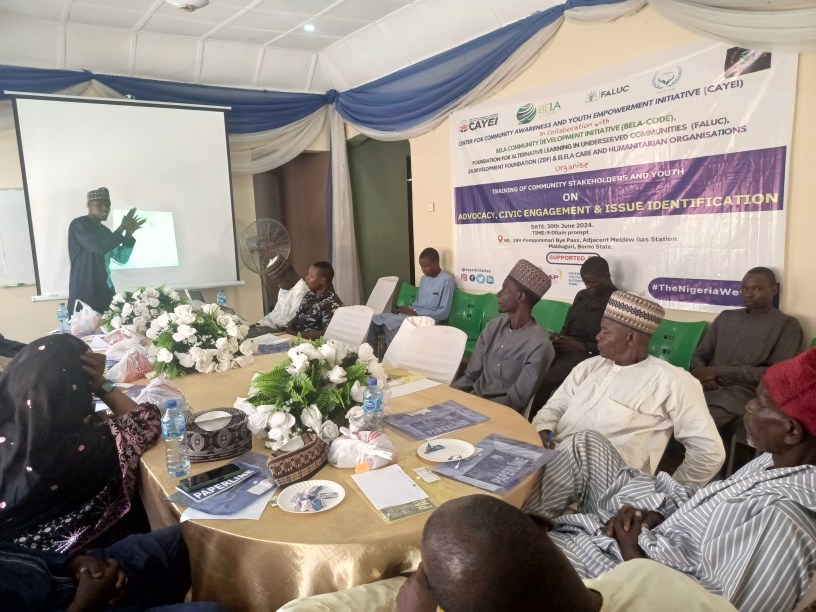
Pompommari, Konduga LGA, Borno State — The Center for Community Awareness and Youth Empowerment Initiative (CAYEI), with funding from the Nigeria Youths Futures Fund and support from Leap Africa, had this week successfully conducted a crucial training session for community stakeholders, youth, and women groups on civic engagement, issue identification, and advocacy.
The training, held on 30th June 2024 in the Pompommari community, targeted 40 participants and sought to address pressing local issues, including rising poverty rates, lack of access to quality drinking water, school dropouts, illiteracy, unemployment, drug abuse, and violent extremism.
“These sad situations have increased over the years due to the high illiteracy rate. Young people don’t know their rights as citizens; they cannot engage with government officials to hold them accountable,” said Yahuza Ismail, the Project Lead and individual grantee who coordinated the project.
“The youth are usually engaged at the onset of the electioneering period and abandoned after the election. Sometimes, the elected leaders are not addressing issues that are affecting the community but rather what suits them.”
The Nigerian constitution, from sections 33 to 44, enshrines young people’s fundamental rights to participate and engage meaningfully in society. Despite these rights, young people still face unequal opportunities for participation and civic engagement, Ismail highlighted.
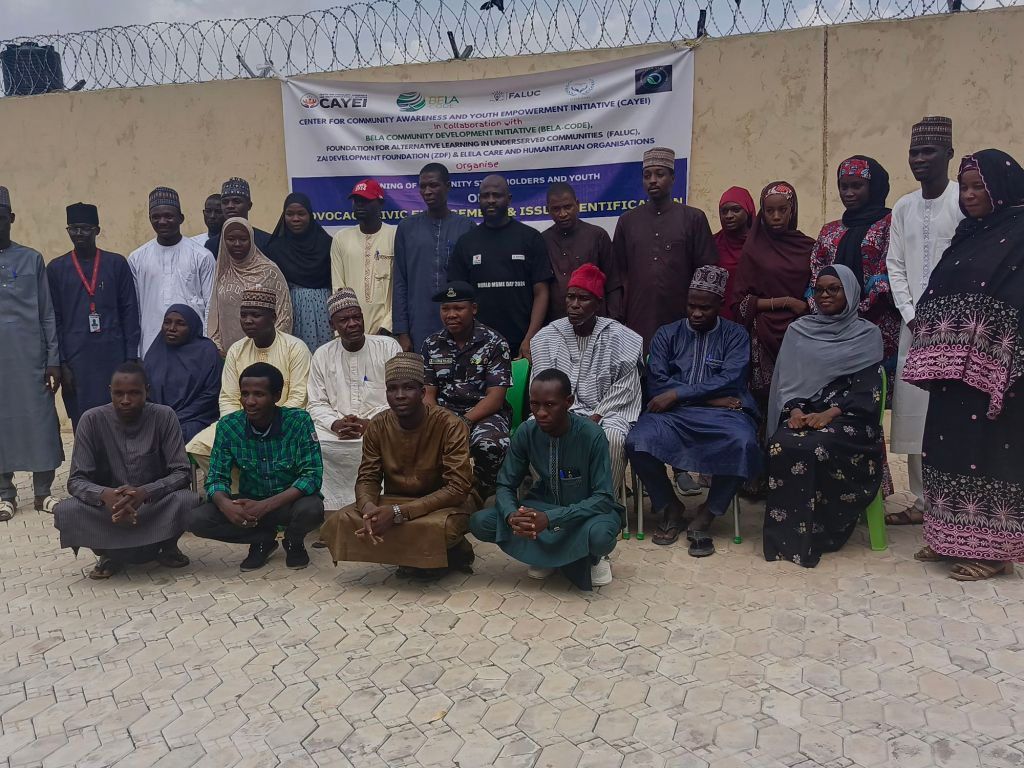
The initiative, in collaboration with ELELA Care Foundation, ZAI Foundation for Development, FALUC, and Bela Code, aimed to empower participants with effective advocacy skills necessary for sustainable development within their community. The program objectives included building the capacity of community members and stakeholders on methods of identifying and prioritizing community issues, strengthening knowledge of strategies for effective advocacy and lobbying, and training on techniques for engaging with civic institutions and promoting accountability.
The training was conducted through facilitation, group work, and presentations, focusing on issues identification, civic engagement, and advocacy. Participants identified community issues and proposed local solutions, forming peace-building and advocacy groups to help conduct and carry out advocacy to relevant bodies.
Yahuza Ismail emphasized the training’s impact, stating, “It enhanced community civic engagement and participation towards holding the government accountable, strengthened community knowledge of engaging with elected political representatives, and promoted the participation of youth in the decision-making process.”
Participants expressed their gratitude and newfound empowerment. Kolo Alhaji Bukar, the Bulama of Pompommari, shared, “We have different kinds of issues in our community, like lack of waste dump, lack of potable water, youth violence. But with this training, we now know how to approach duty bearers with advocacy to help us proffer solutions to our challenges.”
Hajj Altine Mohammed echoed the sentiment, praising the training’s excellence and the advantages highlighted by the Project Lead.
Abba Peter, a policeman working in Jere Division who also participated in the training said he was thrilled by the new knowledge gained.
“I’m so happy to be part of this training, as it provides me with the new knowledge on community engagement, on how people can solve their problems through dialogue and advocacy rather than confrontation and taking the laws into their own hands,” he said.
As the Pompommari community emerges with renewed vigor and strategic skills, it is hoped that their progress will serve as a valuable example for other communities in Borno facing similar challenges so as to foster civic engagement and achieve sustainable development.
 The Humanitarian Times