By Abdul Kareem
MAIDUGURI, Nigeria — The Allamin Foundation for Peace and Development has continued to push for an a peaceful atmosphere for reconciliation and reintegration in Borno State under its “Strengthening Capacities and Will for Transitional Justice” project.
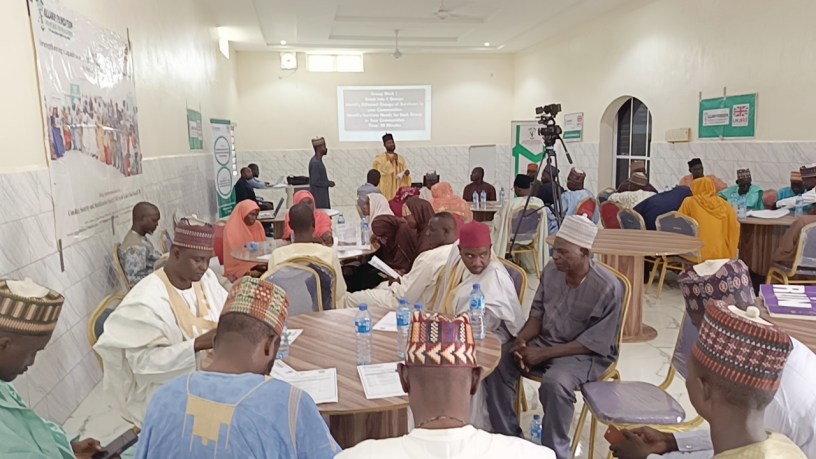
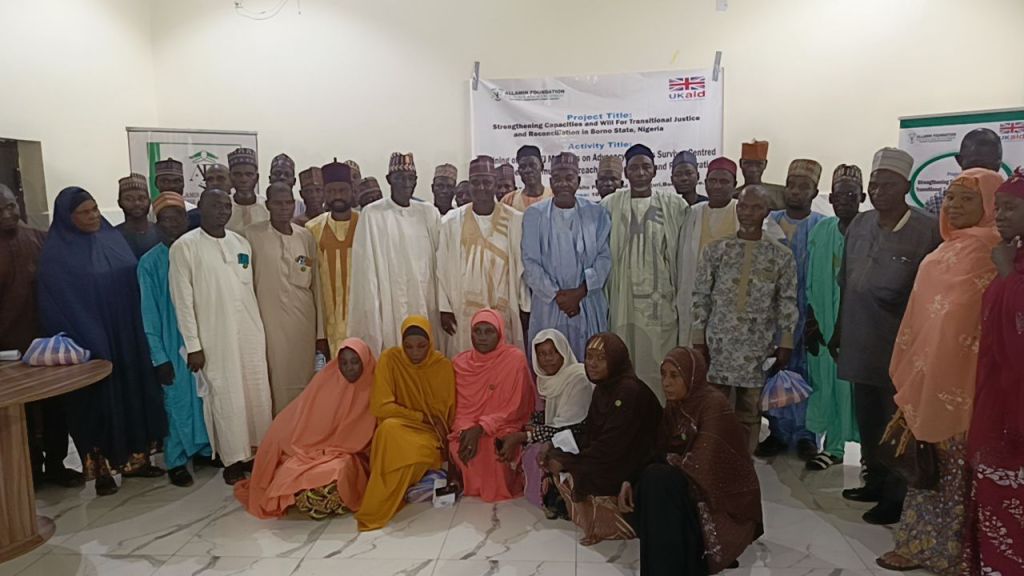
On Wednesday August 14, the foundation organized a comprehensive one-day training focused on survivors-centered advocacy, community outreach, and reconciliation.
Supported by the Foreign, Commonwealth & Development Office (FCDO), the foundation gathered 40 Community Actors for Transitional Justice (CATJ) members from four local government areas: Maiduguri Metropolitan Council, Jere, Konduga, and Mafa for a practical sessions of training on the thematic area. These participants, already active in reconciliation efforts, are meant to be better equipped with skills to support survivors of conflict and contribute to the peacebuilding process in the region.
Hamsatu Allamin, the visionary CEO of the foundation, articulated the fundamental goal of the training: “It is basically to broaden participants’ knowledge on survivors-centered approaches towards reconciliation and reintegration.” This emphasis on survivor-centric strategies underscores the foundation’s commitment to addressing the specific needs and challenges faced by individuals affected by conflict in the region.
The training curriculum was carefully designed to provide participants with practical knowledge and tools to enhance their advocacy efforts. Sessions delved into essential topics such as identifying different groups of survivors, understanding survivor needs within communities, and developing targeted advocacy messages for key stakeholders. Through engaging group work exercises and presentations, participants actively applied these concepts to real-world scenarios, fostering a deeper understanding of the complexities involved in transitional justice initiatives.
Dr Lawan Balami, the lead facilitator of the training, lauded the dedication and enthusiasm of the CATJ members:
“They not only participated fully in the training but also expressed readiness to continue their advocacy work by identifying survivors in need of transitional justice initiatives, particularly from the government,” he said. He added that the proactive approach exhibited by the participants reflects a genuine commitment to promoting healing and reconciliation within their respective communities.
Ambassador Shettima Jafar Imam, a respected community leader from Maiduguri Metropolitan Council, highlighted the vital role of CATJ in community sensitization and awareness creation:
“We engage critical stakeholders, including traditional and religious leaders, women, and youths, emphasizing the importance of peacebuilding and supporting governmental efforts to unite people.” This grassroots engagement and mobilization are essential components of sustainable peacebuilding initiatives in conflict-affected regions.
His Royal Highness Abba Kawu Garbai, the esteemed District Head of Maya, echoed the sentiments of support and appreciation for the Allamin Foundation’s tireless commitment to transitional justice and post-conflict peacebuilding in Borno State. Traditional rulers, such as His Royal Highness, play a pivotal role in fostering peace and unity within their communities, working hand in hand with government agencies and civil society organizations to rebuild trust and promote reconciliation.
The Allamin Foundation continues to make a tangible difference in the lives of those affected by conflict, paving the way for a brighter and more peaceful future for the people of Borno.
 The Humanitarian Times