By Abdul Kareem
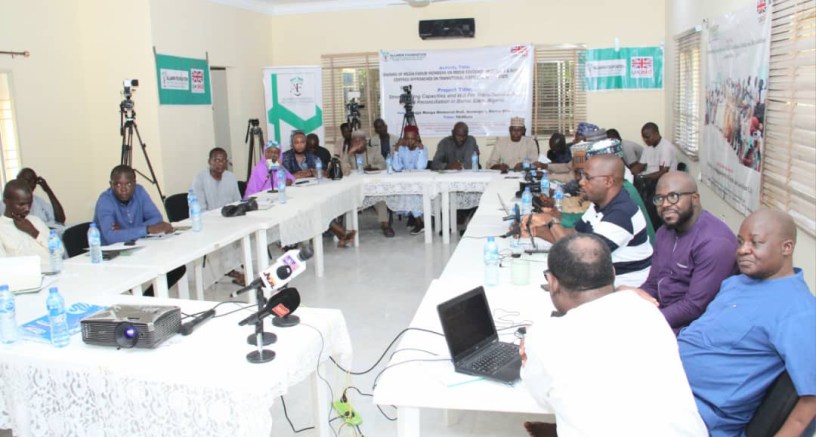
MAIDUGURI, Nigeria (tHT) — Journalists in Borno State, northeast Nigeria, have embarked on a transformative journey to advocate for survivors of the insurgency, equipped with essential skills through a training organized by the Allamin Foundation for Peace and Development, in collaboration with UKaid.
This pioneering initiative seeks to amplify the voices of survivors and promote transitional justice in the region.
In a one-day training session held in Maiduguri, Hajiya Hamsatu Allamin, the Executive Director of the foundation, in a welcome address, underscored the indispensable role of journalists in promoting transitional justice, emphasizing their unique position as key stakeholders with invaluable experience in covering the decade-long insurgency.
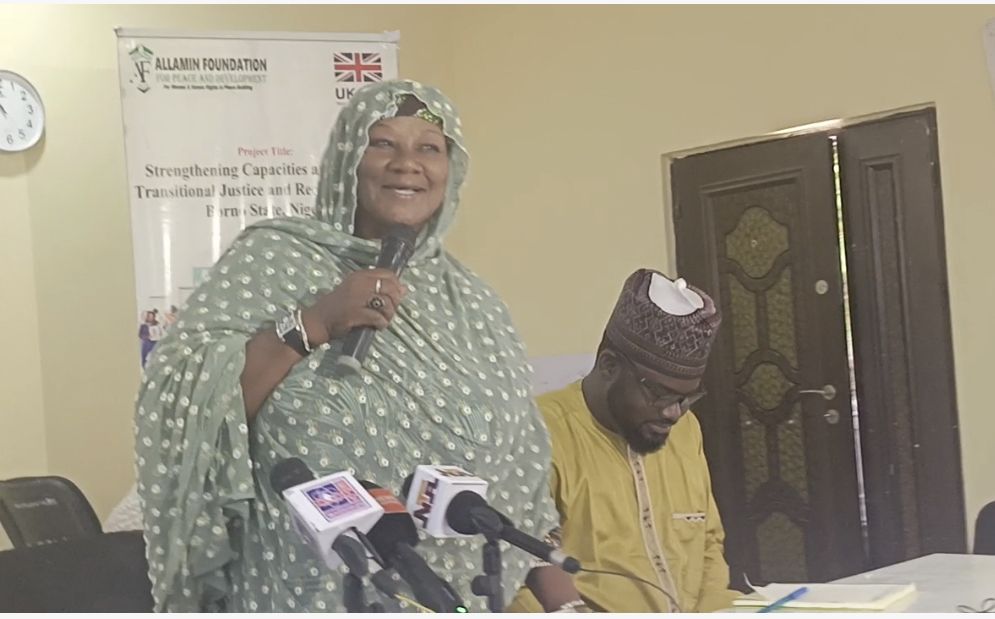
“As a group that has interacted closely with victims across various categories, journalists possess the necessary experience to lead survivor-centered advocacy for maximal impact,” Allamin remarked. She highlighted the foundation’s longstanding commitment to supporting survivors and fostering peace and development in Borno State.
Leading the training, Prof. Abubakar Mu’azu, Director of the Centre for Peace, Diplomatic, and Development Studies at the University of Maiduguri, outlined the objectives of the program. He stressed the importance of enhancing journalists’ capacity to give voice and visibility to victims of the insurgency, aligning with the principles of transitional justice.
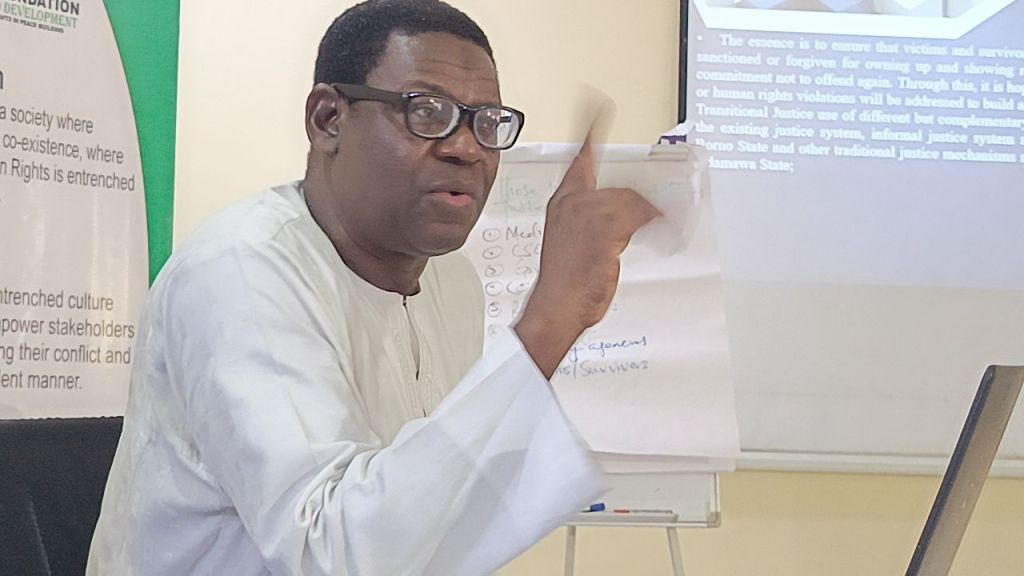
Mu’azu emphasized the need for journalists to combat stigma, promote reconciliation, forgiveness, and healing, and uphold the dignity of victims and survivors. He urged media professionals to hold government agencies accountable in their reporting to promote justice and transparency.
“As journalists who engage closely with grassroots communities, your role is pivotal in raising awareness about the transitional justice system and the unique Borno Model,” Mu’azu explained. He called for strategic engagement with critical stakeholders and traditional leaders to foster partnerships and ensure a comprehensive understanding of the reintegration process.
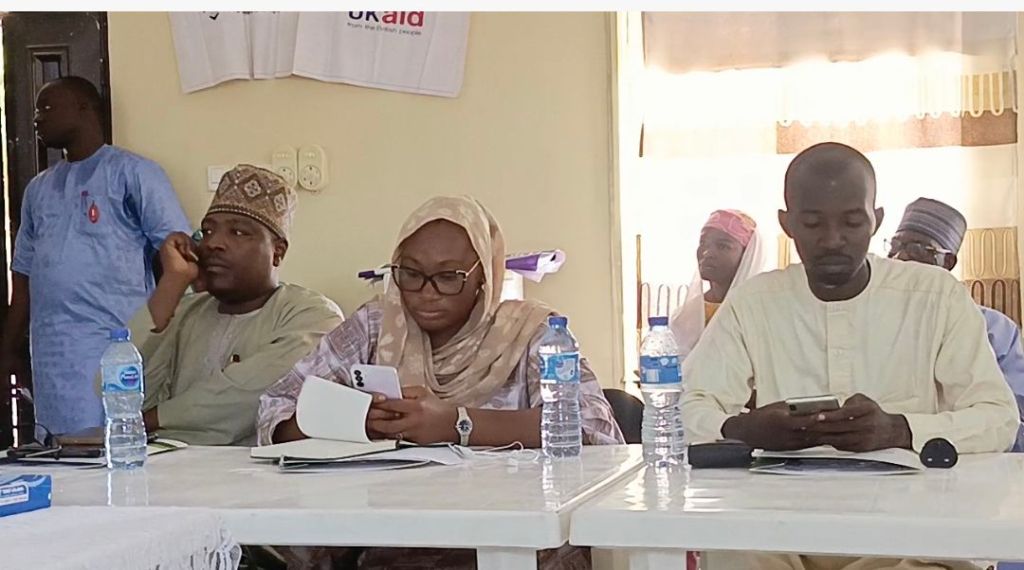
Elaborating on transitional justice, Mu’azu clarified common misconceptions, stating, “Under the transitional justice system, perpetrators of violence will not be absolved of accountability. Those responsible for atrocities will face justice through the criminal justice system.” He highlighted the societal benefits of transitional justice, emphasizing its efficiency compared to traditional judicial processes.
Acknowledging skepticism among Borno residents regarding the efficacy of the ongoing transitional justice system, Mu’azu urged journalists to engage in advocacy that educates and empowers communities. By amplifying survivors’ voices and showcasing the successes of local dispute resolution mechanisms like the Sulhu system, the media can play a pivotal role in promoting justice and healing.
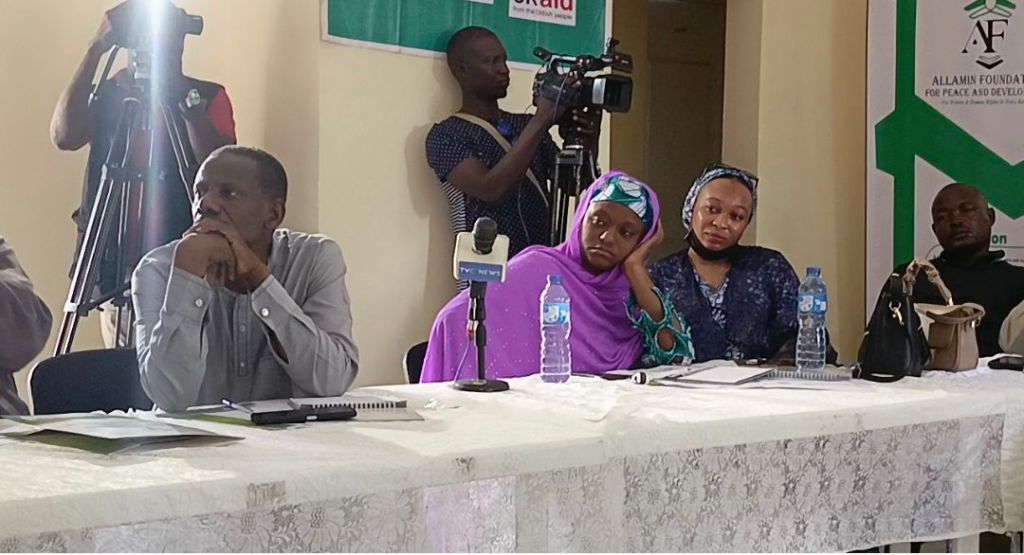
During the training, Prof. Nuhu Gapsiso, a co-facilitator, underscored the media’s influence in shaping public opinion and holding authorities accountable. “The media can foster a culture of transparency, accountability, and respect for human rights, paving the way for a more just and equitable society,” Gapsiso emphasized.
The comprehensive training program encompassed presentations on various topics, including “Understanding Survivor-Centered Approach in Advocacy,” “The Power of Media in Advocacy,” and “Media Coordination in Building Effective Advocacy Campaigns.”
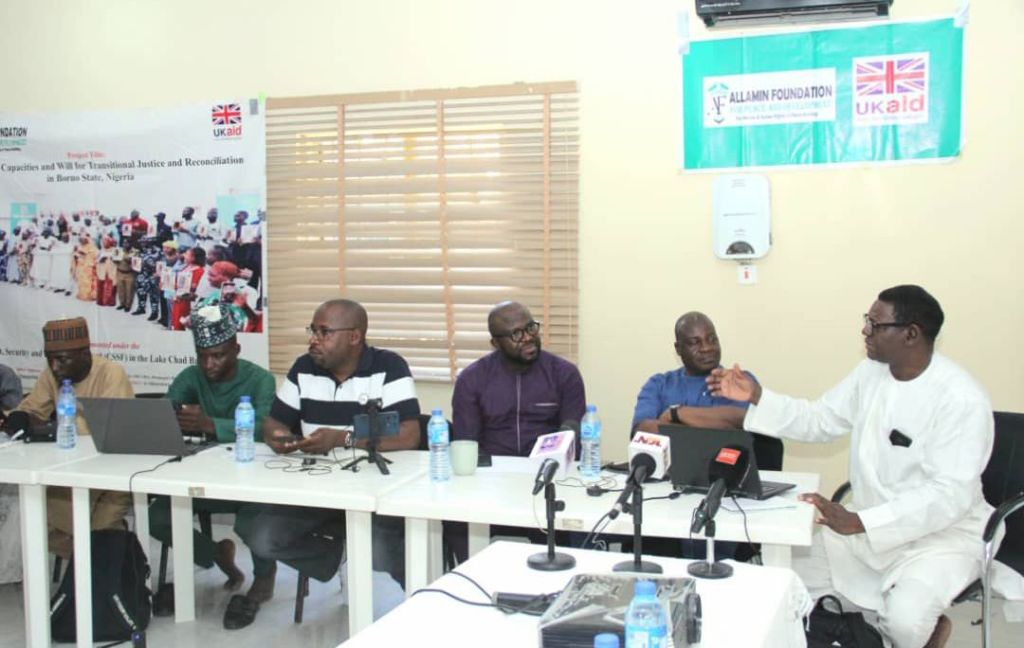
Speaking on behalf the trainees, Abdulkareem Haruna, who chairs the Allamin Foundation Media Forum for Transitional Justice, thanked the Foundation and facilitators for the impactful training, even as he empathised that journalists in Borno are poised to drive meaningful change and contribute to a more inclusive and supportive environment for survivors of the insurgency.
“We are now fully empowered by this training especially in understanding that by amplifying survivors’ narratives, promoting resilience, and advocating for justice, we could achieve a lot in our drive for transitional justice in Borno state. We shall not only put knowledge gained to use, but also step down the ideas to other colleagues who were not here.”
 The Humanitarian Times