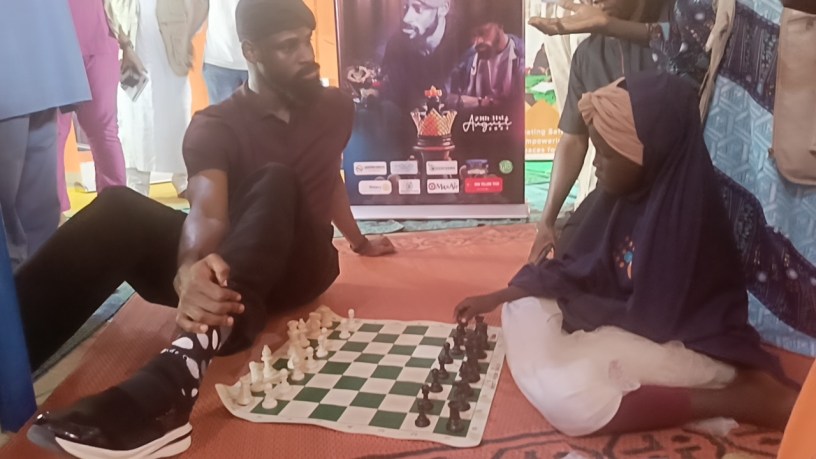
MAIDUGURI, Nigeria (tHT) — Chess grandmaster Tunde Onakoya’s recent visit to Maiduguri, Borno State, highlighted the dangers of a single story—a narrative he found to be incomplete as he encountered a peaceful region brimming with young chess enthusiasts.
Upon arriving at Muhammadu Buhari International Airport, Onakoya was met with a warm welcome that defied the perceptions he had held about the area. His visit, organized by the Maiduguri Chess Club of the Nigeria Air Force, was aimed at promoting chess and exploring the region’s untapped potential.
Onakoya visited IDP camps where he was astonished by the intelligence and enthusiasm of the children, many of whom had only been introduced to chess recently. At the Muna IDP camp, an all-girls group demonstrated remarkable skill, which left the grandmaster impressed. He shared his own story, likening their potential to that of a pawn—an underestimated piece that can transform into a queen.

In another camp, Onakoya navigated narrow streets to engage with young chess players in a small compound. He encouraged parents to support their children’s chess pursuits, emphasizing the game’s role in nurturing creativity and strategic thinking. Drawing parallels to his own journey from a humble background in Ikorodu, Lagos, he illustrated how chess can open doors to global opportunities.
Earlier, Onakoya met with the Commander of the 105 Composite Group, Nigeria Air Force. The commander, also the patron of the NAF Chess Club, was commended for his efforts in promoting peace and empowerment through chess. Onakoya praised the commander’s dedication to helping youth, especially those in IDP camps.
Reflecting on his experiences, Onakoya spoke about the dangers of relying on a single story. “This is my first time in Maiduguri and the North,” he explained. “Many were wary of my visit, but the reception I’ve received challenges the single story I knew.”
He emphasized that chess is a universal language that bridges cultural and socioeconomic divides. “Chess fosters a new generation of thinkers,” Onakoya remarked. “It empowers people to think critically and creatively, offering growth and engagement.”
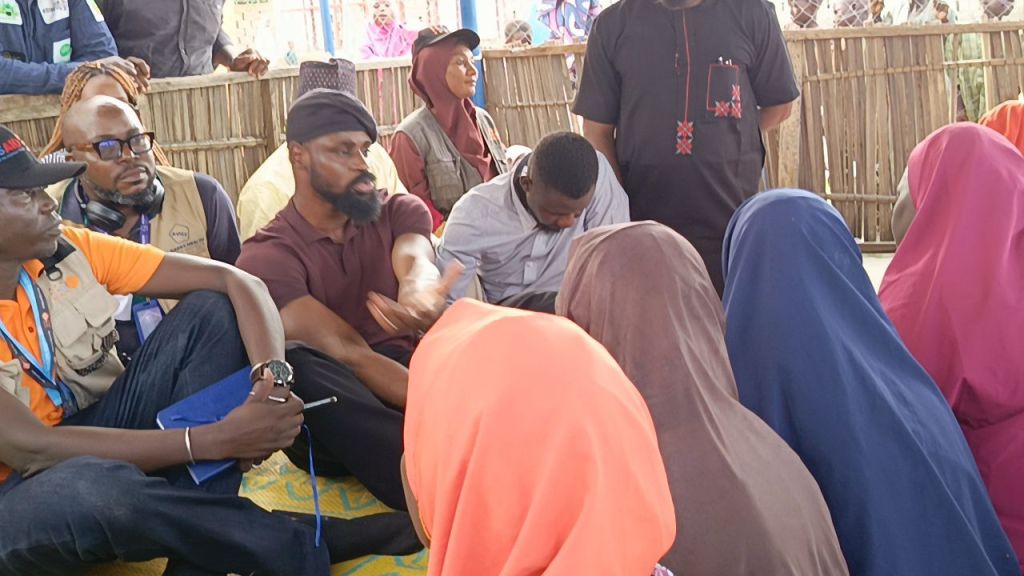
The commander highlighted the chess club’s mission to inspire out-of-school children. He stressed that meaningful engagement is crucial to addressing issues of insecurity and underdevelopment.
The partnership between the Chess in Slums initiative and local organizations aims to introduce chess to marginalized children, providing a platform for growth and community empowerment.
Onakoya’s visit not only revitalized the local chess community but also instilled hope and potential in the children he met. His journey underscored the transformative power of chess as a tool for personal and social change.
The grandmaster’s message was clear: by challenging the dangers of a single story and embracing diverse narratives, communities can foster understanding, unity, and progress. Chess, with its universal appeal, serves as a powerful bridge to empower the next generation of thinkers and leaders.
High point of Onakoya’s engagements in the two Maiduguri IDP camps he visited was the play of chess with young girls and boys whose first encounter with the game of chase was only seven days ago.
At Muna the Grandmaster demonstrated his inner humility when he sat down on a spread mat surrounded by enthusiastic young girls some as old as ten years and began to play with them. The demonstrated greater proficiency in arrangements of the chess pieces so much that even the grand master was forced to ask: “did you say they started learning five days ago?”
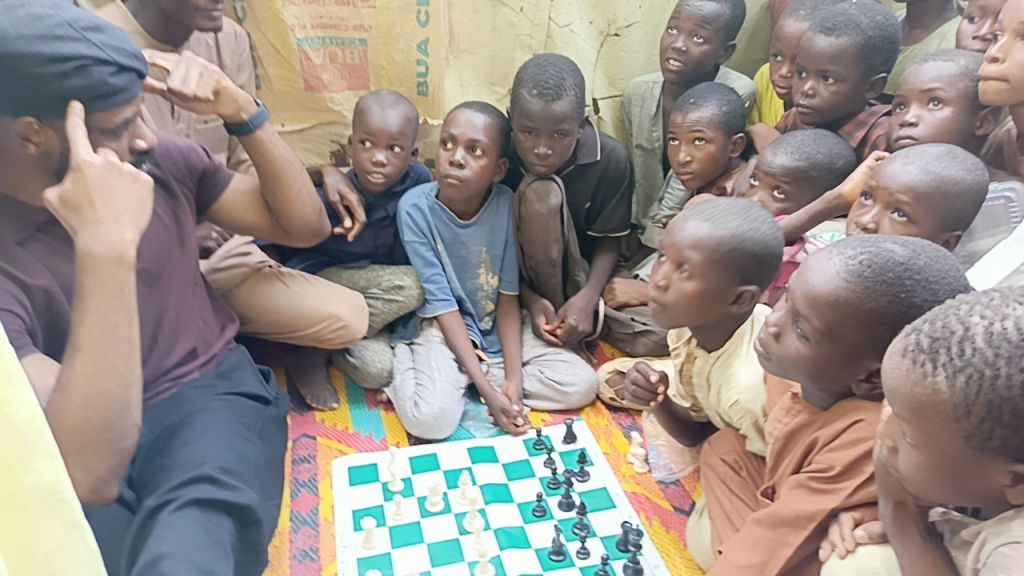
The Grandmaster instilling his magical words on the IDP kids who listen with rapt attention.
Similar amazing display of their grasp of the game was made at another IDP Camp (Shuwari Camp) where the boys and girls demonstrated their new earned mastery of the game of chess.
Wamde Gadzama, a volunteer coach for the IDP kids, noted that they had barely a week of training. “Without any formal education, these children were amazing in how quickly they understood the game,” she said.
“We randomly selected anyone interested in learning, and many turned out, loved the game, and were eager to learn. Their passion shows the world that, given the right opportunities, these children have the potential to become future leaders. They just need support for education. The girls performed exceptionally well, some even better than the boys, demonstrating that gender has nothing to do with potential. Everyone should have an equal opportunity to explore their talents.”
 The Humanitarian Times