By Abdul Kareem
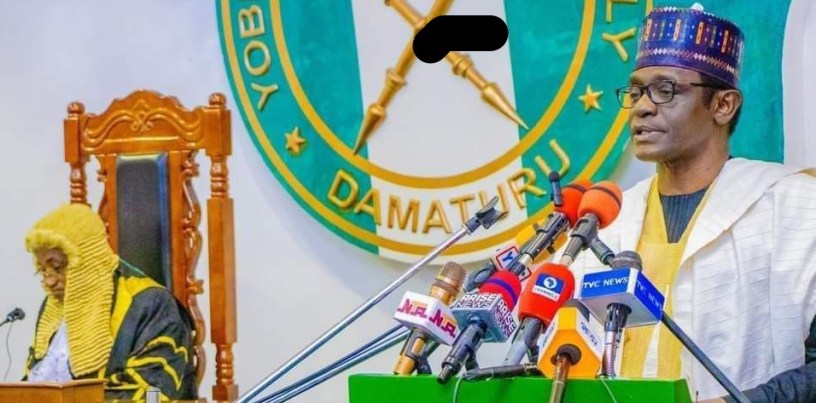
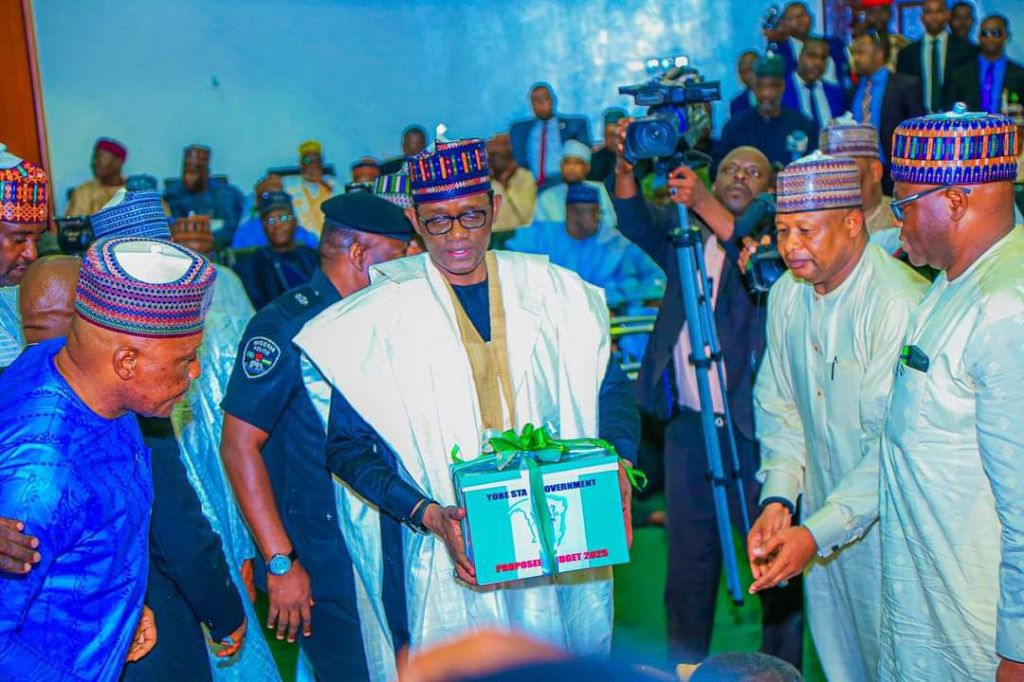
In a strategic move to fortify its development agenda, the Yobe State government has proposed spending ₦320.8 billion in the coming year in a state fiscal policy.
The proposed 2025 fiscal policy allocates ₦144.036 billion, or 44.9%, to recurrent expenditure, while ₦176.77 billion, or 55.1%, is designated for capital expenditure.
Aptly named the Budget of Economic Consolidation and Poverty Reduction, the state government aims to balance economic growth and social welfare through targeted investments across key sectors.
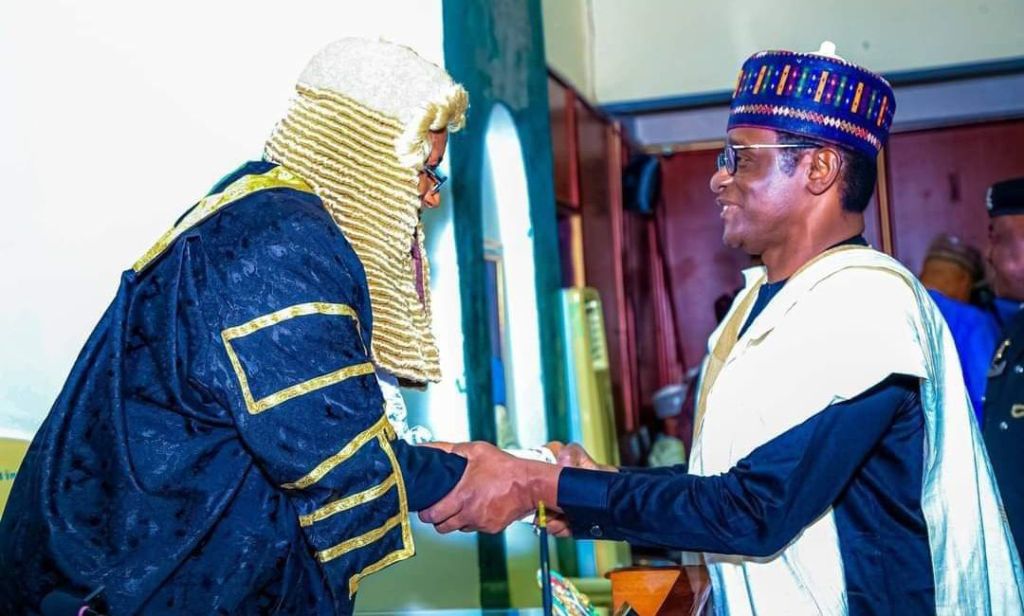
Governor Buni said the budget earmarks N156.9 billion for the economic sector, underscoring its pivotal role in driving growth. Investments will span the Ministry of Agriculture, Ministry of Works, and other crucial departments. Governor emphasized the commitment to infrastructure with 17 ongoing and 11 new road projects, and the initiation of the Damaturu flyover. “The completion of township roads and drainages in five Local Government Areas is very dear to the government,” he remarked, highlighting the transformative potential of these projects.
Additionally, the state will enhance water supply through solar-powered boreholes and advance the Damaturu Green Economic City project, signaling a robust approach to sustainable urban development.
Allocating N108.5 billion to the social sector, the state focuses on education and healthcare. Significant funds are designated for school rehabilitation, scholarships, and the enhancement of the school feeding program. The healthcare agenda includes new maternity and pediatric facilities, bolstering the state’s commitment to achieving the Sustainable Development Goals.
“We intend to consolidate our gains towards reducing morbidity and mortality rates,” the governor stated, reflecting the administration’s health priorities.
The administration sector, along with efforts to combat environmental challenges, receives substantial support. The Ministry of Environment plans to plant over 3.3 million seedlings to combat desertification, reflecting a proactive environmental policy.
2024 Budget Achievements Amid Economic Challenges
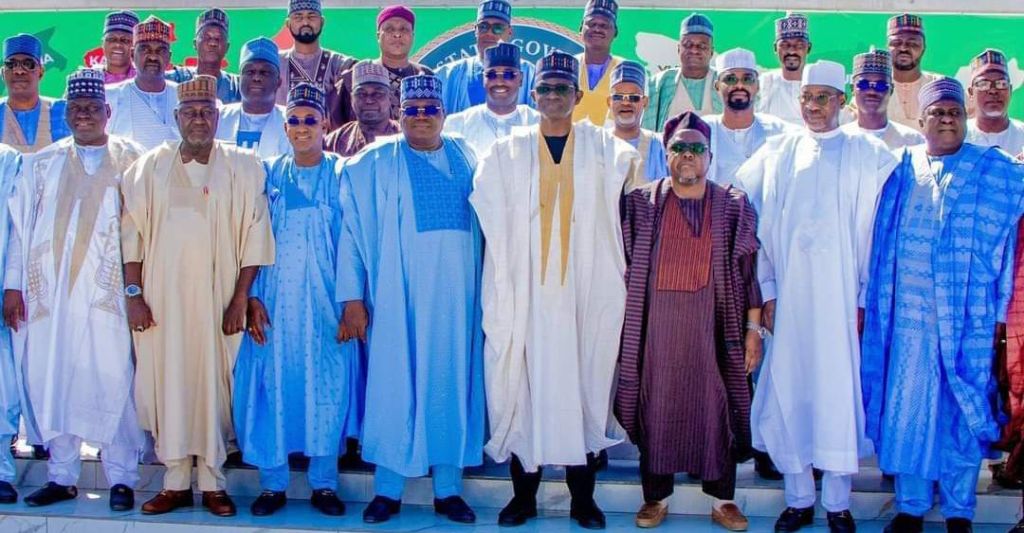
Earlier Governor Mai Mala Buni took the state legislators and guests that filled the hallowed chambers of Assembly complex on a detailed account of Yobe State’s fiscal performance for 2024, highlighting significant achievements despite economic hurdles such as unfavorable exchange rates and persistent inflation.
He recalled that the state approved a budget of ₦216.95 billion for the year 2024, covering both capital and recurrent expenditures. Actual revenues collected for this year, including allocations from the Federation Account and internally generated sources, totaled ₦206.99 billion, representing 95.4% of the projected budget.
Recurrent expenditure for 2024 was initially set at ₦107.41 billion, with actual spending reaching ₦85.69 billion, or 79.8%. Capital expenditure had a budget of ₦109.54 billion, with ₦79.26 billion spent, achieving a 72.4% execution rate. Overall, the governor said, the budget performance stood at 76% as of the end of September 2024.
Key Achievements for 2024
Infrastructure Development:
Governnor Buni said the sum of ₦17.49 billion was spent on road construction, including the Nguru-Bulanguwa route and the dualization of the Damaturu-Kalallawa road. Future projects include completing the Trans-Sahara road and connecting all political wards with access roads.
Urban Development
The state invested ₦9.24 billion in projects such as the Damaturu Mega Shopping Mall and modern markets in several towns.
Agricultural Empowerment
₦15.71 billion supported agricultural initiatives, including equipment procurement and the State Agricultural Empowerment Programme, benefiting over 5,000 people.
Water Supply Enhancement
The sum of ₦4.61 billion was allocated for converting boreholes to solar hybrids to improve water supply.
Social Empowerment
A total of ₦1.97 billion funded empowerment packages for underprivileged groups and small-scale entrepreneurs.
Education and Health
Investments included ₦19.02 billion for educational infrastructure and ₦7.94 billion for healthcare improvements, such as hospital upgrades and medical supplies.
Rural Electrification
The state spent ₦11.66 billion on electrification projects, enhancing power supply and installing solar street lights.
The governor stressed that despite economic constraints, these projects underscore his administration’s commitment to development and improved living standards.
 The Humanitarian Times