By Abdul Kareem
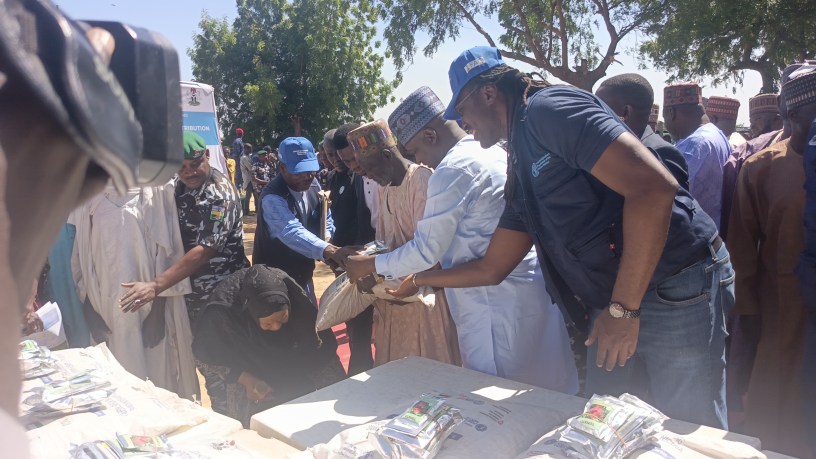
KHADDAMARI, Borno (tHT) — To help farmers recover from the severe flooding that devastated most parts of Northeast Nigeria in September, the Food and Agriculture Organization (FAO) has on Saturday Nov. 16 launched its 2024/2025 edition of the Dry Season Input Distribution program.
The effort aims to support 49,000 farmers as they seek to rebuild their livelihoods amidst ongoing food insecurity exacerbated by worsening impacts of climate change the Boko Haram conflict.
During the launch event held in Khaddamari, Borno State, Governor Prof. Babagana Umara Zulum, who was represented by his deputy, Usman Umar Kadafur, emphasized the importance of agriculture in the local economy.
“Agriculture is the backbone of our State’s economy,” he said. “The support we are providing today will equip our farmers to maximize productivity during this critical season.”
FAO Representative ad interim, Mr. Dominique Koffy Kouacou, stressed the urgent need for intervention, noting alarming projections from a recent food security analysis.
“Between June and August 2025, approximately 33.1 million people across Nigeria could face food insecurity,” he said. “In Borno, the number of affected individuals is expected to rise to 5 million, underscoring the urgency of this program.”
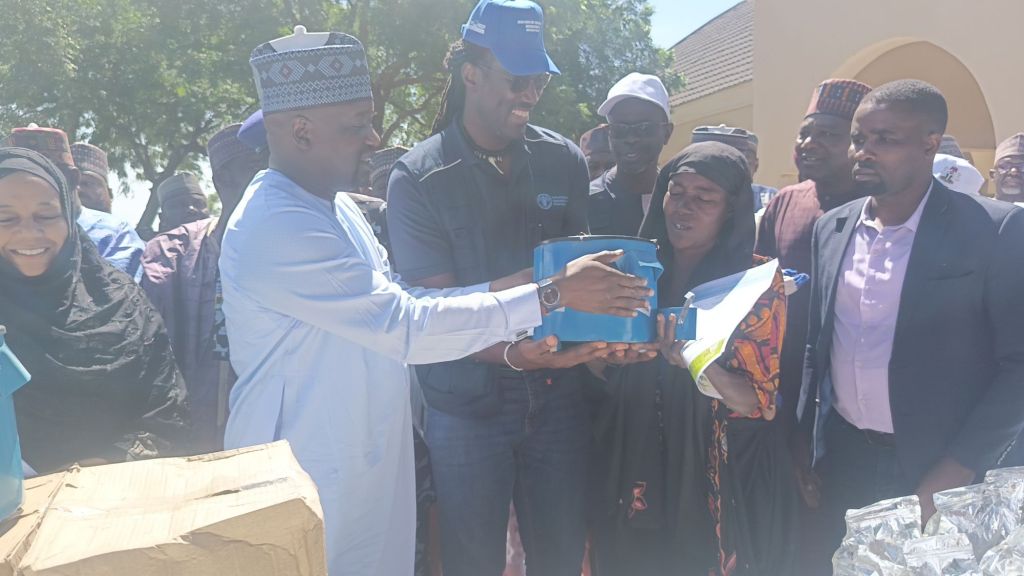
The Dry Season Input Distribution program will enable peasant farmers to have access to high-quality seeds, fertilizers, and solar-powered water pumps to communities severely impacted by the floods.
“Our goal is not only to address immediate food insecurity but also to pave the way for sustainable income generation and resilience-building among returnees and host communities,” Kouacou said.
One of the beneficiaries, Ummita Muhammad, a female farmer from Jere local government, thanked the organisers for the support.
“This assistance is a lifeline for us. The floods destroyed much of our land, but with these inputs, we have hope to rebuild and sustain our families,” she said.
The program is part of a broader strategy involving international donors such as the Government of Norway, USAID, and the European Union. It aims to enhance food security and economic self-sufficiency for internally displaced persons and host communities in the region.
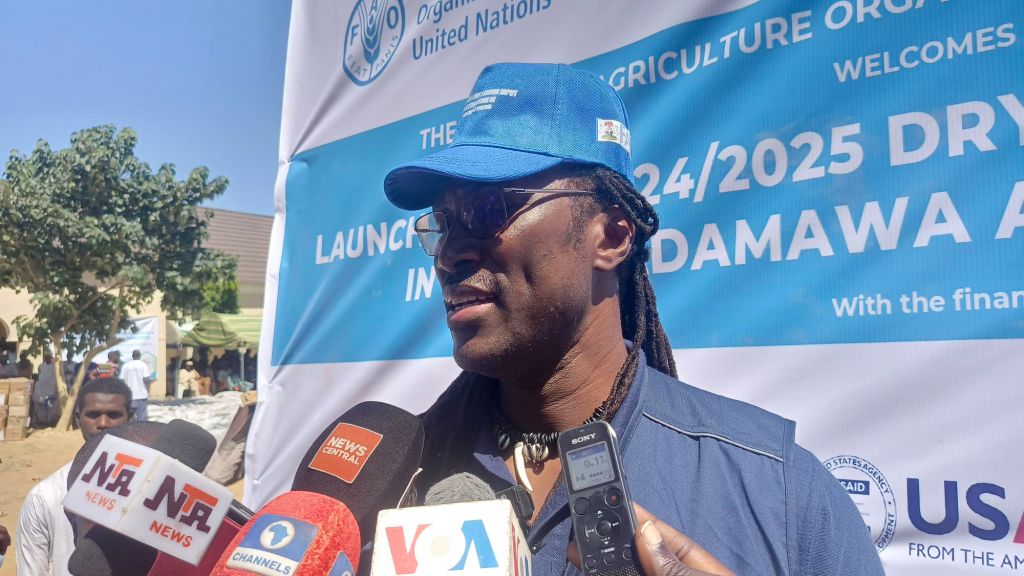
Kouacou reaffirmed FAO’s commitment to achieving Zero Hunger, in line with Sustainable Development Goal 2.
“Together, we are making significant strides towards ensuring sustainable livelihoods and fostering long-term recovery in Northeast Nigeria,” he said.
Both Kouacou and Governor Zulum reiterated their commitment to building a resilient agricultural sector in Borno.
“With collaborative efforts, we can build a stronger, more prosperous future for all,” Zulum affirmed, highlighting the enduring partnership between FAO, the Borno State Government, and local communities.
According to the latest Cadre Harmonise report on Acute Food and Nutrition Insecurity Analysis in Nigeria, the country will in the coming months face a critical humanitarian crisis. With an alarming projection that approximately 33.1 million people—including over 514,000 internally displaced persons (IDPs) in Borno, Sokoto, and Zamfara States, will experience food insecurity at crisis or worse levels between June and August 2025.

This dire situation spans 26 states and the Federal Capital Territory (FCT), highlighting the widespread vulnerability of households during the lean season.
As the lean season approaches, families are bracing for increased food consumption deficits. Many households are expected to transition from Stress (Phase 2) to Critical Food Consumption (FC) conditions, primarily due to disrupted livelihoods.
Economic challenges, including a significant drop in purchasing power, are exacerbating the struggle to secure sufficient food. The recent removal of fuel subsidies and the volatile Naira-Dollar exchange rate—witnessing a fluctuation of 16.25% between August and September 2024—have further destabilized the economy. Coupled with an inflation rate that surged to 32.7% from 26.7% in the previous year, the cost of essential farm inputs has risen by an average of 35%, driven largely by soaring energy prices.
Nutrition is another pressing concern, with the situation across various states ranging from Alert (Phase 2) to Serious (Phase 3) and even reaching Emergency (Phase 4) levels in many local government areas (LGAs), particularly in the Northwest and Northeast regions. In Borno State, acute malnutrition rates are particularly alarming, with Global Acute Malnutrition (GAM) levels varying between 5.8% to 18.1%. Maiduguri stands out with the highest prevalence at 18.1%, followed by Jere at 14.9%, while several LGAs in Borno Central are at a Crisis threshold prevalence rate of 11.3%. Critical levels above 10% are also noted in Northern and Central Katsina.
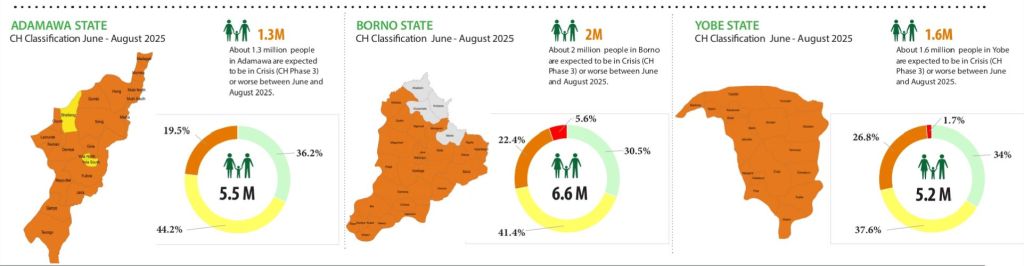
The mortality landscape in Adamawa, Borno, and Yobe (BAY) states reveals significant disparities. While the Crude Death Rate (CDR) and Under-Five Mortality Rate (U5MR) in Adamawa and the Southern LGAs of Borno have remained stable within minimal thresholds, the overall outlook remains concerning given the widespread food and nutrition insecurity.
 The Humanitarian Times