By Zainab Yetunde Adam
CAREGIVERS in Borno, State in northeast Nigeria, are jeopardizing the health of acutely malnourished infants by diverting and selling free food supplements intended for their recovery. This investigation sheds light on this troubling practice.
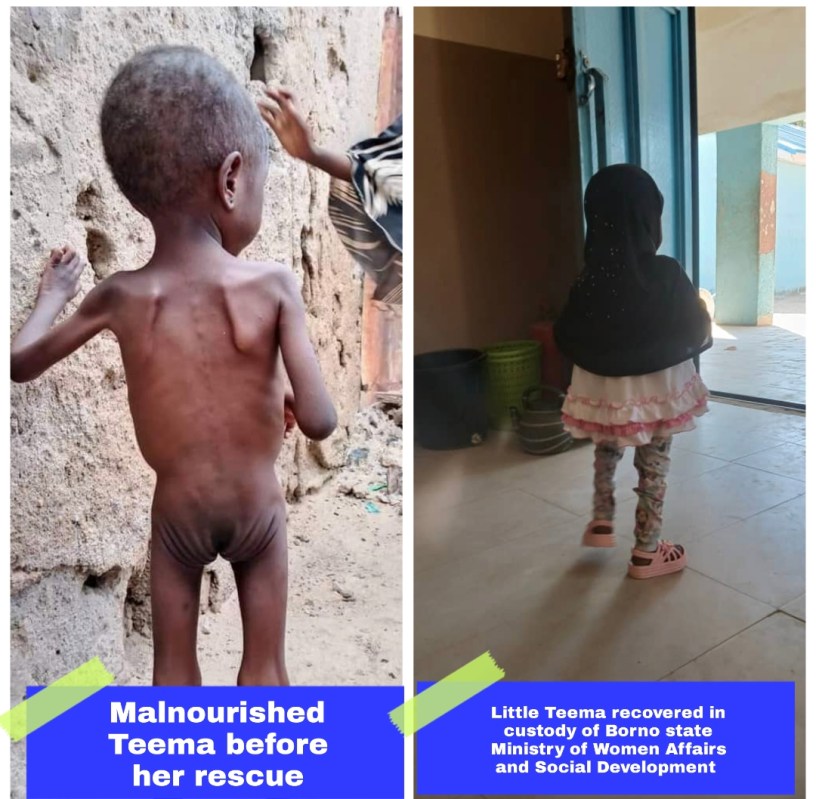
Teema Abubakar, a three-year-old girl, has been exploited by numerous caregivers seeking access to Ready to Use Therapeutic Food (RUTF) to sell for personal gain. Despite RUTF being a well-known free supplement for malnourished children, Teema’s situation worsened until she was rescued by the Borno State Ministry of Women Affairs and Social Development on October 16, 2024, following the widespread circulation of her images on social media.
Teema is just one among thousands of children suffering from “inflicted” malnutrition in Northeast Nigeria at the hands of unscrupulous caregivers who hire malnourished children under the guise of poverty. These caregivers lack certification from any authority, and many are young women who exploit children under five years old to access RUTF at health facilities for sale.
Investigations reveal that women are often found near health facilities, seated in shaded areas, conducting illicit RUTF transactions. Three-year-old Zainab Ibrahim, who lost her mother at birth, is another victim, used by women in Shettimari, Maiduguri, to collect RUTF. Despite receiving the supplement, no improvement in Zainab’s health is evident. Her caregiver, Fatima Ibrahim, believes she is adequately caring for her, and no one confronts her about the child’s wellbeing.
Numerous malnourished babies are visible within and around the New GRA Primary Health Care Centre in Maiduguri. Many of these infants, carried by parents, appear emaciated as they await distribution of the ‘not for sale’ supplements.
Malnutrition is alarmingly prevalent among children under five in Northern Nigeria. The British Broadcasting Corporation (BBC) recently reported that 4.4 million children under five are acutely malnourished, a figure that has doubled from the previous year’s 2 million. This exponential rise is driven by escalating food inflation, increasing poverty, and a deteriorating security situation in the region.
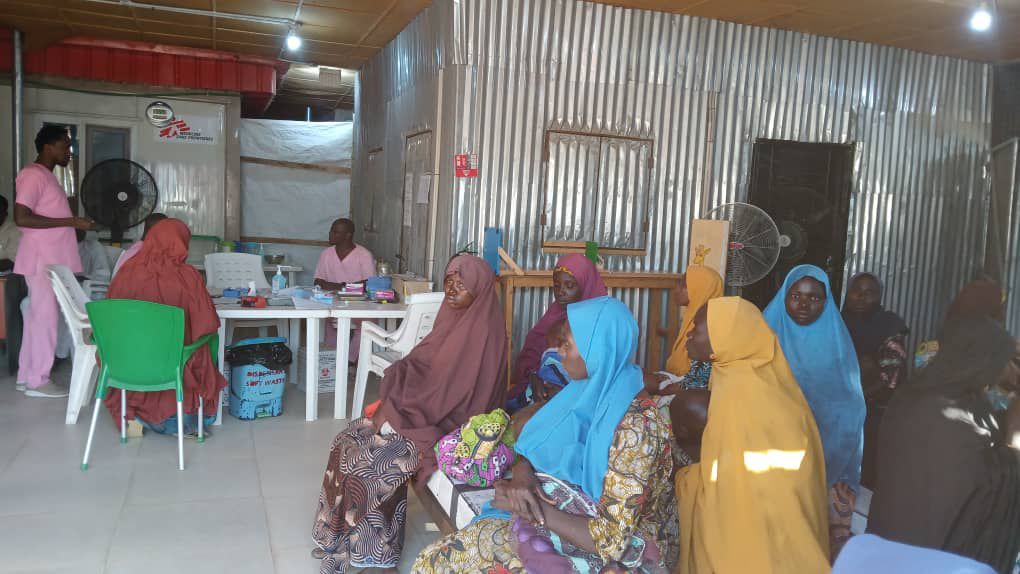
Photo credit: Zainab Yetunde Adam
As of August 2024, the Federal Ministry of Budget and Economic Planning revealed that over 31.8 million Nigerians are grappling with acute food insecurity, compounded by malnutrition among women and children. Despite these dire circumstances, the diversion of food and RUTF worsens, straining already limited resources and medical services.
From January to September 2024, Medecine Sans Frontieres (MSF) reportedly treated 18,555 malnourished children in Maiduguri, a 12.5% increase from the same period last year, with facilities attending to up to 100 malnourished children daily at peak times.
Understanding RUTF
Commonly known as Tamuwa in Maiduguri, RUTF is a free food supplement accessible only in hospitals and through NGOs. Organizations such as the World Food Programme (WFP), USAID, UNICEF, World Health Organisation (WHO), and MSF supply it to treat Severe Acute Malnutrition (SAM) and Moderate Acute Malnutrition (MAM).
RUTF, made from powdered milk, peanuts, butter, vegetable oil, sugar, and a mix of vitamins and minerals, provides 500 calories and essential micronutrients, allowing malnourished children to gain weight rapidly. It can be consumed directly from the packet.
Despite the government’s efforts and support from International Non-Governmental Organizations (INGOs), the distribution of RUTF is plagued by challenges, including illegal sales and the “renting” of malnourished babies to acquire the supplement.
**Impact of Boko Haram and Socioeconomic Issues**
The Boko Haram insurgency has devastated the livelihoods of people in Borno, Adamawa, and Yobe States. Residents in these predominantly agrarian regions struggle to farm and provide for their families. Climate change has further exacerbated the situation, with parts of Borno experiencing low rainfall and flooding that submerged 80% of the state in September 2023.
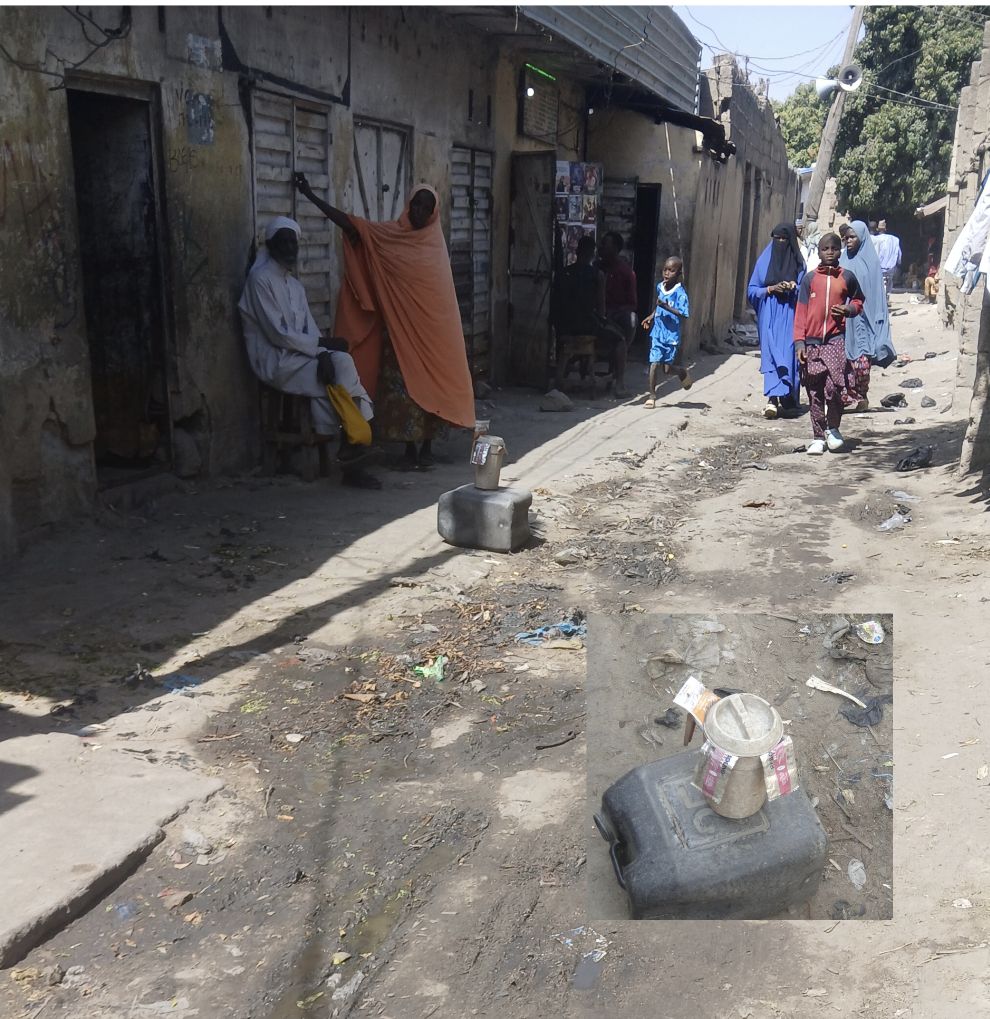
Photo credit: Zainab Yetunde Adam
The aftermath of the conflict has resulted in ongoing food shortages. The International Committee of the Red Cross (ICRC) reports that remnants of war, including mines and explosives, continue to threaten civilians’ safety and hinder agricultural activities.
Despite new agricultural initiatives and livelihood opportunities, those exploiting humanitarian aid to profit from children’s suffering are often not Internally Displaced Persons (IDPs) but regular civilians. Once a child is assessed as malnourished at any Primary Health Care (PHC) facility, they are enrolled for free treatment until recovery. Treatment typically includes administering 13 to 14 sachets of RUTF during a single hospital visit. Some caregivers sell the majority of the RUTF while retaining a couple of sachets to present as proof of consumption during follow-up visits.
To manipulate their child’s health status for further RUTF supplies, some caregivers resort to giving their children adulterated mixtures to induce gastrointestinal issues, making them appear more severely malnourished upon return to the hospital.
A dealer who spent eleven years in the RUTF “business,” wishing to remain anonymous, described it as lucrative but ultimately futile. “I earned up to N100,000 in five days. However, I quit when Tamuwa became 13-14 sachets, contrary to the previous 18, 20, and 28 sachets,” she stated.
Another resident, Aisha Abubakar, emphasized that RUTF is intended to help malnourished children recover if taken as prescribed. “The NGOs that supply it did not intend for healthy people and adults to sell and consume it,” she asserted.
Reports indicate that some women can access multiple facilities with a child, disguising the child’s gender to collect RUTF daily. Unfortunately, only a few facilities check the child’s weight or gender before administering treatment.
**Exploitation of the System**
Zara Ibrahim, introduced to this illicit practice by neighbors, initially hesitated but began participating in October 2024. “I fled banditry from Sokoto and had to survive poverty through this business,” she explained. Zara noted that she does not hire out her sick baby but admitted to administering only a few sachets and selling the rest. She received a referral card for RUTF through a nurse at the Maryam Abacha facility.
Health experts warn that drug doses need to be tailored individually based on a child’s weight, age, clinical condition, and body surface area. Young children often cannot communicate their symptoms, complicating the assessment and treatment process.
Beyond illegal sales, RUTF has been misappropriated for other purposes, including being used as an aphrodisiac. A male health worker, speaking anonymously, confirmed that some men consume it for perceived sexual benefits.
*The Hiring of Babies
Investigations revealed that babies are being “hired” at rates ranging from N200 to N1,000 by fraudulent caregivers. During the investigation, a woman offered a child for hire without hesitation.
Countermeasures Against Fraudulent Caregivers
Some hospital staff have implemented measures to combat fraudulent caregivers and prevent the diversion of RUTF. They monitor frequent visitors and enforce scheduled follow-up appointments. Parents who deviate from their scheduled visits are often turned away unless there is an emergency.
Several health facilities have identified known sellers and refuse to enroll them for further treatment to prevent diversion.
Malnutrition as Child Rights Violation
UNICEF states that malnutrition violates children’s right to good health, a sentiment echoed by the Borno State Child Protection Law, which condemns child starvation. Umar Alkali, Dean of the Faculty of Law at North-Eastern University Gombe, cautioned that parents must prioritize their children’s health over monetary gain, emphasizing the need for public awareness and government policies to protect children’s rights.
Meeting Points for Illicit Transactions
The entrances of Primary Health Care Centres are becoming hotbeds for illicit dealings involving fake caregivers and RUTF sellers. Community members have reported specific days for transactions, with prices ranging from N180 to N400 depending on the seller.
*Transporting Diversions Across Borders
The diversion of RUTF is not limited to Borno State. Similar cases have been reported in other northern states, with illegal sellers transporting the supplement to eager customers across Nigeria. In 2017, the Nigeria Security and Civil Defense Corps (NSCDC) arrested two individuals with 4,000 sachets intended for sale to a biscuit factory in Kano. Despite some arrests, the offenders often evade punishment.
On October 14, 2024, the National Agency for the Prohibition of Trafficking in Persons (NAPTIP) Borno command arrested a woman for using a child as bait for RUTF, a case that drew attention from the World Health Organization (WHO) and Borno State Ministry of Women Affairs. Although the child has since recovered, many others remain at risk of malnutrition.
ASP Nahum Kenneth Daso, Public Relations Officer for the Borno command, noted that the NSCDC has not recorded any recent arrests related to RUTF diversion, labeling the act a criminal offense since it is clearly marked “Not for sale.”
Government and NGO Responses
The Borno State Ministry of Women Affairs and Social Development is actively training women in skill acquisition and providing grants to reduce reliance on illicit practices. Asabe Muhammad, a social welfare worker, lamented that many women engage in selling RUTF out of self-interest rather than poverty, often without their husbands’ knowledge.
Mohammed Olatunji Bello, Programme Coordinator of Albarka Health Spring Foundation (AHSF), acknowledged the challenges of diversion but emphasized ongoing education for mothers about the proper use of RUTF. He cited flooding, economic hardship, and inflation as contributing factors to the surge in malnutrition.
MSF’s Nutrition Project Coordinator, Alvaro Sicilia, reiterated the importance of proper follow-up and health promotion to ensure that patients use the supplements as intended. MSF, as an organization, does not criminalize caregivers and patients who are already facing hardship. Instead, they ensure that patients have access to the appropriate medication and the necessary support to care for their children.
In contrast, UNICEF argues that national governments hold the primary responsibility for upholding children’s right to nutrition. Achieving nutritious diets, essential nutrition services, and positive nutrition practices for all children, adolescents, and women requires a collective effort. This involves commitments and investments from various government bodies, society, and both public and private partners.
To obtain a response from the Borno State Government regarding the diversion of RUTF, an interview request letter was submitted to the state Ministry of Health and Human Resources on Monday, November 11, 2024, and was acknowledged by the commissioner’s secretary.
Additionally, the reporter reached out via phone, text message, and WhatsApp to the known contact numbers of the commissioner, Baba Mallam Gana, a professor. The commissioner initially responded, promising to arrange an interview for Saturday, November 23, 2024. However, when the reporter followed up on Friday, November 22, he stated that he was unavailable for the interview.
This investigation is supported by the John D. and Catherine T. MacArthur Foundation and the International Centre for Investigative Reporting.
 The Humanitarian Times