By Abdulkareem Haruna
Maiduguri, Borno State — As the 5th Lake Chad Governors Forum concluded, Friday, Jan. 31, a united voice from Civil Society Organizations (CSOs) emphasized the urgent need for collaborative efforts to address the humanitarian crisis that has gripped the Lake Chad Region for over a decade.
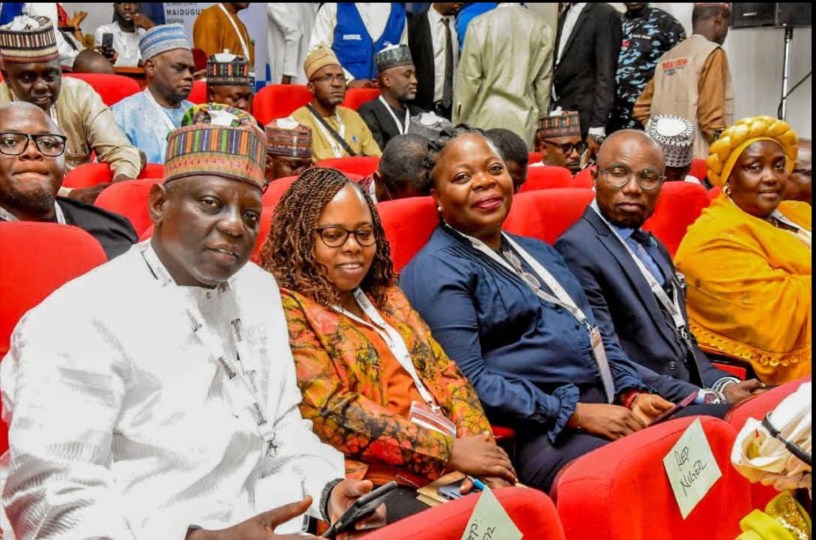
The three-day forum, held in Maiduguri, provided a platform for stakeholders to discuss pressing challenges in the Lake Chad region, and propose actionable solutions.
The CSOs of the Region outlined nine key recommendations aimed at improving the living conditions of over 15 million people affected by the ongoing crises, including the Boko Haram insurgency.
“What is for us without us is not for us!” a communique from the CSOs passionately declared, underscoring the necessity for the inclusion of affected populations in decision-making processes.
The declaration highlighted the importance of inclusion, advocating for the meaningful participation of marginalized groups such as women, youth, and people with disabilities in all humanitarian and development initiatives.
“The affected population must be at the center of our planning and execution,” the representative insisted, calling for stronger mechanisms for accountability and evaluation of interventions.
Coordination among CSOs and government entities was another critical point raised. “Strengthened coordination is essential for the effective implementation of the RS-SRR programs,” the declaration stated, emphasizing the need for decentralized authorities to engage with local counterparts. This collaborative approach aims to foster viable multi-stakeholder consultations across the region.
Furthermore, the CSOs urged for the establishment of robust partnerships with key development stakeholders, advocating for localization strategies that promote sustainability and local ownership of interventions.
“Building strong and sustainable partnerships is crucial for long-lasting impact,” the statement read.
The need for an International Support Group was also emphasized, calling for increased funding opportunities dedicated to CSOs and government institutions. “Donor flexibility is vital to address the high-impact needs of our communities,” the communique stated, as it highlighted the dire financial constraints faced by many organizations.
In addition to these recommendations, the CSOs pressed for inter and cross-border cooperation to boost economic growth and enhance joint security actions in border communities. “Mutual cooperation can lead to sustainable economic development, benefiting all involved,” they argued.
The declaration also addressed the environmental crisis, particularly the alarming shrinkage of Lake Chad. “If the Lake Chad is recharged through sustainable management practices, we can provide livelihoods for more than 10 million people,” a representative shared, emphasizing the urgent need for environmental restoration efforts.
Moreover, the forum recognized the importance of demobilization, disarmament, and reintegration (DDRR) initiatives. “Traditional and religious institutions must play a role in transitional justice, ensuring that the voices of victims are heard, especially in peacebuilding efforts,” the statement urged.
Capacity strengthening and protection of civilian populations rounded out the key recommendations. “Every civilian should be protected from violence and discrimination; they must be able to engage in their daily lives without fear,” the CSO declaration insisted.
The call to action resonated throughout the forum, as participants reiterated the critical role of CSOs in facilitating change. “We are here to play a role; let us not miss this opportunity for accountable action,” they urged, signaling a commitment to support the implementation of the forum’s outcomes.
As the Lake Chad Region continues to grapple with multifaceted challenges, the collaborative efforts between governments, CSOs, and the international community will be vital in paving the way towards recovery and stability.
 The Humanitarian Times