By Abdulkareem Haruna
MAIDUGURI, Nigeria – The Northeast Development Commission (NEDC) has launched a multi-pronged initiative aimed at tackling the region’s mounting waste problem while simultaneously stimulating the local economy.
The program focuses on training individuals in sustainable waste management practices and providing them with the tools and skills to create marketable products from recycled materials.
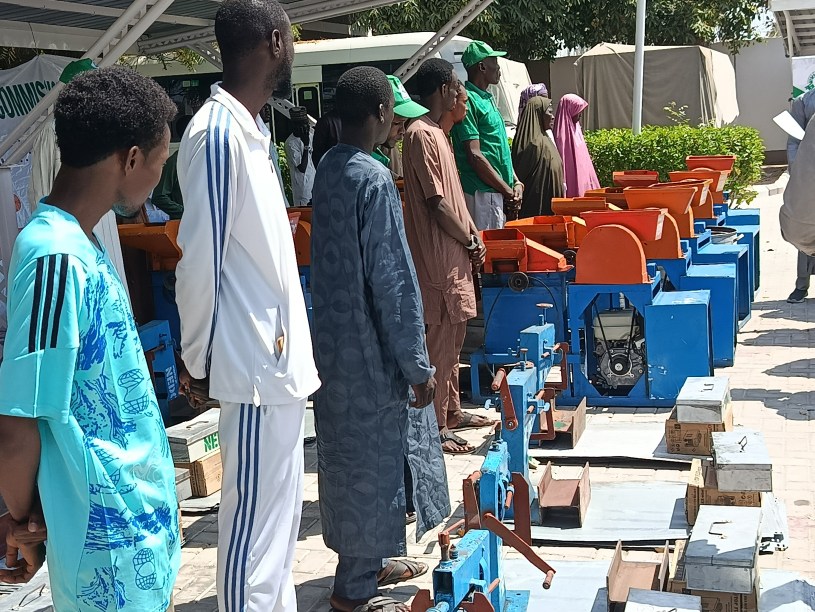
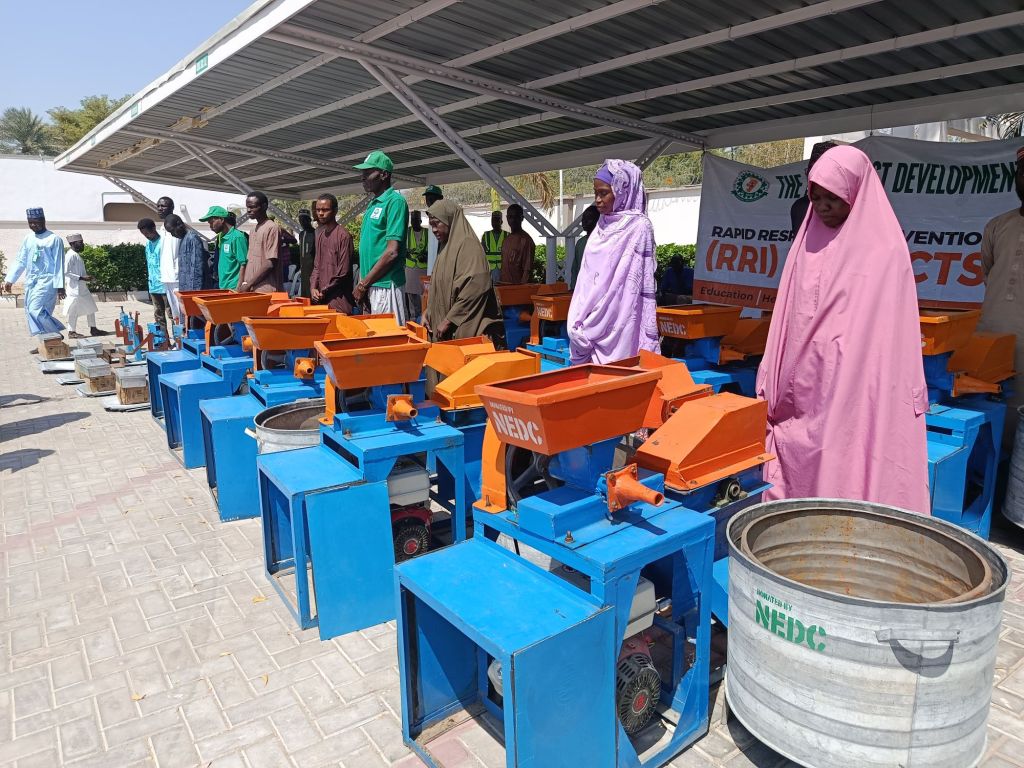
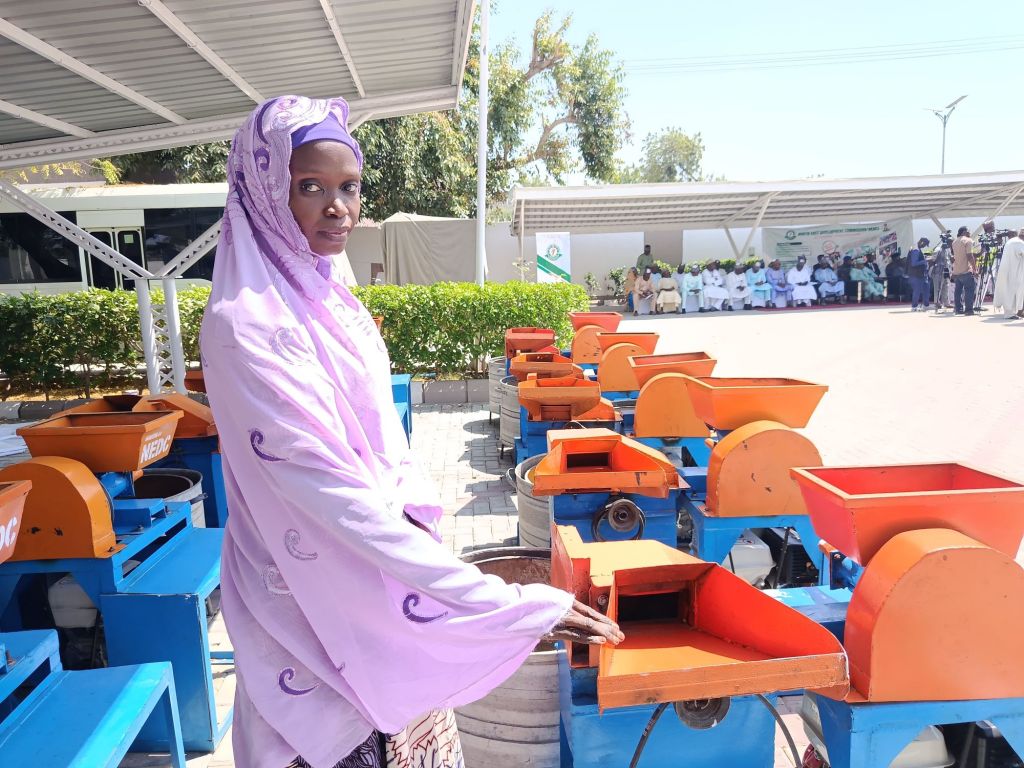
The NEDC recently distributed starter kits comprising briquettes making machine, as well as local stove making tools to 20 newly trained individuals equipped to produce charcoal and aluminum stoves using locally sourced and recycled materials. This initiative is part of a broader NEDC effort to promote local industry and self-sufficiency within the region.
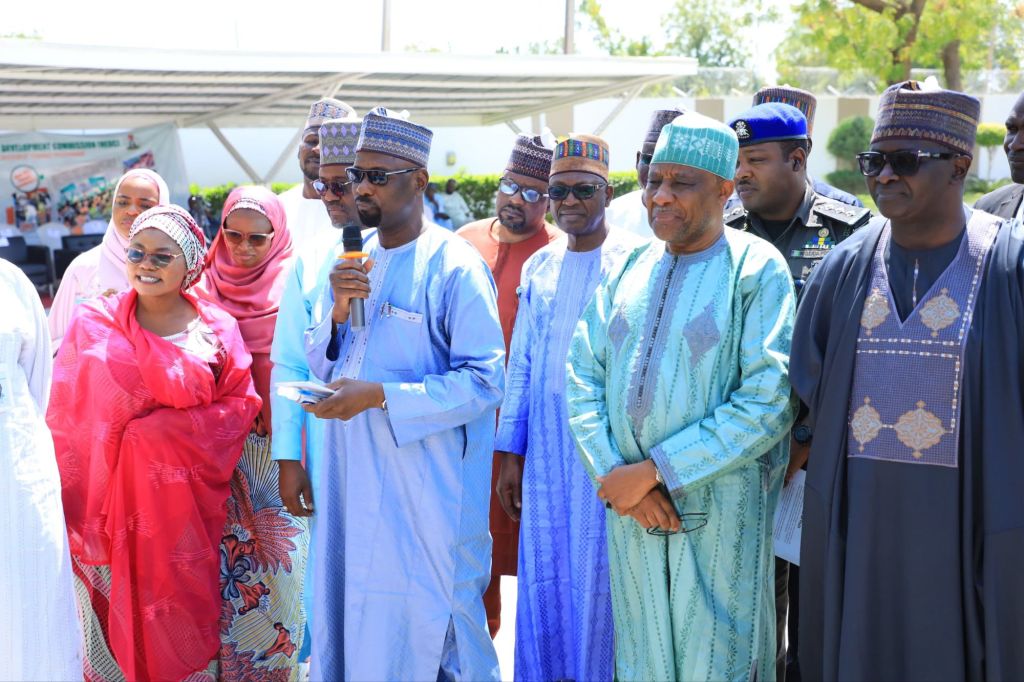
“We are actively engaging local people to contribute to this initiative,” stated Alkali Goni, Managing Director of the NEDC. “Additionally, we have implemented integration efforts to utilize local talent for operating the machinery involved. This local involvement is beneficial for everyone connected to the project.”
The Commission has also implemented extensive training programs. Nearly 300 individuals have received training in waste management, with an additional 60 participants specializing in renewable energy and recycling system installation. Dr. Zainab Chellube, the project coordinator in Borno state, highlighted the urgency of the situation.
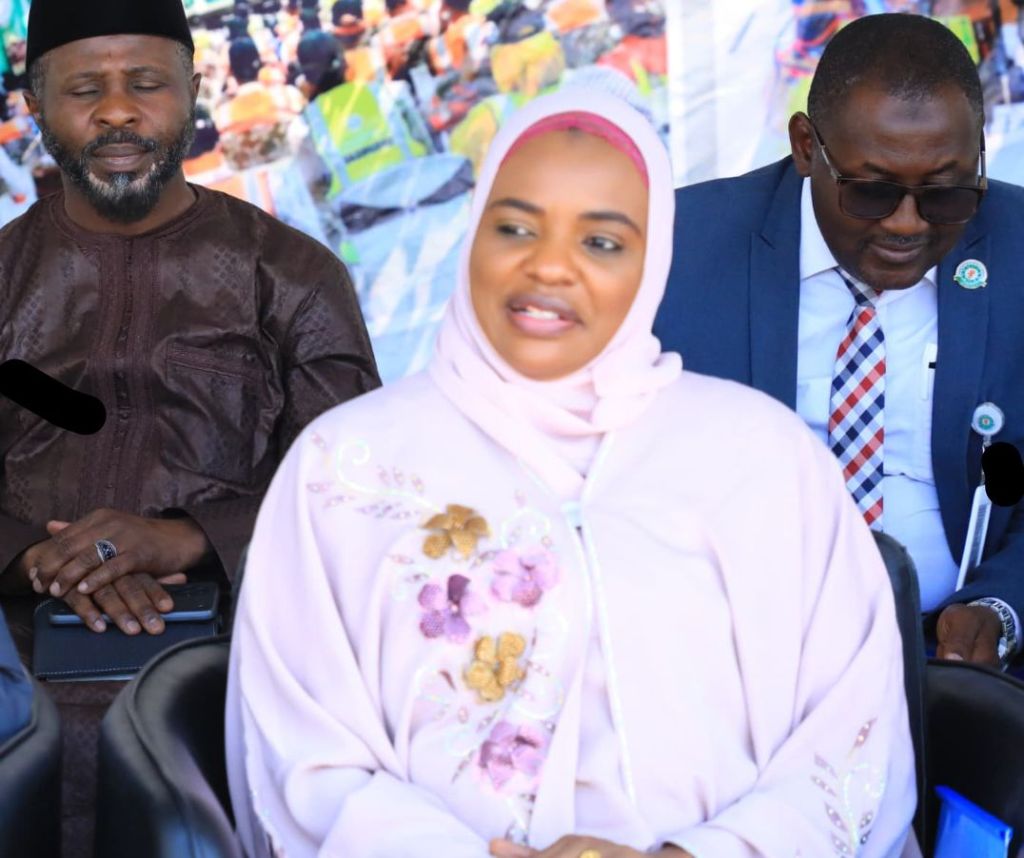
“Research indicates that over 451 tons of plastic waste are brought into our region weekly, with 105 kilograms generated every Monday alone,” Chellube explained. “Much of this waste is disposed of indiscriminately, posing a significant environmental challenge.”
The training programs aim to equip participants with both theoretical knowledge and practical skills. “Our goal is to equip those in the waste management business by linking practical and theoretical approaches, enabling them to operate in a controlled manner while generating sustainable income,” Chellube said. The curriculum emphasizes best practices and safer handling procedures for waste materials.
The NEDC has committed to ongoing support and monitoring of the project. “We are committed to monitoring progress closely,” Goni affirmed. “Our department will oversee the project regularly, and we plan to engage with local stakeholders for at least one year.”
The commission currently has 20 such machines deployed across six states.
Mohammed Adam, one of the training beneficiaries, expressed his gratitude for the opportunity to learn stove fabrication skills.
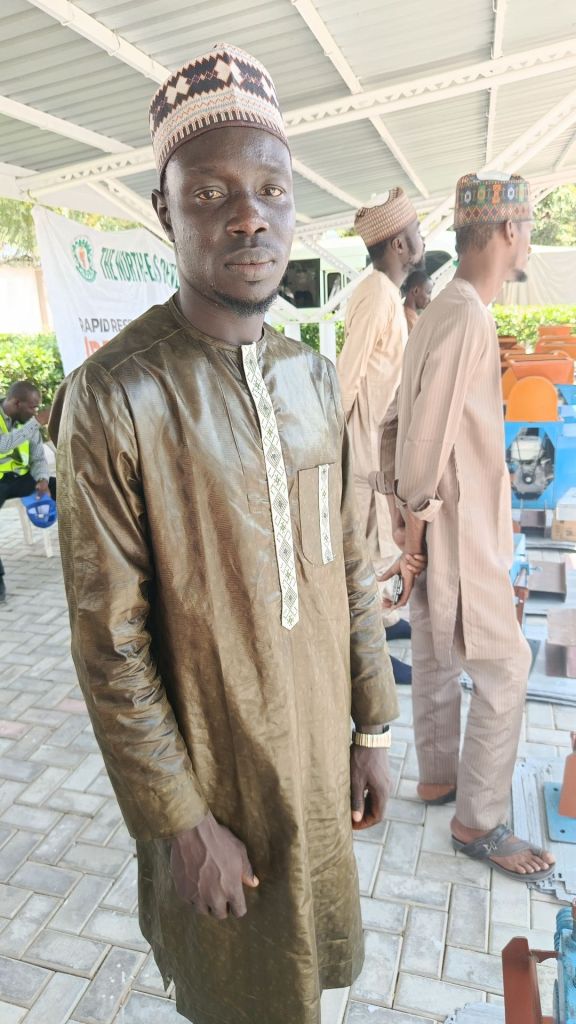
“I used to be a vendor at a small mobile phone shop,” he said. “But now I can own my own business where I can produce products rather than retailing for others. I’m so grateful to NEDC and those who thought of this idea.”
Aisha Wakil, who received training in charcoal production using agricultural waste like rice and maize chaff, said, “It took us about five days to learn this trade skill, and thank God, I now have the knowledge to produce charcoal and even train others.”
Looking ahead, the NEDC envisions establishing a central recycling plant in Borno state.
“We hope to train even more individuals and engage them further,” Chellube stated.
“We envision establishing a central recycling plant in our state, where all participants can collaborate, bringing their waste to be transformed into valuable resources.”This centralized approach aims to maximize the impact of the initiative and create a sustainable, long-term solution to the region’s waste management challenges.”
 The Humanitarian Times