By Abdulkareem Haruna
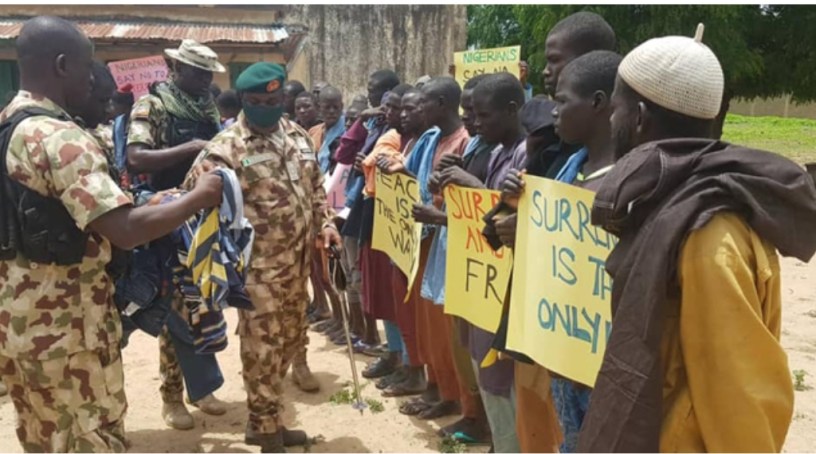
MAIDUGURI, Borno State – Two hundred and thirty individuals who previously engaged in violent insurgency are now prepared for reintegration into Borno State communities, following a graduation ceremony at the Operation Safe Corridor Deradicalization, Rehabilitation, and Reintegration (DRR) Camp in Malam Sidi, Gombe State.
These 230 individuals are part of Batches 6 and 7 of the 2024 repentant clients.
A total of 390 former militants had surrendered to the Nigerian Army and enrolled in the DRR programme. After completing a six-month programme that included deradicalization, rehabilitation, and vocational training, 230 of these individuals, identified as indigenes of Borno State, were presented at the ceremony.
Representing the Borno State Government, the Commissioner of the Ministry of Women Affairs and Social Development, Mrs. Zuwaira Gambo, received the 230 individuals.
According to a statement from the Borno State Ministry of Information and Internal Security, these individuals expressed regret for their past involvement with Boko Haram, citing duress or abduction in many cases, and pledged to pursue peaceful lives.
The graduation event was attended by numerous government and security officials from various states and federal agencies. The Coordinator of Operation Safe Corridor, Brigadier General Y. Ali, acknowledged the collaboration of stakeholders in the programme’s success.
The Commandant of the DRR Camp, Colonel A.A. Johnson, detailed the six-month rehabilitation programme, which included religious reorientation, vocational training, psychological counseling, and civic education.
Mrs. Gambo conveyed the Borno State government’s commitment, under Governor Babagana Umara Zulum, to support the reintegration process. The 230 repentant clients took an oath of allegiance to Nigeria during the ceremony.
This graduation marks the latest effort in the ongoing drive to achieve lasting peace and promote rehabilitation in the Northeast region.
Despite undergoing deradicalization and returning to their home communities after escaping or being rescued by the military, many former terrorists face significant challenges. A recent article by HumAngle, a Nigerian online investigative news outlet, details how such individuals often grapple with poverty, intense discrimination, and profound stigma, which can sadly lead them to prefer their previous lives in the bush.
Unlike those who undergo formal rehabilitation programs, they receive little to no support, leading to feelings of deep isolation and a yearning for the relative stability they experienced in the forest.
Without access to rehabilitation or community support, these returnees often struggle to rebuild their lives. In the article, the deradicalized terrorists express a desire for basic necessities to regain their livelihoods but are met with hostility from community members who remember their past association with Boko Haram, sometimes including involvement in logistics or the dissemination of radical ideology. This rejection and lack of reintegration assistance leave them feeling like outsiders in their own homes.
Haunted by their experiences and overwhelmed by their current struggles, some of these individuals find themselves increasingly isolated and ostracized. They may even begin to view a return to the forest as a preferable alternative to the harsh realities they face in their communities. The absence of adequate rehabilitation and the pervasive community rejection can lead to despair and a loss of hope for a normal life, leaving them on the fringes of society and potentially vulnerable to re-engagement with extremist elements.
 The Humanitarian Times