By Abdulkareem Haruna
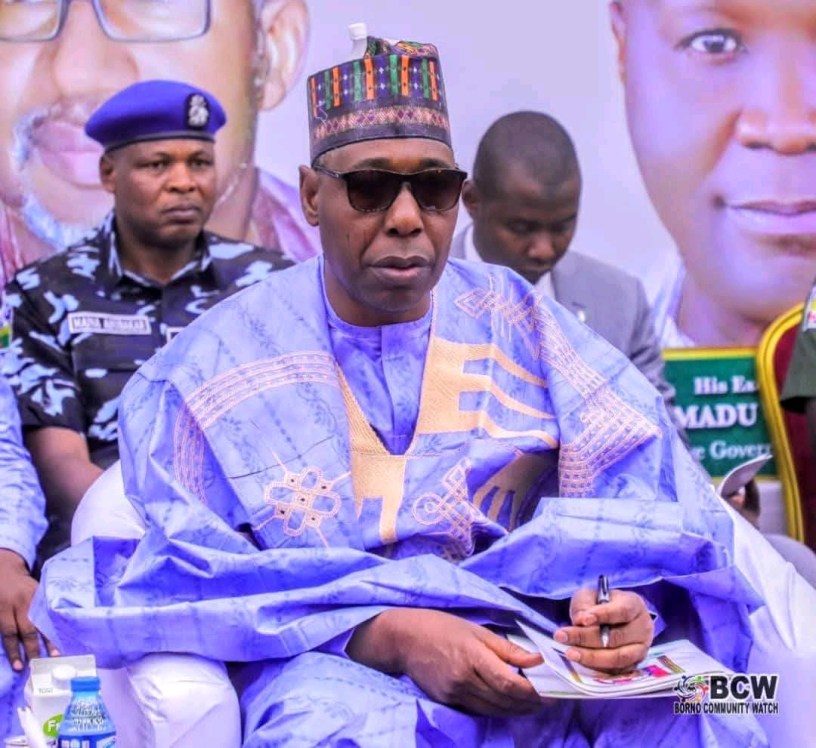
Borno State Governor Babagana Umara Zulum, has on Thursday, demanded a more aggressive military approach to combat a resurgence of Boko Haram-linked insurgency while simultaneously urging immediate and unified action to tackle the “alarming” levels of poverty gripping the region.
Speaking at the 11th meeting of the forum, hosted in Yobe State’s capital, Governor Zulum painted a stark picture of the challenges facing the Northeast. He commended the past collaborative efforts of the governors but emphasized the critical need for escalated action on two fronts: security and economic well-being.
Addressing the persistent threat of insurgency, Governor Zulum acknowledged the sacrifices of the Nigerian Armed Forces but voiced serious concern over the recent increase in attacks. He directly called on the military to “revisit its operational strategy so as to be more offensive,” warning that the insurgents’ renewed activity threatened to undo the progress made in the long-fought conflict
Beyond the immediate security crisis, Governor Zulum placed significant emphasis on the dire economic situation facing the region’s populace. He described the poverty level as “alarming,” framing it as both an economic and a humanitarian emergency. He called for “urgent collective action” from his fellow governors to address food scarcity, transportation difficulties, limited healthcare access, and the devastating impact of the global economic downturn on the purchasing power of ordinary citizens.

To combat poverty, Governor Zulum proposed a dual strategy focusing on both short and medium-term interventions. A key element of this plan is the revitalization of the agricultural sector through increased support for farmers, investments in irrigation infrastructure, and the adoption of climate-resilient agricultural practices.
Recognizing the limitations of agriculture alone, the Borno governor also stressed the importance of creating an enabling environment for small and medium-scale industries. This includes strategic investments in infrastructure, the provision of incentives to attract private sector involvement, and the promotion of entrepreneurship and innovation within the Northeast. He asserted that the forum’s purpose was to move beyond identifying problems and actively “proffer durable solutions.”
Governor Zulum underscored the “sacred responsibility” of the governors to provide basic necessities, create opportunities, and ensure security for their constituents. He emphasized the necessity of mutual support and cooperation among the states, highlighting that the collective progress of the region was dependent on their ability to work together and leverage their respective strengths.
Looking to the future, the forum, under Zulum’s leadership, committed to prioritizing investments in crucial infrastructure, including roads, electricity, and clean water. They also pledged to intensify efforts to alleviate poverty through job creation, skills development programs, and support for small businesses. Diversifying the regional economy and proactively addressing the perennial issue of flooding were also identified as key priorities, with Zulum urging his colleagues to heed early warnings from the Nigeria Hydrological Services Agency (NIMET).
Expressing optimism despite the significant challenges, Governor Zulum voiced his confidence that through unity and a shared vision, the Northeast could achieve stability and prosperity. He called on his fellow governors to reaffirm their commitment to their people.
In closing, Governor Zulum thanked Yobe State Governor Mai Mala Buni for hosting the meeting and introduced Umar Musa Gulani, the newly appointed Director General of the North East Governors’ Forum, expressing confidence in his ability to coordinate the forum’s crucial work. The 11th meeting, under Governor Zulum’s assertive leadership, signals a renewed urgency in tackling the intertwined crises of insecurity and poverty that continue to plague Nigeria’s Northeast.
 The Humanitarian Times