By Abdulkareem Haruna
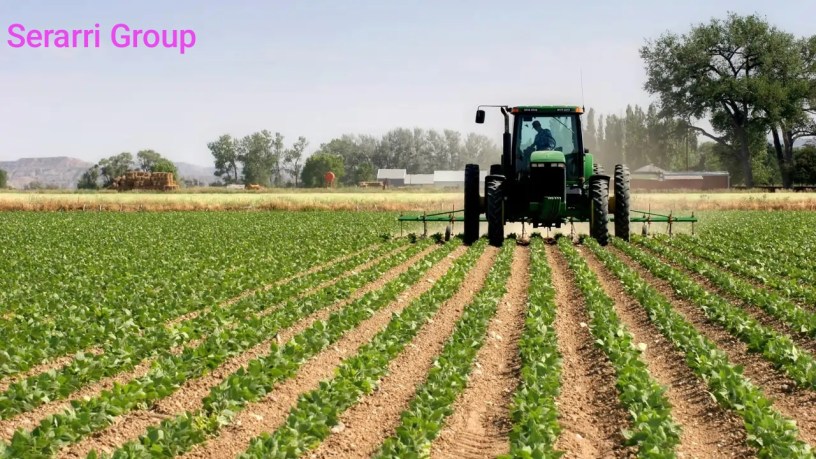
ABUJA – The Nigerian government on Friday inaugurated a steering committee to oversee the Sustainable Power and Irrigation for Nigeria (SPIN) project, a $500 million World Bank-backed effort aimed at strengthening the nation’s food security, water management practices, and resilience to climate change.
The initiative seeks to develop large-scale, multi-purpose infrastructure for both irrigation and hydropower generation.
Speaking at the inaugural meeting in Abuja, Minister of Water Resources and Sanitation Prof. Joseph Utsev, who co-chairs the committee with the Minister of Power, emphasized the project’s alignment with President Bola Tinubu’s “Renewed Hope Agenda.”
Utsev noted that SPIN builds upon the successes of the Transforming Irrigation Management in Nigeria (TRIMING) project, which rehabilitated approximately 32,000 hectares of irrigation schemes and empowered Water Users Associations (WUAs) nationwide.
“Nigeria is committed to improving its food, water, and energy security,” Utsev stated. He outlined the project’s ambitious targets, including irrigating 500,000 hectares of agricultural land, generating 30 Gigawatts of sustainable energy, and enhancing resilience against floods, droughts, and climate change.
The SPIN project comprises four key components: institutional strengthening, irrigation modernization, dam safety and operational improvements, and effective project management. It will be implemented through two models: one focusing on federally managed schemes in collaboration with interested states, and another supporting state-owned irrigation schemes.
According to Utsev, 17 out of 34 interested states have qualified to participate by meeting readiness criteria, which include enacting a WUA law at the state level, allocating budgetary provisions for WUA operations and maintenance, and establishing counterpart funding.
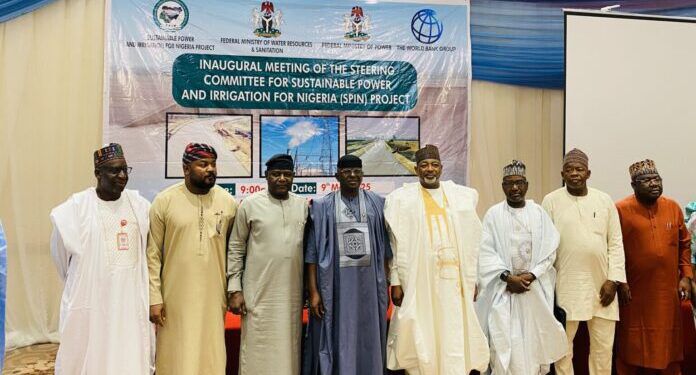
Minister of Agriculture and Food Security Sen. Abubakar Kyari lauded the project as timely, emphasizing the need for measurable outcomes. “What specific results will this project deliver? In the case of agricultural production, what measurable outcomes are we targeting?” he questioned, stressing the importance of result-driven efforts.
Minister of Power Adebayo Adelabu, represented by Permanent Secretary Mahmadu Mamman, underscored hydropower’s crucial role in Nigeria’s energy transition and its synergy with food security. He noted the ministry’s responsibility in preparing project memos to attract private sector investment in hydropower development.
The steering committee, composed of federal ministers and commissioners from participating states, will serve as the project’s apex policy and decision-making body. Adelabu urged the committee members to remain committed to the project’s success and assured them of the ministry’s support in addressing potential challenges.
 The Humanitarian Times