By Abdulkareem Haruna
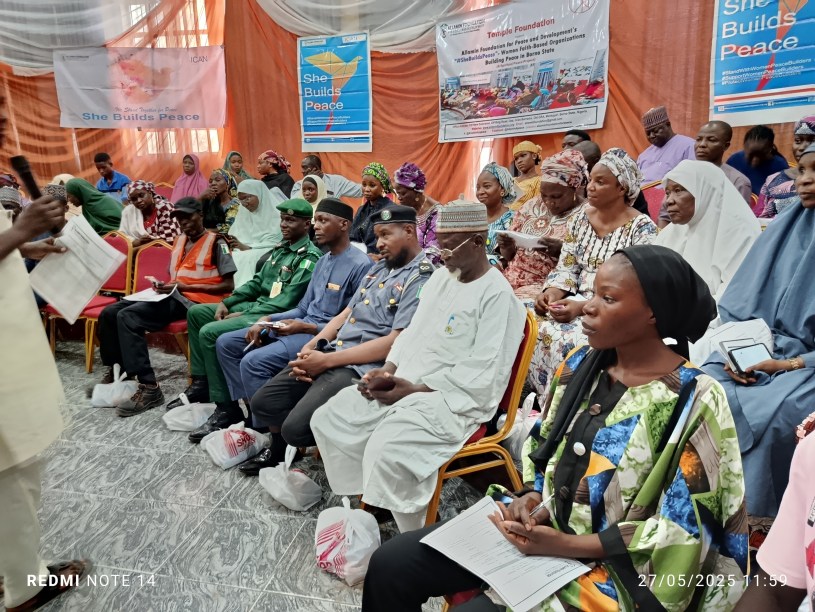
MAIDUGURI, Nigeria – In a bid to foster interfaith harmony and peaceful coexistence, the Allamin Foundation for Peace and Development, a Maiduguri-based non-governmental organization, convened a one-day dialogue focused on Islam and Christianity, drawing religious leaders, scholars, and community members.
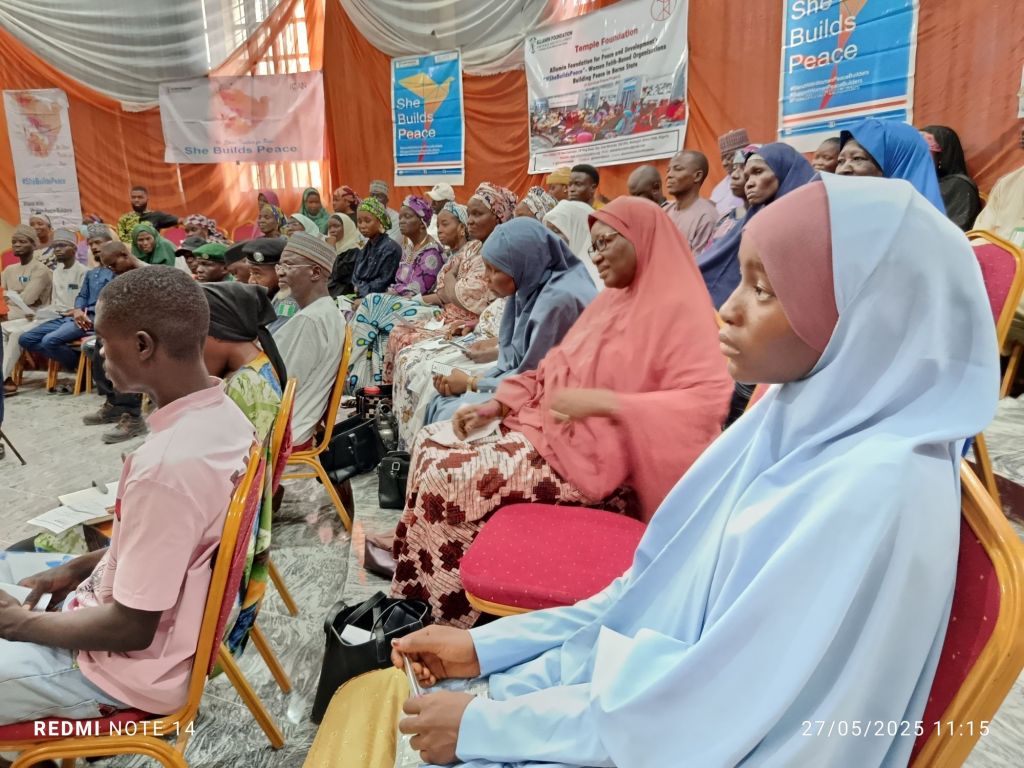
The well-attended event, held at the Women Development Center Maiduguri, underscored the critical need for mutual respect and understanding between the two dominant faiths in the region.
Hajiya Hamsatu Allamin, Executive Director of the Allamin Foundation, highlighted the initiative’s core objective: to promote peace and religious tolerance. She noted the program’s sponsorship by Temple Foundation, supporting the Foundation’s “SheBuildsPeace” project, which empowers Women Faith-Based Organizations in Borno State to contribute to peacebuilding efforts.
Throughout the dialogue, speakers emphasized various facets of religious tolerance and accountability.
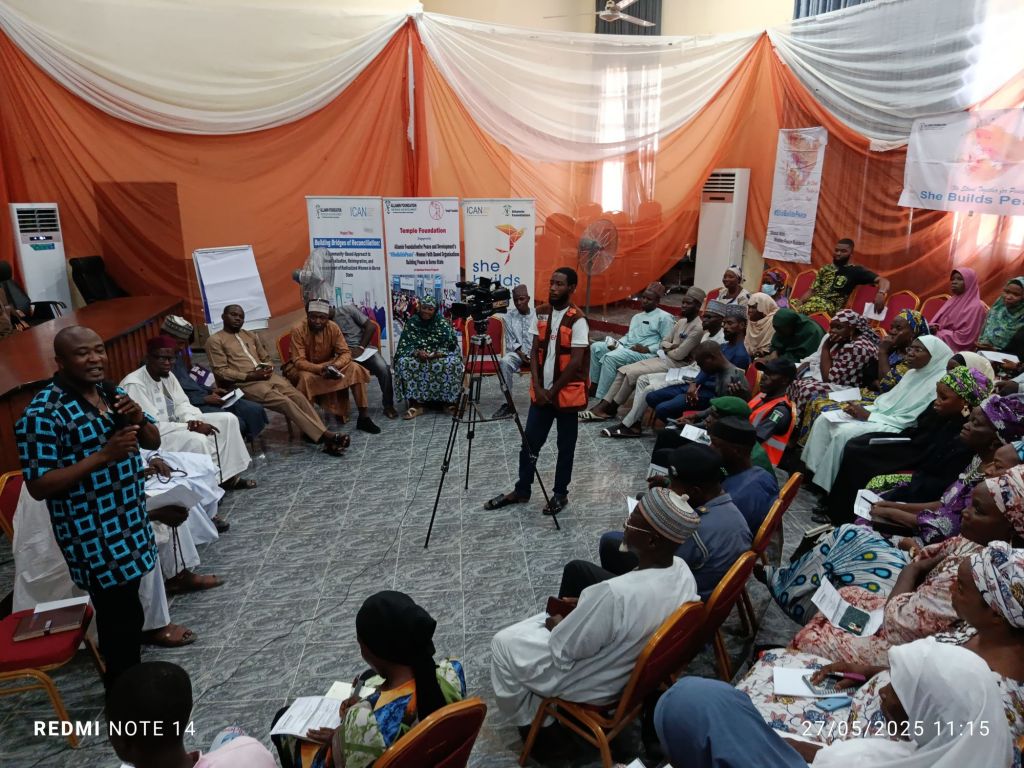
Sheikh Ibrahim Mustafa, who led in the opening conversation reminded the gathering that both Islam and Christianity are religions recognized by God. He said Islam itself is a religion that is named after peace. He thereby urged participants to recognize and respect the values of all religions.
Yilar Emmanuel urged participants to respect the teachings of all religions, cautioning against claims of religious or doctrinal supremacy. Malam Muhammad Alhaji-Isa called for justice and an end to the shielding of criminals, a sentiment echoed by several other speakers.
Rev. Ambassador Joseph Dauda Bwala identified four pillars for peaceful coexistence: justice, love, and regard for the religion of others. He stressed the importance of respecting the doctrines of the world’s over 800 religions, quoting the biblical verse, “Blessed are the peacemakers, for they shall inherit the kingdom of God.”
Imam Goni Modu Ahmad of Garkuwari Jummaat mosque affirmed that all religions preach truth, attributing doctrinal falsification to worshippers themselves. He also cautioned against the politicization of religious teachings, particularly due to relationships between some clerics and government officials.
Pastor Babatunde Alakija challenged attendees to bridge the gap between religious preaching and practice, urging them to consistently “do the right thing.”
Dr. Ibrahim Mohammed Ahmad, Head of Department of Sharia Law at the University of Maiduguri, cited Islam’s inherent tolerance, noting its allowance for Muslim men to marry Christian women and the practice of giving Zakat (charity) to Christians. He called for greater government involvement in promoting religious tolerance and warned against allowing “Satan to infiltrate our midst.”
During the plenary session, participants further emphasized the importance of strong family backgrounds, good parenting, and child discipline. There was a collective call to desist from making rash decisions in defense of religious symbols or holy names. Participants also urged clergy to refrain from deliberate misinterpretation of holy texts for political gain and spoke out against the dissemination of “half-baked or edited messages on social media.”
At the end of the events all stakeholders looked at the challenges, risk and implications as well as how to mitigate the challenges for a way forward.
 The Humanitarian Times