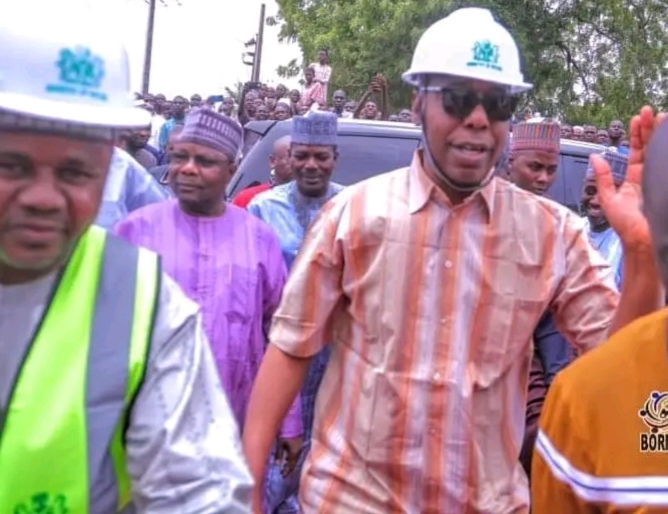
By Abdulkareem Haruna
Except for 2018, I had long jettisoned the idea of following politicians on their campaign trains as a journalist. I decided, since 2011, it was better to find more meaningful ways to spend my editorial time than enduring days and nights in the hinterlands, listening to loud, boring campaign songs in a long convoy of vehicles, only to hear politicians promise nothing of substance to the people.
However, my interest in trailing campaigns, especially for the governorship, rekindled in 2018 when the ruling APC decided to settle on the candidacy of Professor Babagana Zulum. The reason was, apart from him coming in as a semi-dark horse, I was thrilled with journalistic excitement to see what this gentle university don, who had never stood for elections or held any elective office of mainstream politics – not even at the ward level – would say or do during the campaigns.
During the campaign, at least from my experience in some of the local government areas visited, Zulum was empathetic about the fact that for over a decade, Borno State had suffered a devastating Boko Haram insurgency, a relentless tide of violence that not only claimed countless lives but systematically dismantled the very sinews of civil society. Infrastructure, particularly roads and bridges, suffered catastrophic damage, turning once bustling arteries into impassable ruins.
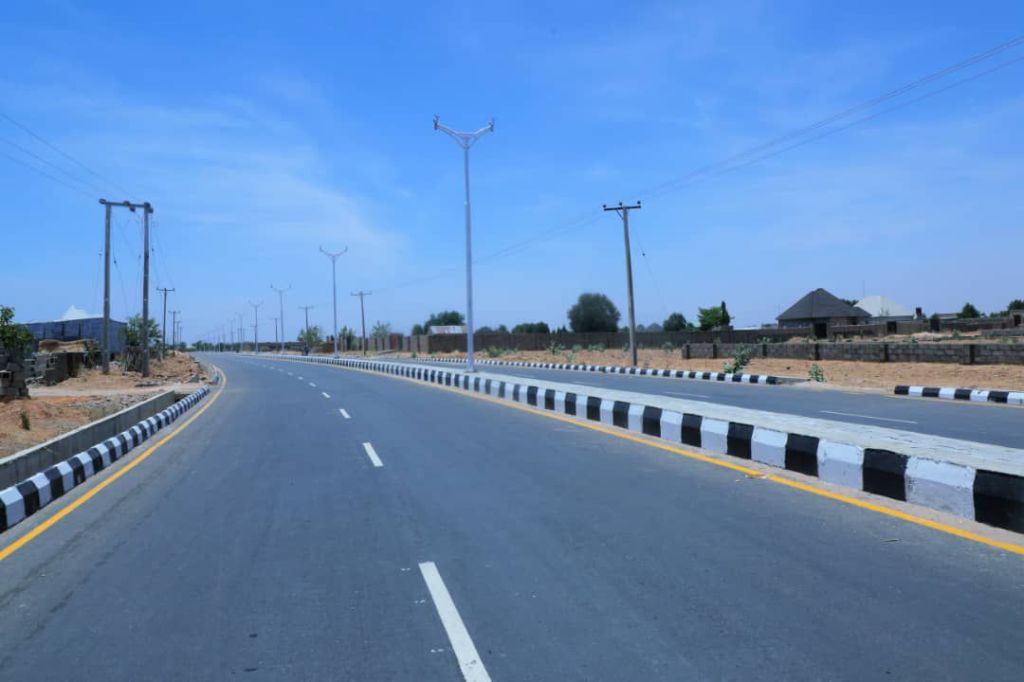
Zulum repeatedly promised to construct roads in virtually every place he campaigned, so much so that I began to lose interest, almost writing him off as one of those politicians who promise heaven and earth just to secure votes. Of course, he had a good track record of achievement as a commissioner for RRR (Reconstruction, Rehabilitation, and Resettlement), where he spearheaded the reconstruction of thousands of houses destroyed by Boko Haram, but promising roads, in that massive scale, seemed like biting off more than he could chew.
Zulum won the election with a historic landslide, and we all watched with keen interest how he would go about fulfilling his promises – promises he made in the name of Allah.
His predecessor Kashim Shettima, now Vice President, had in his farewell speech at the Ramat Square on May 29, 2019, told the people of Borno state that he was happy and confident that Borno would witness greater development because he is leaving the state for a “Work Horse”. So, everyone who listened keenly waited to see what the new man brings on board.
Impressively, amidst the continuing conflict, we began to witness a remarkable transformation under the Zulum administration. This transformation was driven by the relentless vision and pragmatic leadership of Governor Zulum, a professor of irrigation engineering. Suddenly, nearly every street in Borno became a construction site as the governor began to spread new roads, overhead bridges, and drainage in what local media and residents alike are increasingly describing as a “harvest of roads.” Zulum’s administration has embarked on an unprecedented infrastructure drive, literally paving the way for recovery, resettlement, and renewed hope across this embattled northeastern state.
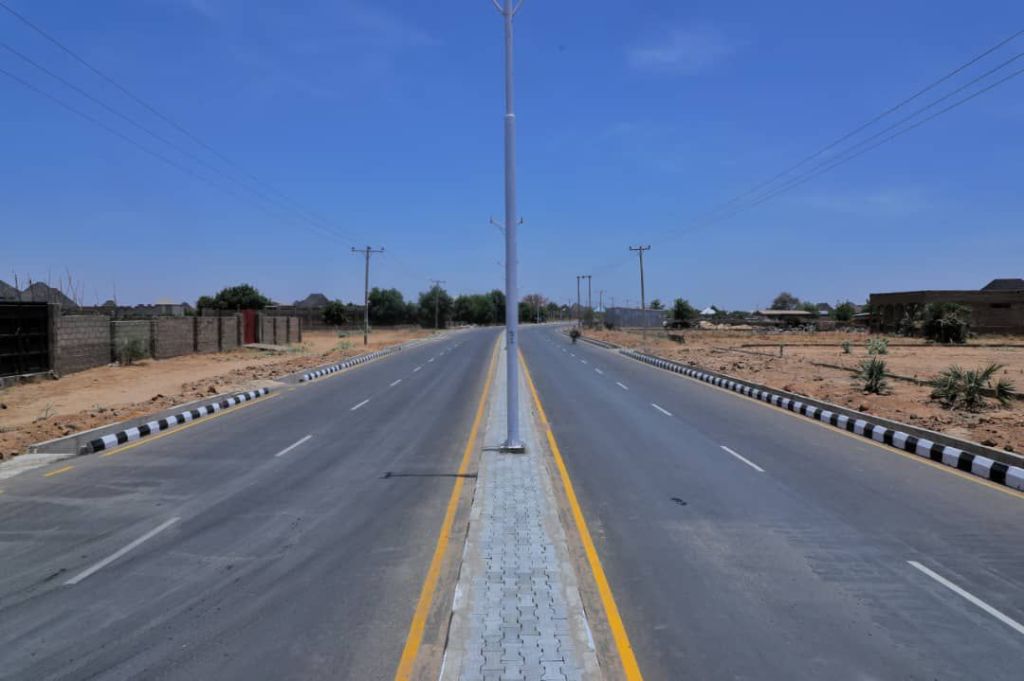
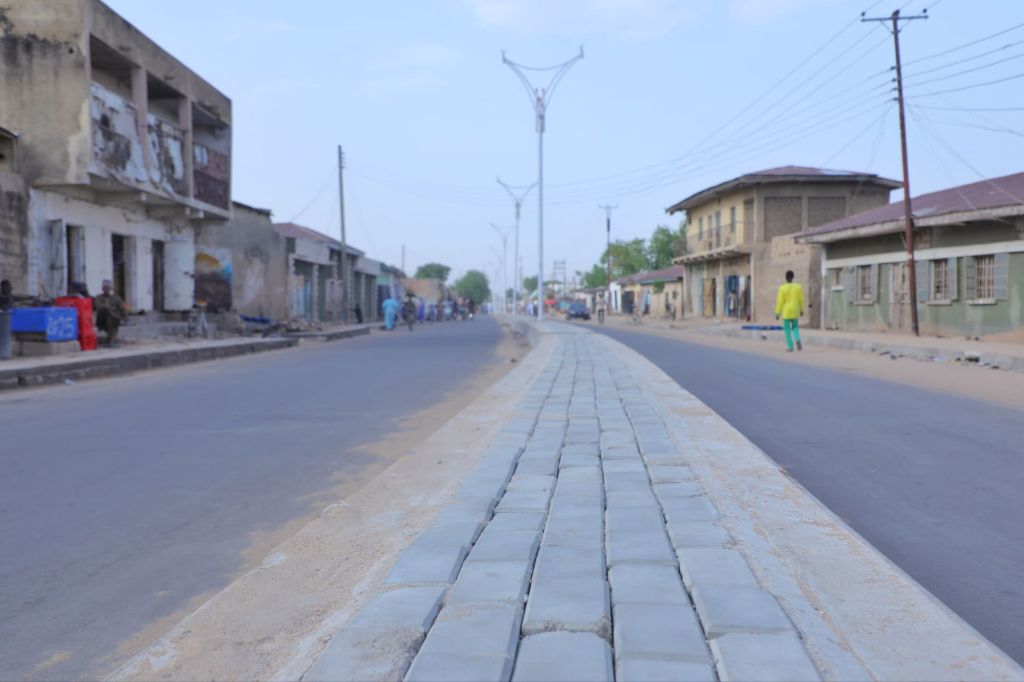
In the past six years, the bustling streets of Maiduguri, the state capital, to remote locations in the local government area, previously inaccessible communities, the rumble of construction machinery has become a defining soundtrack of his tenure.
The scale of Zulum’s ambition in this sector is staggering, particularly given the immense security challenges and the state’s limited resources. We all have witnessed and consistently highlight a sustained, multi-billion-naira investment in road networks and bridges, designed not merely for beautification but as critical enablers of economic activity, access to essential services, and the reintegration of displaced populations.
Just recently, to mark Democracy Day 2025, Governor Zulum commissioned a staggering 20 road projects within Maiduguri alone. These latest projects, totaling a combined 21.8 kilometers, span key areas like Maisandari, Umarari, Ngarannam, and Gwange. Among the newly opened thoroughfares are Maina Kenindi Road, Talba Road, Yerima Road, Tafa Balewa Road, Cemetery Road, Park Road, Benue Road, Kinshasa Road, Homan Road, Kyari Sandabe Road, Elkanami Road, Onitsha Road, Dicharima Road, Sokoto I Road, Sokoto II Road, Engr Bukar Tijjani Road, Waziri Road, Marghi Road, Zajeri/Umarari Road, and Amb. Mahmud Ahmed Express Road.
These completed and now commissioned roads are deliberately designed to enhance urban mobility and connectivity, crucial for a city that has seen a significant population influx due to displacement from rural areas.
Beyond Maiduguri’s urban sprawl, Zulum’s reach extends further. One of the most significant recent undertakings, flagged off in April 2025, is the construction of a 7.1-kilometer terminus junction to Molai express road, complete with a six-span bridge, and the state’s fourth flyover along the busy Post Office area in Maiduguri. This ambitious project, costing an estimated N26 billion, aims to drastically decongest traffic and provide seamless routes for commuters and goods, thereby enhancing access to critical economic zones, schools, and healthcare facilities. Governor Zulum, during the groundbreaking ceremony, emphasized the dual purpose of the post office bridge: “What we are doing is not only for beautification but also to accommodate the increasing population growth in Maiduguri. We must expand the city.”
He famously challenged contractors to ensure timely completion, stating, “Ten months is 10 months, the total contract sum is N16 billion and we have paid 50% of this amount. So, the contractor has no excuse for delaying the project.”
This proactive approach to funding and oversight has become a hallmark of his administration. Early in January 2025, I was amongst the journalists who reported Zulum’s approval of N1.4 billion for the immediate dualization of a 1.9-kilometer road from Ngomari Junction to the Muhammadu Buhari International Airport in Maiduguri. This is a critical project given the anticipated increase in international flight operations and the overall need for improved connectivity to the state’s air hub.
A year before, in June 2024, we reported a detailed comprehensive list of achievements in infrastructure within just one year. This included the construction of a 1.90 km dual road with drainage and street lights at Amb. Mahmud Ahmed Road Gwange, and an extensive 9.30km road network with 9.10km drainages in Umarari/Ngarannam. The Farm Center Housing Estate also benefited from a 3.88 km road and drainage network. The Kashim Ibrahim University Teaching Hospital (KIUTH) saw the construction of a 782-meter dual carriageway and rehabilitation of 3.10 km of single carriage road within the university.
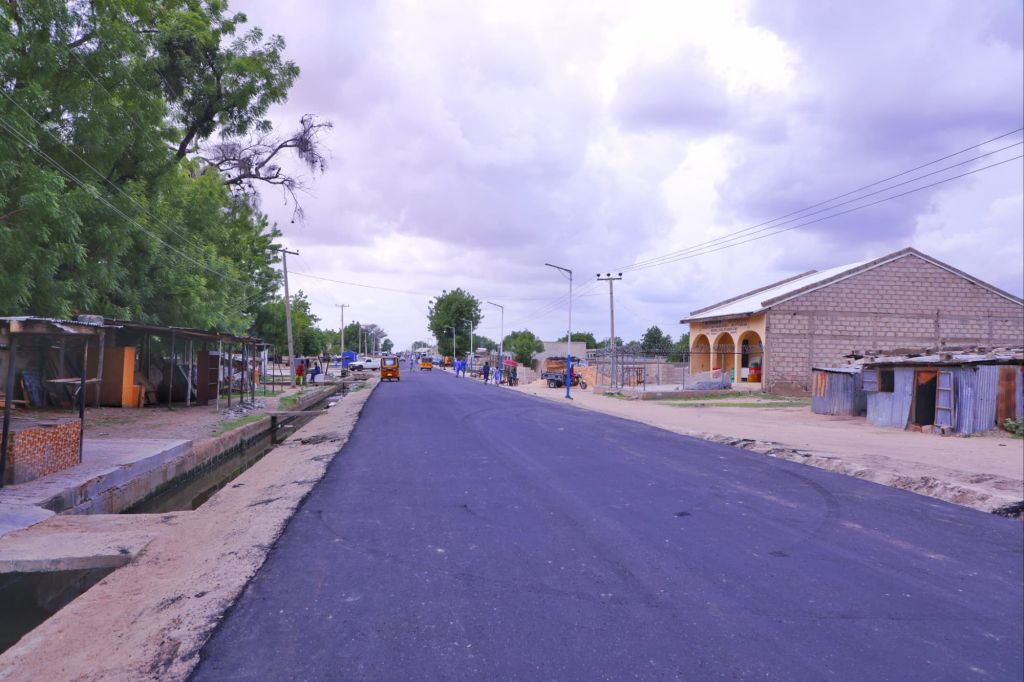
Perhaps most impactful for the Maiduguri city motorists is the rehabilitation and overlay of a massive 37.54 km dual carriageway, encompassing Lagos Street, Bama Road to Custom flyover, Sir Kashim Ibrahim Road to West End flyover, and Baga Road to Gubio Road junction, was completed. Further rehabilitation work covered 4.80 km of dual carriageway from West End flyover through Sir Kashim Ibrahim Road to Race Course roundabout and Shehu’s Palace roundabout, along with 5.56 km of Muhammadu Indimi Way and 960m of Shehu Laminu Way. A significant milestone was also the completion of a three-span flyover bridge at West End, Sir Kashim Ibrahim Road, further easing traffic bottlenecks that had plagued the city for years.
Beyond the urban centers, Zulum’s focus on road construction extends to linking communities vital for economic recovery and the return of displaced persons. The rehabilitation of the Mafa/Dikwa section of the Maiduguri Ngala Road is a case in point, connecting communities essential for agriculture and trade in areas previously ravaged by insurgency. In Askira/Uba, a 9.29 km road network with 16.56 km of drainage was constructed, signifying a commitment to rural development and improved access to markets for farmers.
I have learned from the ministry of works and the media team of Governor Zulum, being led by my former principal at the NUJ Borno Council, Comrade Dauda Iliya, who is now the Special Adviser and Official Spokesman, that the administration has also invested in the necessary logistics to sustain this pace of construction, including the procurement of 35 Howo tipper trucks and a Luigong wheel loader, ensuring that projects can be executed more efficiently by government agencies or monitored effectively by the Ministry of Works.
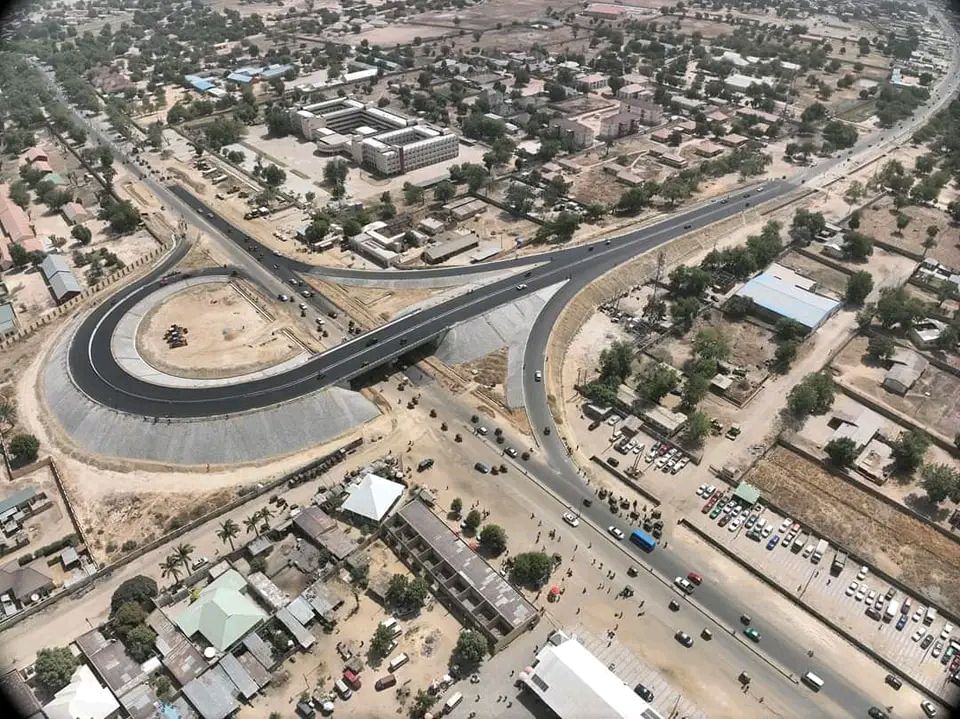
The Commissioner for Works and Housing, Engr. Mustapha Gubio, has frequently reiterated the administration’s commitment to quality and timely delivery, stressing that projects are meticulously monitored to ensure strict compliance with specifications. This oversight is crucial in a region where the history of abandoned or shoddy projects has often left communities disillusioned.
Zulum’s strategic vision for infrastructure extends beyond conventional roads. I was part of the media professionals in Borno that reported in December 2024 the groundbreaking initiative for an intra-city rail transport system, a first for any northern Nigerian state. The initial phase of that novel project involves 12 designated terminals within Maiduguri, connecting major markets, schools, and other economically viable locations. This forward-thinking project aims to offer a cost-effective, energy-efficient, and environmentally friendly alternative for mass transit, complementing the ongoing road network expansion.
The impact of this harvest of roads recorded in the last six years is multifaceted. Of course it facilitates the movement of security forces, essential for maintaining peace and stability. It enhances access to healthcare facilities, ensuring that residents, particularly those in remote areas, can reach medical attention when needed. Economic activities are spurred as farmers can transport their produce to markets more easily, and trade flourishes. Furthermore, these new roads and bridges are physical symbols of a state rebuilding, instilling confidence in communities and encouraging displaced persons to return and resume their lives.
While the challenges in Borno still remains – from ongoing security concerns to the humanitarian needs of millions – Governor Zulum’s focus on infrastructure development demonstrates his belief in a brighter future for the state. As the construction continues and the dust settles on freshly paved surfaces, Borno State is literally laying the groundwork for its own reemergence, one road and one bridge at a time – and this is being facilitated by no one but Professor Babagana Zulum, Borno’s Indisputable ‘Roadmaster’.
 The Humanitarian Times