By Abdulkareem Haruna
As the nation grapples with soaring food prices and the aftermath of multiple crises, Nigeria has launched an ambitious bid to overhaul its agricultural landscape. At the heart of this endeavor is a revamped Ministry of Agriculture and Food Security, a symbolic and substantive change championed by President Bola Ahmed Tinubu and driven by Senator Abubakar Kyari, the Minister of Agriculture and Food Security.
Just days into his administration, President Tinubu signaled the urgency of the situation by renaming the Ministry of Agriculture and Rural Development. This move was not mere optics; it immediately followed a declaration of a state of emergency on food security, placing it at the core of his administration’s ambitious 8-point agenda. For Kyari, this mandate is clear: “All other agendas—be it inclusivity, economic empowerment, job creation, access to capital, security, or the rule of law—directly concern our mandate of delivering food security.”
The scale of the challenge, and the opportunity, is immense. Agriculture is Nigeria’s largest employer, engaging an estimated 42 million households. With an average household size of four to six people, this translates to over 160 million Nigerians out of a population of 240 million (according to the World Bank) directly involved in farming. The majority of the populace, therefore, relies on this sector.
“When this mandate was given to us, we approached it with utmost seriousness,” Minister Kyari told The Washington Post, citing clear signs of declining food availability, affordability, and accessibility. The cracks in Nigeria’s food supply chain were exacerbated by a series of compounding crises.
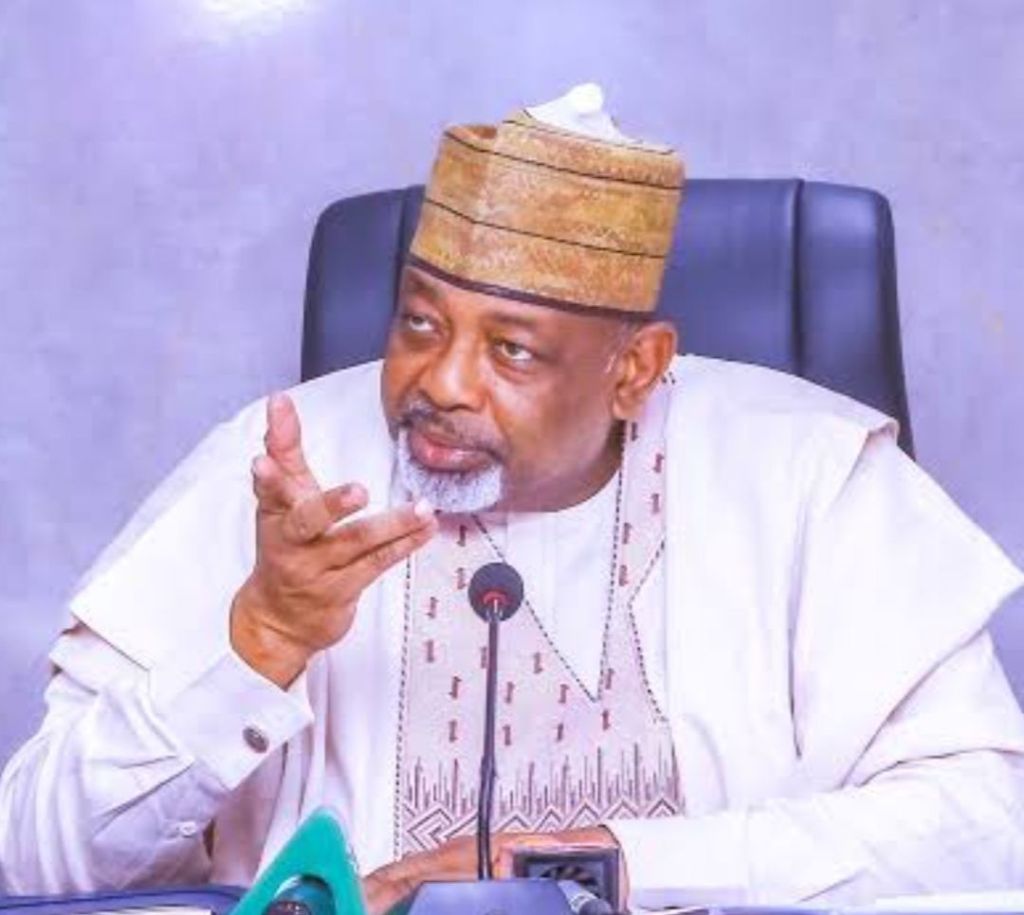
Senator Abubakar
The COVID-19 pandemic in 2020 disrupted global food chains for three years. Then, 2021 and 2022 brought devastating floods, a stark reminder of climate change’s impact. While insecurity, particularly in the northern regions, had been a persistent threat to farming, it had begun to recede slightly by that time.
Perhaps the most impactful, and self-inflicted, wound came in late 2022 with the Central Bank’s naira redesign policy. “It significantly affected our farmers, 80% of whom reside in rural areas,” Kyari explained. These regions, largely underserved by financial institutions, faced a severe cash crunch. The policy, announced in October with a December deadline, coincided precisely with the harvest season. Farmers lacked cash to pay laborers, and consumers had no physical currency to buy produce, leading to slashed prices and significant losses for producers. The repercussions echoed into March 2023, when farmers, still without capital, struggled to cultivate for the crucial wet season. Further complicating matters was the political transition from the Buhari administration to President Tinubu’s government, which created a period of uncertainty and a lack of support during the elections.
By July and August of last year, a full-blown food crisis seemed inevitable. The ministry’s immediate focus became ensuring food availability and affordability. Their strategy involved ramping up cultivation, not just for the main wet season, but exploring multiple cycles, including dry seasons.
“In some irrigated areas, up to four cultivation cycles are possible,” Kyari noted, a critical leverage point for food security.
The first major intervention came in November 2023 with the launch of the wheat season. Nigeria annually imports a staggering six million tonnes of wheat, costing approximately $8 billion—a crop Kyari insists can be grown domestically. The initial efforts supported 120,000 farmers in parts of northern Nigeria, achieving an overall success rate of about 70 percent.
The second phase involved aggressive dry season rice cultivation, which proved pivotal in sustaining the nation’s rice production last year, especially after floods in Bauchi and Borno, and droughts in states like Taraba and Adamawa. This strategic timing ensured a positive harvest of rice and maize that complemented the larger wet season yield.
In a first for a long time, the government last year distributed 100,000 tonnes of assorted fertilizers (2,150,000 bags of NPK, Urea, MOP) free of charge, a direct directive from the President.
“This input support was critical, especially given other necessary structural reforms that led to increased costs,” Kyari stressed. “Had the President not undertaken these reforms, the food we are concerned about today would be three or four times more expensive.” He noted that this free distribution was a “game-changer,” half going to state governments and half directly to verified farmers, encouraging conservation practices.
Beyond direct agricultural inputs, he said the President also provided immediate relief. “Fifty-eight tonnes of rice were initially distributed, followed by 42,000 tonnes of assorted grains nationwide. More recently, subsidized sales of rice at N40,000 per bag have been ongoing. Borno State, particularly affected by floods, received an additional 30 trucks of food aid, supplemented by 20 trucks from national reserves and 80 trucks of subsidized rice, totaling 100 trucks of rice and 34 trailers of maize and sorghum for flood victims.
These interventions are designed to influence market prices by boosting supply. While positive harvests in 2024 have begun to increase availability, the battle for affordability continues.
“Unscrupulous individuals hoarding food stocks bought at lower prices caused temporary price hikes,” Kyari admitted, but noted that when prices began to drop, panic selling by these hoarders ultimately increased availability.
The challenge now, Kyari explained, is navigating the delicate balance between consumer welfare and farmer sustainability. “Farmers need a certain price threshold below which they cannot go, as it impacts their production costs and discourages future cultivation,” he said. The ministry’s goal this wet season is to “find a balance between consumer welfare and producer sustainability.”
Ultimately, the vision is clear. “Our farmers provide 80% of our food needs,” Kyari affirmed, celebrating them as the “unsung heroes” who helped stabilize prices last year despite immense challenges. Yet, President Tinubu’s primary concern remains ensuring that “all Nigerians can afford three square meals and no one goes hungry at all.” It’s a monumental task, but Nigeria’s leadership is determined to tackle head-on.
 The Humanitarian Times