By Abdulkareem Haruna
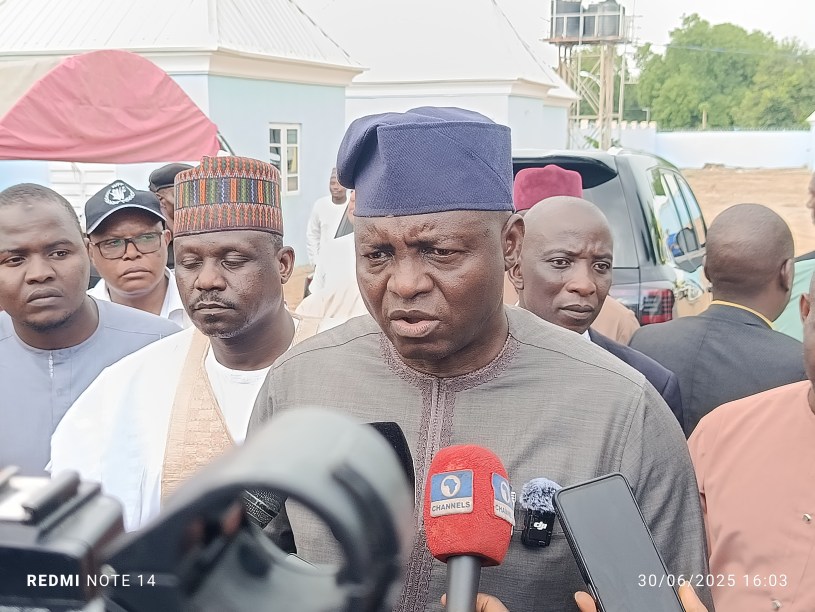
NGALA, BORNO STATE – Nigeria’s Minister of Humanitarian Affairs, Netawe Yilwatda, has lauded the success of resilience-building initiatives in Ngala, a community grappling with the influx of returning refugees and a strained food system. The Minister’s remarks come as the federal government signals a pivot towards sustainable, local solutions amidst a “marginally reducing” international funding landscape for humanitarian aid.
Speaking in an interview after supervising operations by the World Food Programme (WFP) and other humanitarian organizations in Ngala, and Konduga communities of Borno State, Yilwatda highlighted significant progress in boosting local food production and consumption.
“I was earlier in Ngala where I went to supervise the works that the WFP and other Humanitarian organisations are doing there in terms of helping people build resilience,” Yilwatda stated. “There are a lot of people returning from Cameroon and also from Chad and that increases the pressure on the food system, especially in that axis, and it’s putting pressure on costs.”
The Minister emphasized the critical evaluation of local infrastructure and security challenges, including the condition of road networks crucial for food distribution and the disruptive impact of elephants on farmlands. However, she underscored the transformative role of technology in improving agricultural output.
“The beauty of it is that the technology being deployed for the people at Ngala has improved the system,” she said. “It has encouraged production and it has also encouraged consumption of food within the system to produce locally.”
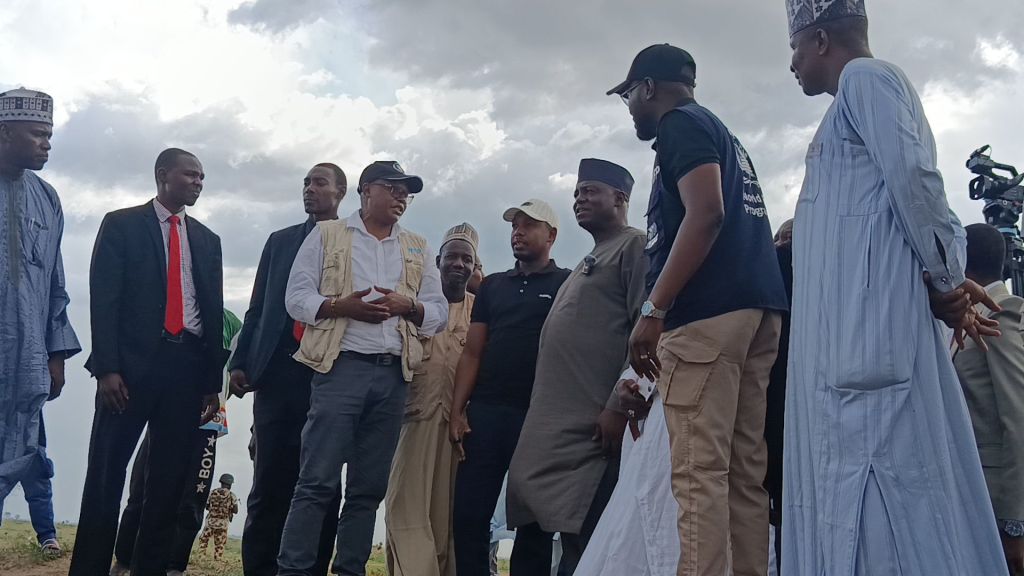
Yilwatda particularly praised the increased participation of women in agriculture and the economy, and the successful integration of local ingredients in food supplement production, which were previously imported.
“We have seen how we have used local contents in the production of food supplements that we used to import before, and how that has added value to the system she noted, expressing a commitment to ensuring these benefits reach all rural communities.
The Minister conveyed his profound satisfaction with what she described as “climate-smart investment” that reduces energy costs and increases profit margins for local farmers. “When you have a new investment that reduces even the cost of energy and it’s making the profit margin, that’s the bottom is increased for the people who are finding, and that’s what we’re looking at,” she said, envisioning a restoration of dignity and livelihood for returning populations.
“We must ensure that we reduce dependence on food aids,” he asserted. “We are fully off the cliff in terms of funding. Funding is reducing marginally, and we must walk towards a sustainable means of migrating people out of dependency.”
Earlier, David Stevenson, the WFP Country Director, echoed the Minister’s positive assessment, commending the scheme’s impact on rural malnutrition and reaffirming WFP’s commitment to supporting both state and federal governments in expanding the project’s reach to conflict-affected communities.
Bawu Bamusami, the State’s Agriculture Commissioner, further elaborated on the program’s success, noting its role in empowering displaced persons to engage in farming for both sustenance and income, thereby breaking their reliance on external aid.

The tripartite efforts to boost food security comes with an innovative new digital biometrics e-wallet and food voucher system to assist internally displaced persons (IDPs). The initiative aims to enhance food security and promote dignity among those affected by conflict.
This cutting-edge system is designed to ensure transparency, accountability, and efficiency in humanitarian aid distribution. Digital vouchers are redeemable at local retail outlets using point-of-sale (POS) systems, allowing beneficiaries to purchase locally produced food items.
Beneficiaries Muhammad Kabir and Bintu Maigari expressed heartfelt gratitude for the year-round farming opportunities, acknowledging the support from federal, state, and international partners.
The minister later paid a courtesy visit to His Eminence Abubakar Garbai Allamin El-Kanemi, the Shehu of Borno, to convey the purpose of his mission and offer condolences for the September 2024 flooding that affected the region. The foremost ruler of northeastern Nigeria commended the minister and his delegation, urging continued support for Borno State.
 The Humanitarian Times