By Abdulkareem Haruna
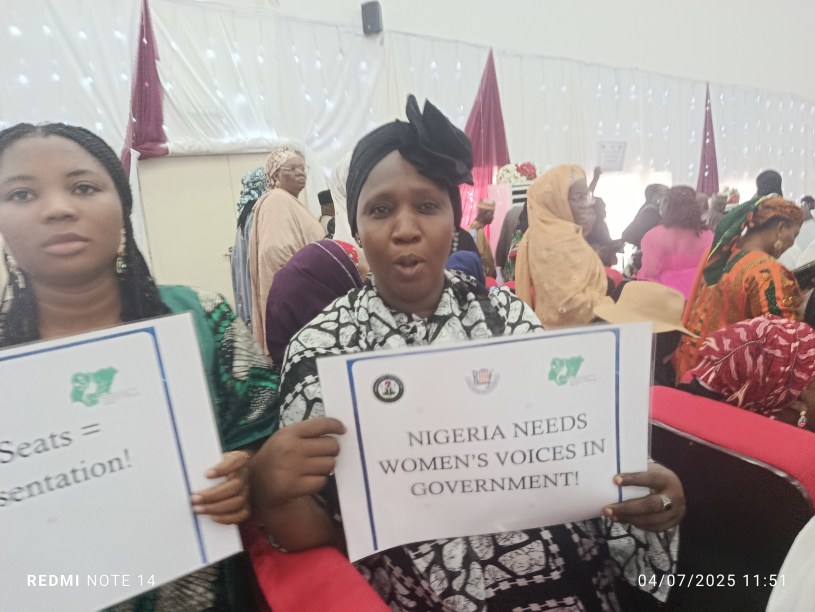
MAIDUGURI, Nigeria – A coalition of civil society organizations, led by the Women’s Rights Advancement and Protection Alternative (WRAPA), on Friday formally submitted a memorandum to the Senate Committee on constitutional amendment, advocating for the creation of additional legislative seats exclusively for women and significant reforms to the selection process of the Independent National Electoral Commission (INEC) leadership.
The groups presented their consolidated position at a Zonal Public Hearing on the review of the 1999 Constitution, emphasizing that these reforms are crucial for Nigeria’s inclusive development and electoral integrity.
Saudatu S. Mahdi, Secretary General of WRAPA Nigeria, underscored the urgency of the “Additional/Reserved Seats for Women Bill.” She stated that if passed, the bill “will position Nigeria for accelerated, inclusive development, aligning us with other progressive nations advancing gender-balanced governance.”
The proposed bill seeks to amend the constitution to create One additional Senatorial seat per state and the Federal Capital Territory exclusively for women (adding 37 seats); Two additional House of Representatives seats per state exclusively for women (adding 74 seats); One additional State Assembly seat per senatorial district for women (adding 108 seats).
WRAPA and its partners urged the National Assembly to ensure a special constituency structure for women contesting these seats, consider a 12-year (three-cycle) temporary measure with a midterm review, and clarify the creation of new constituencies.
Beyond gender representation, the memorandum also pressed for reforms in the appointment of INEC leadership. The groups expressed concern that the current system, which vests appointment power in the Presidency, risks “political interference and undermining public confidence.”
They proposed an independent panel-led selection process for the INEC Chairman, National Commissioners, and Resident Electoral Commissioners (RECs), drawing parallels to Kenya’s IEBC model. This, they argued, would “guarantee impartiality and operational independence” and “enhance public trust in electoral processes.”
Mahdi concluded by making a direct appeal to the legislators: “It is our collective prayer that this 10th National Assembly will seize this historic opportunity to treat this as Nigeria’s Bill — and deliver its accelerated passage.” She added that both the women’s seats bill and INEC reforms are “historic, strategic, and people-centred measures capable of delivering a truly representative and credible electoral system for Nigeria. The time for decisive, gender-responsive, transparent reform is now.”
Ministry of Women Affairs Backs Proposal, Citing Global Successes and Persistent Barriers
Earlier, the Federal Ministry of Women Affairs had also lent its voice to the proposed creation of special seats for women in parliament. Presenting its position paper at the Zonal Public Hearing in Maiduguri, the Ministry commended the National Assembly’s commitment to inclusive governance and gender equality, stating that the institutionalization of special seats aligns with global best practices and Nigeria’s national gender policy objectives.
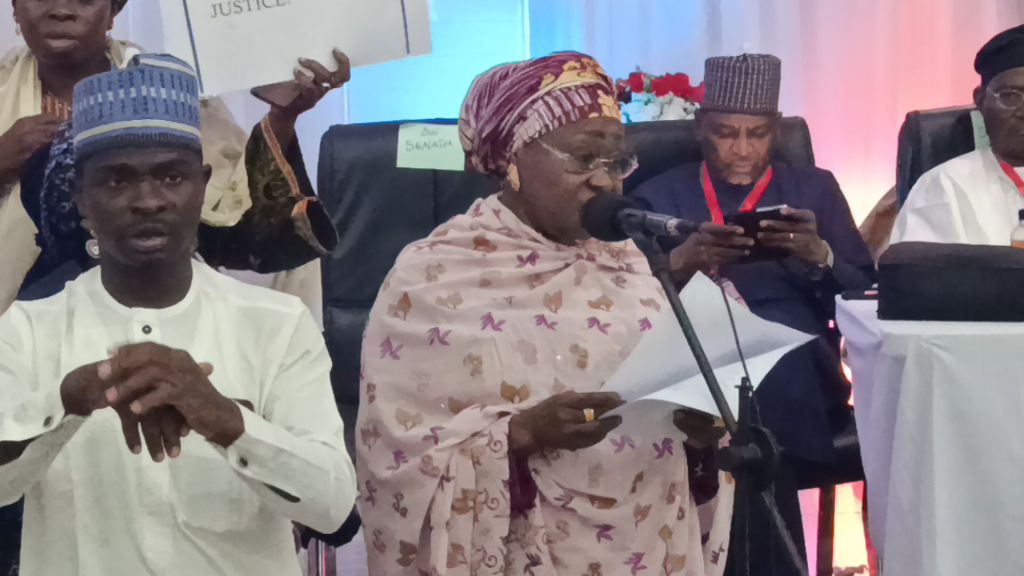
The Ministry’s Director-General, National Centre for Women Development (NCWD) Hon. Dr. Asabe Vilita Bashir, highlighted the stark underrepresentation of women in Nigeria’s legislative structures, noting that women occupy less than 5% of seats in the 10th National Assembly—significantly below the 35% affirmative action target.
Dr. Bashir identified key barriers to women’s participation, including the high cost of electioneering, cultural and religious stereotypes, political violence, and marginalization within political party structures.
“Establishing Special Seats for Women provides an equitable and strategic mechanism to address these long-standing structural barriers,” Dr. Bashir stated, adding that women bring “valuable perspectives to critical areas such as education, healthcare, gender-based-violence and economic empowerment sectors.”
The Ministry pointed to countries like Rwanda, Uganda, Tanzania, and Senegal, which have successfully implemented gender quota systems, with Rwanda achieving over 60% female representation due to constitutional quotas.
The Ministry’s recommendations include establishing a minimum of 35% reserved seats, ensuring equitable distribution across geopolitical zones, mandating political parties to include female-only candidacy for designated constituencies, and providing capacity building and mentorship for women aspirants. Dr. Bashir concluded by emphasizing that the adoption of special seats “is not a favour—it is a constitutional and moral imperative that will enrich Nigeria’s democracy, deepen accountability, and promote national development.”
 The Humanitarian Times