By Abdulkareem Haruna
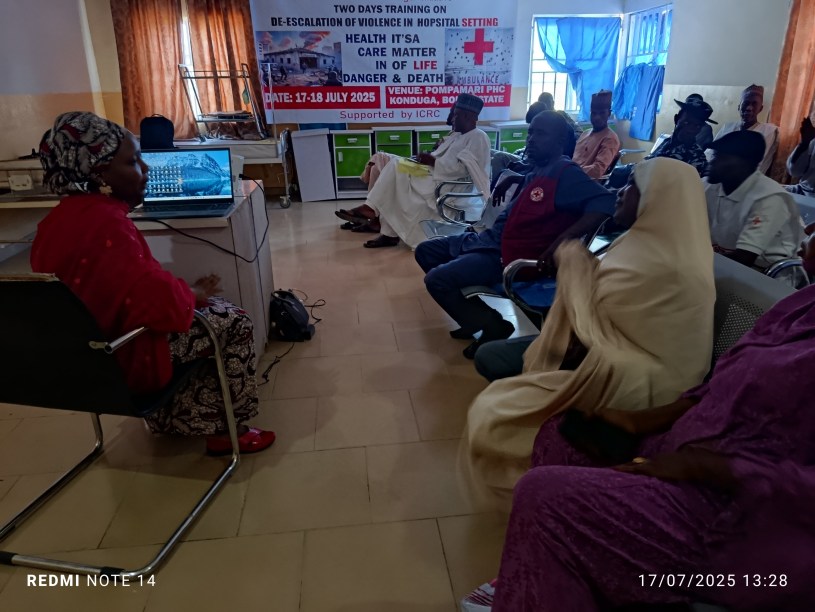
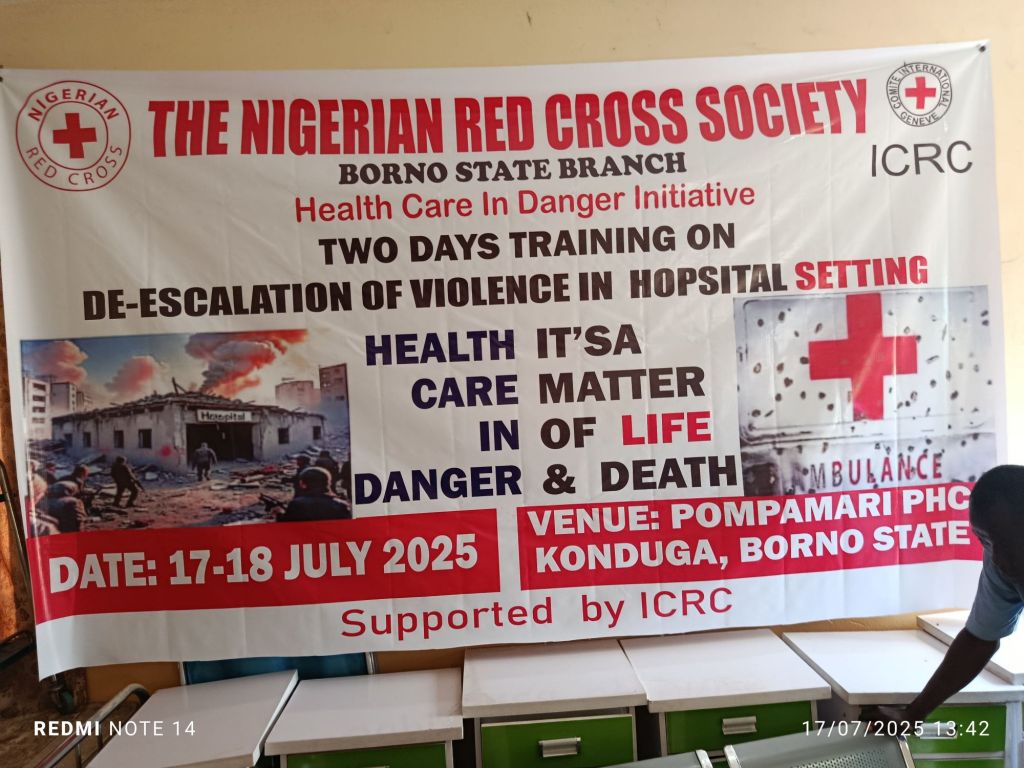
Konduga, Nigeria – The Nigeria Red Cross, in collaboration with the International Committee of the Red Cross (ICRC), today concluded a two-day training program in Konduga, Borno State, focusing on de-escalating violence in hospital settings.
The training, funded by the ICRC’s “Healthcare in Danger” (HCiD) project, is a critical initiative aimed at improving the security and delivery of impartial healthcare during armed conflicts and other emergencies.
Yabintu Abubakar Ali, Communication Officer for the Red Cross in Borno State and a facilitator of the training, emphasized the severe impact of over a decade of armed conflict in the region. “Widespread violence has frequently exposed healthcare workers, facilities, and vehicles to attacks, damage, or obstruction,” she said. ”This includes killings, injuries, harassment, intimidation, bombings, looting, and delays at checkpoints.”
Such attacks, Bintu explained, have devastating consequences, disrupting vital health services and leaving countless individuals without life-saving treatment. “Entire communities can be cut off from essential care like maternity services, childcare, and vaccinations, sometimes leading to the collapse of entire health systems.”
Bintu also highlighted “subtle violence” within hospitals, often stemming from miscommunication among patients (who are direct victims of armed violence), their caregivers, and healthcare personnel.
“Healthcare personnel face many challenges working in armed conflict situations, especially as they often cope with limited resources while dealing with large influxes of patients requiring immediate, life-saving attention,” she noted. “Beyond those professional challenges often lie grave dangers associated with the nature of their work.”
During the training, participants were encouraged to understand the challenges and immense tasks faced by healthcare providers and to ensure safe access for patients and secure zones around hospitals. They also received guidance on promoting effective communication between caregivers and healthcare workers.
Zannah Bakura Galtimari, the acting District Head of Auno and a participant, praised the Red Cross for the initiative, stating that incidents of violence in healthcare settings have decreased since the trainings began. While acknowledging that “some patient relatives often go violent as they seek urgent attention for their sick or injured relatives,” he added, “the truth is that at times some of the healthcare facilities are overwhelmed and the personnel are not adequate to attend to everyone at the same time, hence they need to prioritize their service.” Galtimari also stressed the need for his community to increase vigilance in protecting health facilities from vandalism by criminals and insurgents to ensure uninterrupted healthcare provision.
A police officer who participated in the training said the lectures had equipped him with improved approaches to safeguarding healthcare facilities and promoting unhindered community access to healthcare services.
 The Humanitarian Times