By Abdulkareem Haruna
MAIDUGURI, Borno State – For the people of Maiduguri, the capital of Borno State, northeast Nigeria, the annual rainy season that usually lasts for about 12 weeks, brings not just relief from the scorching heat, but also a relentless cycle of fear.
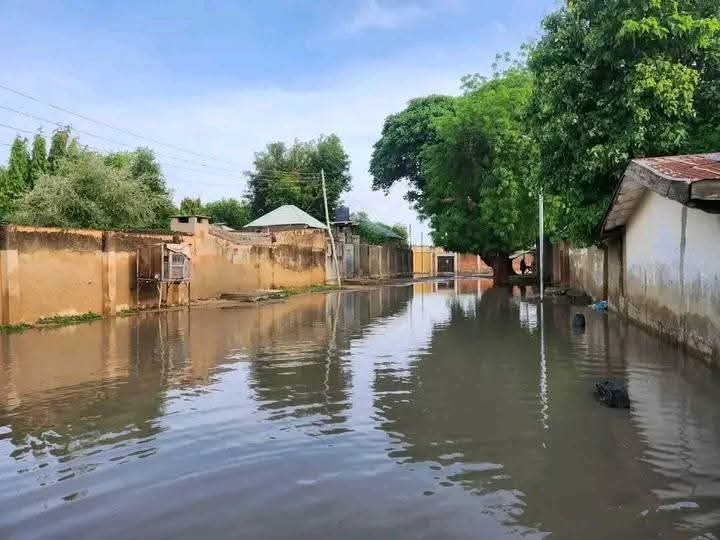
Heavy rain on Wednesday, July 30th, caused widespread flooding across the city. Homes in many areas, including the Government Reserved Areas (GRAs), Jiddari Polo, Bulumkutu, Ngomari, and along the Baga road, that wee thought to be safe upkands, were submerged. Houses crumbled, livelihoods were washed away, and the stark reality of Maiduguri’s “endless flood disaster” once again came to the fore.
Last year, on September 10, 2024, the collapse of the Alau Dam triggered an unprecedented catastrophe, claiming scores of lives and displacing hundreds of thousands. While the dam’s integrity remains a critical concern, the deeper, more pervasive problem for Maiduguri lies not just in a single structural failure, but in the city’s fundamentally flawed water management system. Even without a dam breach, Maiduguri is like a city condemned to suffer from floods that kill residents and destroy homes and businesses.
For the past two decades, significant investments have been made, by successive governments, in road infrastructure, often featuring expansive drainage facilities. These drains sometimes double the length of the roads they run alongside, yet they offer little protection when the heavens open its blessed waters for more than 30 minutes. The problem isn’t always the absence of drains, but their design and functionality.
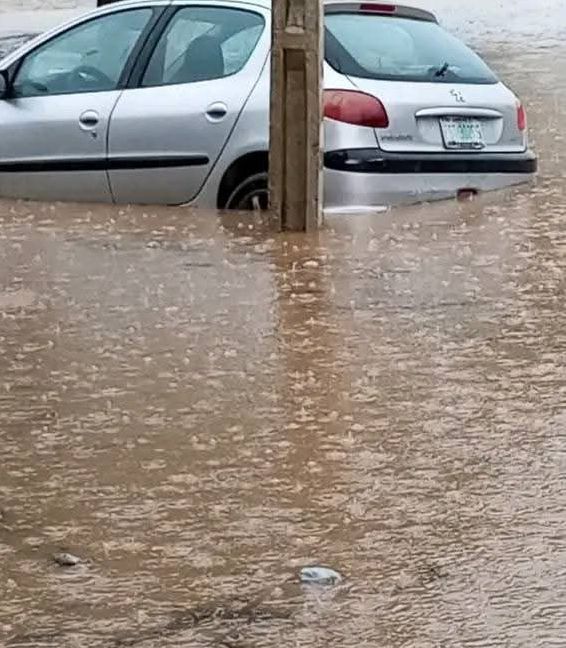
“We usually clean the drainage before the rainy season, we really do,” laments Yahaya Garba, a resident of Bulumkutu, while who spoke to this reporter while surveying his waterlogged compound. “But what’s the use when the water has nowhere to go? Most of these drains just stop, sealed off, with no proper outflow.” This observation highlights a critical flaw: unlike global best practices where urban drainage systems are designed to channel water to designated outlets, many of Maiduguri’s drains are essentially dead ends, becoming overflowing gutters that merely exacerbate the problem they are meant to solve.
No part of Maiduguri, it seems, is truly safe.
While the September 2024 flood had its specific impact zones, areas like the GRAs, Jiddari Polo, Bulumkutu, Ngomari, and the Baga Road axis, that are even considered uplands, are historical flashpoints for perennial flooding. This week’s flashflood confirms the reality, as these neighborhoods, traditionally hit hard by heavy rains, once again bore the brunt, with many homes collapsing under the sheer force of the water.
The consequence is a city grappling with not only immediate losses but also the constant fear of the next downpour. Businesses are crippled, health risks from contaminated water rise, and the very fabric of community life is strained.
Maiduguri’s continuous battle with flooding is a basic sign of how poor urban planning and inadequate infrastructure can undermine even significant investments. While efforts to desilt existing drains are commendable, they only address a symptom, not the root cause. Global best practices in urban water management emphasize comprehensive, integrated systems that account for rainfall intensity, terrain, and proper outflow mechanisms, often incorporating green infrastructure solutions like permeable surfaces and retention ponds to manage stormwater runoff naturally.
It is time for the government of Borno State to move beyond piecemeal solutions and undertake a fundamental rethinking of Maiduguri’s drainage system. A mass redesign, based on modern engineering principles and a clear understanding of the city’s hydrological challenges, is not merely an option but an urgent necessity. Governor Babagana Zulum is seen by many as the best person to tackle Maiduguri’s deeply flawed water management system. If his administration, with less than two years remaining, can achieve a lasting solution, it would be a monumental success. This is because he is considered the only leader, so far, with the necessary courage and commitment to fix the city’s drainage woes. Only then can Maiduguri truly begin to escape the shadow of its endless flood disasters and ensure the safety and well-being of its resilient, yet long-suffering, residents.
 The Humanitarian Times