By Abdulkareem Haruna
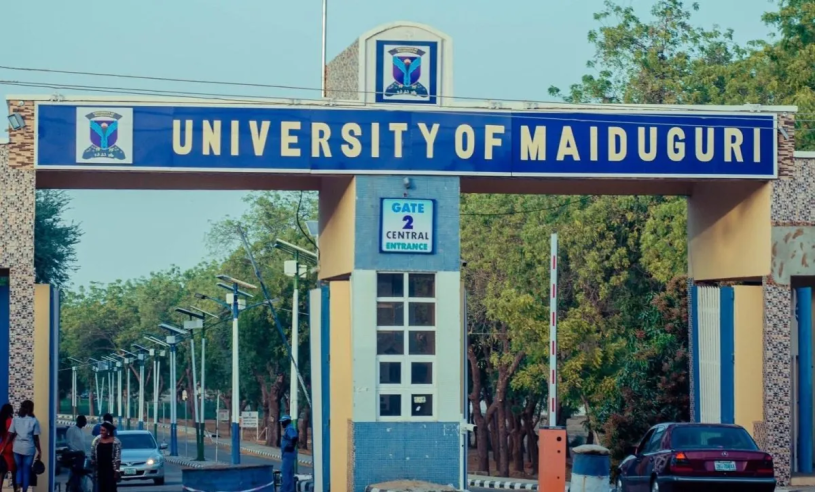
MAIDUGURI, NIGERIA – The University of Maiduguri has established a new Faculty of Communication and Media Studies, a move that restructures and expands its existing Mass Communication program.
The decision, approved by the university’s Senate, follows a federal government policy to unbundle the broad field of mass communication into more specialized departments.
The new faculty, approved during the 319th Regular Meeting of the Senate on July 31, will initially operate with three departments: Journalism and Media Studies, Broadcasting, and a rebranded Department of Mass Communication. Four additional departments—Public Relations, Advertising, Development Studies, and Information and Media Studies—are planned for a second phase of development.
The unbundling of Mass Communication is a nationwide policy from Nigeria’s federal government, implemented through the National Universities Commission (NUC). The NUC’s directive, which has been in place for several years, aims to address the changing media landscape and the growing need for specialized skills.

The policy was designed to move beyond a generalist approach to media education and promote deeper expertise in areas like broadcasting, journalism, advertising, and public relations. This shift reflects global trends in media education and seeks to enhance the employability of graduates by providing them with more targeted professional training.
Dr. Abdulmutallib A. Abubakar, the head of the former Mass Communication department, spearheaded the effort to establish the new faculty. He noted that the expansion, which grew out of a department established in 1983, is a response to the “increasing demand for specialization and professionalism” and the “dynamics of technological changes.” The initiative is also a direct response to the requirements set by the NUC.
The University Senate session that approved the new faculty was presided by the Vice-Chancellor, Prof. Mohammed Laminu Mele. Dr. Abubakar expressed his gratitude to the university leadership and his colleagues, stating his commitment to ensuring the new faculty becomes a “center of academic excellence, skills, and professionalism.”
 The Humanitarian Times