By Abdulkareem Haruna
Maiduguri, Nigeria – In the face of rising flood fears, Borno State Governor Babagana Umara Zulum moved to calm residents Saturday, assuring them that measures are in place to prevent a recurrence of the devastating flood that claimed over 150 lives last September.
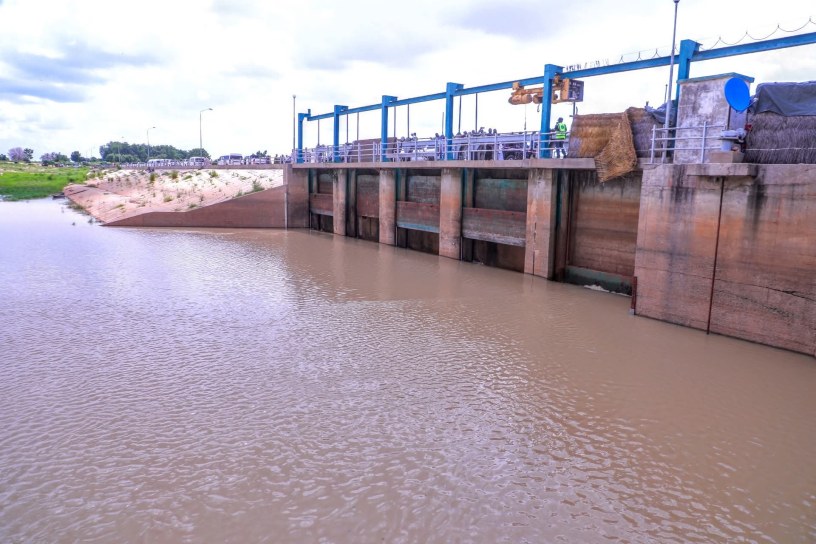
The governor’s visit to the Alau Dam, a critical piece of infrastructure on the outskirts of Maiduguri, came just days after heavy downpours submerged parts of the city and raised alarms about the dam’s stability. Last September, a breach in the dam’s dykes led to widespread flooding, displacing more than a million people and destroying property worth billions.
“Based on our engineering knowledge, we concluded that there is no cause for alarm,” Zulum told reporters during his inspection. He noted that in response to recent reports of rising water levels, the state government had worked with contractors to fully open the dam’s water channels, causing the water volume to recede.
Zulum’s reassurances are a direct response to a growing sense of unease among residents. The recent rains, which collapsed several buildings and even submerged a graveyard last Wednesday, have brought back painful memories of the 2024 disaster. A report from the dam’s contractors last week further heightened tensions, warning the governor that water levels had risen beyond a “tolerable” point.
Despite the current situation, Zulum expressed confidence in the ongoing rehabilitation efforts. He praised President Bola Ahmed Tinubu for approving a N80 billion allocation for the dam’s reconstruction, which he said would include new structures to contain excess water.
“We want to look at the master plan of the state and ensure that all waterways are cleared to allow inflow of water to the rivers,” he said, signaling a major review of the city’s town planning.
The governor, however, did not mince words when addressing the role of residents in the flooding problem. He expressed frustration at the “obstinate” practice of building on waterways and dumping refuse in drainage channels.
He issued a stern warning that the government would, from now on, demolish any building found on a waterway.
“We must enforce certain environmental standards,” Zulum said. “It is better for us to safeguard, take early warning measures rather than remedial measures after the incident might have occurred.”
Zulum urged a collaborative approach, instructing his team of engineers to work with the contractors to “come up with workable recommendations to ensure that what happened before is not repeated.”
 The Humanitarian Times