By Abdulkareem Haruna
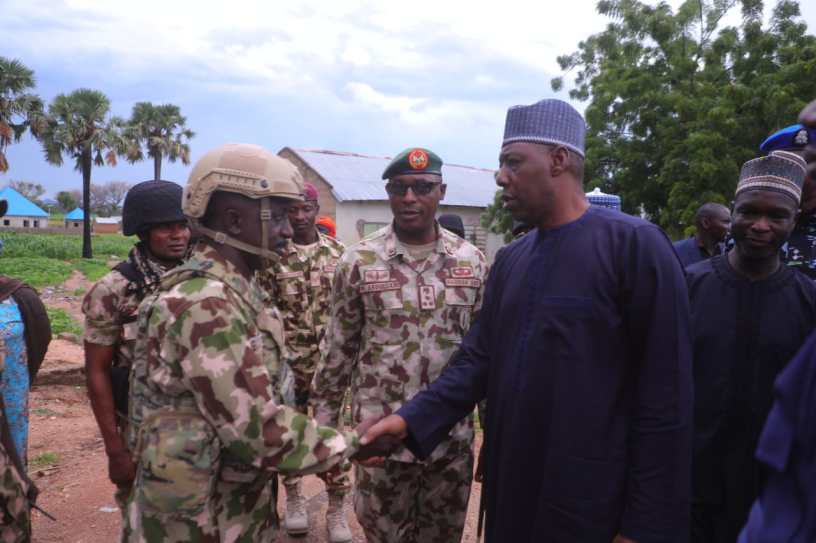
GWOZA, Nigeria – In Borno State, Governor Babagana Zulum has launched a “resilience tour” as thousands of villagers flee a new wave of terrorist attacks near Gwoza. The tour, according to his spokesman, Dauda Iliya, is aimed at boosting morale and supporting communities affected by the conflict.
Of course this is a move that goes beyond a simple show of support; it is a high-stakes political and strategy aimed at reassuring a traumatized populace and, perhaps, resetting the narrative in one of Nigeria’s longest-running conflicts.
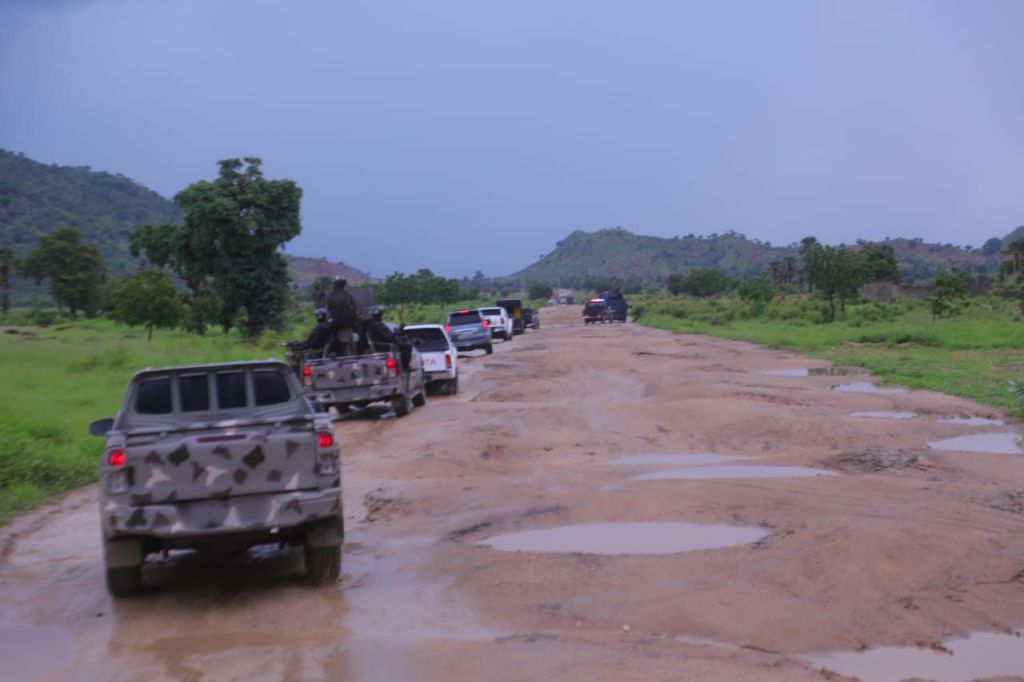
Zulum’s visit, last week, to Gwoza and the hard-hit community of Limankara isn’t a photo-op or any kind of publicity stunt. It is a direct and forceful challenge to the insurgents. The governor’s declaration that “no community in Gwoza Local Government Area will fall into the hands of Boko Haram” is a powerful, if not perilous, promise. In a region where such assurances, especially from the military, have often proven hollow, the governor doesn’t mind putting his credibility on the line.
His pledge to remain in the area until the security situation stabilizes and his announcement that the recently displaced community of Bita would be resettled immediately are bold statements designed to project an image of a government that is not just reacting, but actively reclaiming lost ground.
That visit to Gwoza, just like a similar trip taken to Dikwa and Marte in May this year, speaks to a fundamental shift in strategy. For years, the security response in Borno has been characterized by a cycle of displacement and containment. Zulum’s approach, however, seems to be one of forward defense and community empowerment. His promise of providing logistics to the Civilian JTF, which is a critical, homegrown force, in Limankara signals a recognition that a purely military solution is insufficient.
What Zulum is doing is a local-level effort to fortify community resilience from within, a strategy that, if successful, could become a template for other vulnerable areas.
It is also instructive to understand that Limankara, a town that has miraculously resisted displacement even at the peak of the insurgency, holds a symbolic importance that Zulum is keen to leverage. So, by reinforcing its resilience, he is aiming to create a ripple effect of confidence.
But the governor’s visit also exposes the deep-seated frustrations and challenges that still remain. The Emir of Gwoza, Alhaji Mohammed Mustapha Idrissa Timta, while expressing gratitude to the Governor for the visit, was not economical in his assessment when he said: “Security is our major concern.” That was a statement that served as a reminder that despite years of military operations, the threat is far from over.

The monarch’s appeal for more troops and a “massive onslaught on the insurgents’ enclaves” is a direct call for federal intervention, a tacit admission that the state government, even with its best intentions, cannot win this war alone. The Emir’s condemnation of “individuals undermining peace efforts” and the spread of “fake news” on social media also points to a battle being fought on multiple fronts—one against physical threats and another against the erosion of trust and morale.
Zulum’s “resilience tour” is therefore more than a visit; it is a political statement. It is an attempt to demonstrate that his administration is not a distant, detached authority but one that is intimately connected to the suffering of its people. By bringing the Brigade Commander of the 26 Task Force Brigade along with him, he is also projecting an image of a united front between the civilian government and the military. This kind of visible partnership is crucial in a conflict where coordination has often been a point of contention.
The advantage for Borno state, should this risk pay off, is immense. A successful strategy in Gwoza could restore faith in the government’s ability to protect its citizens, encouraging other displaced communities to return. It could also weaken Boko Haram’s influence by denying them a narrative of uncontested victory. A state where communities can not only resist but also resettle would be a powerful rebuke to the insurgents’ ideology. However, the stakes are incredibly high. A single, successful attack by Boko Haram on any of the communities Zulum has pledged to protect could not only undermine his authority but also send a fresh wave of panic across the state. So, this resilience-building synergy must be supported by all and sundry.
 The Humanitarian Times