By Abdulkareem Haruna
The enduring image of Professor Babagana Zulum, the Governor of Borno State, is not of a politician in a pristine, air-conditioned office, but of a leader among the rubble, a man walking the perilous, often neglected, frontline of the state’s recovery. Despite his massive workload, Governor Zulum still demonstrates an extraordinary capacity to notice and reward those who genuinely commit themselves to public service.
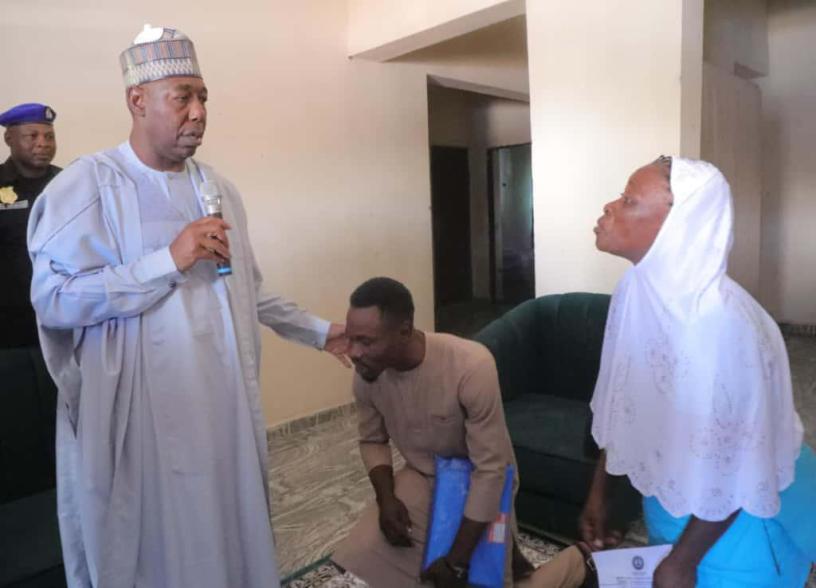
Early this week, the governor recognised yet another dedicated civil servant, Mrs. Mabel Ijeoma Duaka, a 61-year-old nurse and mother of four, from Anambra State, who has dedicated over 24 years to the Mafa Primary Healthcare Centre. Zulum identified her and made her an instant national symbol. Her heroism was not a single spectacular feat but a quarter-century of unflagging commitment to duty, a consistency that held firm even when Mafa, the Governor’s own hometown, was reduced to a warzone. Yes! When others, understandably, fled the Boko Haram onslaught, Nurse Duaka, affectionately known as ‘Mommy Mafa’, stood her ground, ensuring that a flicker of life-saving care remained in the community. Her dedication transcended her tribal origin and her personal safety, embodying the highest ideals of professional conduct.
Governor Zulum’s appreciation package – a two-bedroom bungalow and an automatic lecturing appointment for her son at the Borno State University – is a masterstroke of governance. It is an act of acknowledging that the very fabric of state survival during a crisis rests on the shoulders of individuals like her. This is the underpinning message of rewarding excellence in service: a policy tool more potent than a thousand circulars on performance management.
The political significance of this encounter cannot be overstated, particularly for a country wrestling with its unity. Mrs. Duaka is an Igbo woman, a non-indigene, who stayed to serve a predominantly Kanuri community in the North-East. By singling her out for this life-changing reward, Governor Zulum sends an unambiguous, powerful message that Nigerians can work with dedication irrespective of their ethnicity and religion, and the government can and should reward people regardless of their backgrounds.
This act directly confronts the debilitating narrative that opportunity in Nigeria is solely tied to one’s state of origin or religious affiliation. It is a powerful, practical demonstration of true federal character built on merit and dedication. In a state that has experienced the worst of communal violence, this reward is an investment in social cohesion, telling every Nigerian civil servant—whether in Maiduguri or Lagos, Kaduna or Calabar—that selfless service is the only prerequisite for recognition. It builds a sense of national purpose and common destiny, a belief that the system will reward the person who delivers value, not just the one who knows the right people.

The Strategic Value of Rewarding Excellence
Looking closely at how Zulums’s reward strategy can improve dedication to duty and excellence in civil service, its impact is multifaceted and strategically brilliant.
First, it institutionalised the “Hero Principle.” By publicly rewarding a specific, identifiable act of sustained sacrifice, Zulum creates an inspirational benchmark for all public sector workers. It provides a visible, tangible demonstration of a working reward system, countering the widespread cynicism that often leads to low morale and productivity. When civil servants see that genuine, long-term commitment to their duty—especially under duress—can secure their family’s future, their motivation shifts from survival to excellence.
Second, the nature of the reward, a permanent home and academic employment for the son, addresses the most fundamental concerns of the Nigerian worker: shelter and inter-generational security. A government that takes away the crippling fear of homelessness and securing a child’s future has earned the fierce loyalty of its workforce. This targeted, life-altering compensation is far more motivating than a generic bonus because it validates the worker’s entire life of sacrifice. It transforms a government employee’s perspective from simply earning a salary to building a legacy.
Third, this reward mechanism is a clear instrument against the endemic problem of “ghost workers” and mediocrity. It signals that the government is actively seeking out and scrutinising performance on the ground. The simple presence of a leader in a remote clinic like Mafa, and the subsequent recognition of a dedicated worker, proves that the system is watching the work being done, not just the names on the payroll. This is crucial for reversing the culture of impunity and inefficiency that has plagued the civil service for decades.
Governor Zulum, by making the reward personal, permanent, and transcendent of ethnic lines, has provided a timely lesson for the entire Nigerian political class that leadership is not solely about commissioning mega-projects; it is fundamentally about identifying, appreciating, and elevating the heroes within your ranks. It is about fostering a culture where dedication is seen as the highest form of patriotism. The gift of house in Mafa is more than just a home for Nurse Ijeoma. The gesture transforms the nurse from an anonymous public servant into a national symbol of selfless service. By rewarding an individual purely on the basis of her unwavering professional conduct, Zulum is demonstrating a practical application of the merit principle—a principle often championed in rhetoric but rarely upheld in practice in the Nigerian public sector. This kind of inclusive recognition serves as a vital psychological balm, fostering a sense of shared citizenship and loyalty to the state, irrespective of where one hails from or how one worships. It tells all Nigerians: your dedication will be seen, and your sacrifice will be valued.
 The Humanitarian Times