By Abdulkareem Haruna
The Federal Government today officially launched the 2025/2026 Dry Season Wheat Production Programme in Maiduguri, signaling a strategic push to strengthen Nigeria’s food security and agricultural economy.
The Federal Government today officially launched the 2025/2026 Dry Season Wheat Production Programme in Maiduguri, signaling a strategic push to strengthen Nigeria’s food security and agricultural economy.
The program, executed under the National Agricultural Growth Scheme and Agro-Pocket Project (NAGS&AP), was flagged off by the Minister of Agriculture and Food Security, Senator Abubakar Kyari, who emphasized the government’s commitment to empowering smallholder farmers and diversifying production across Nigeria.
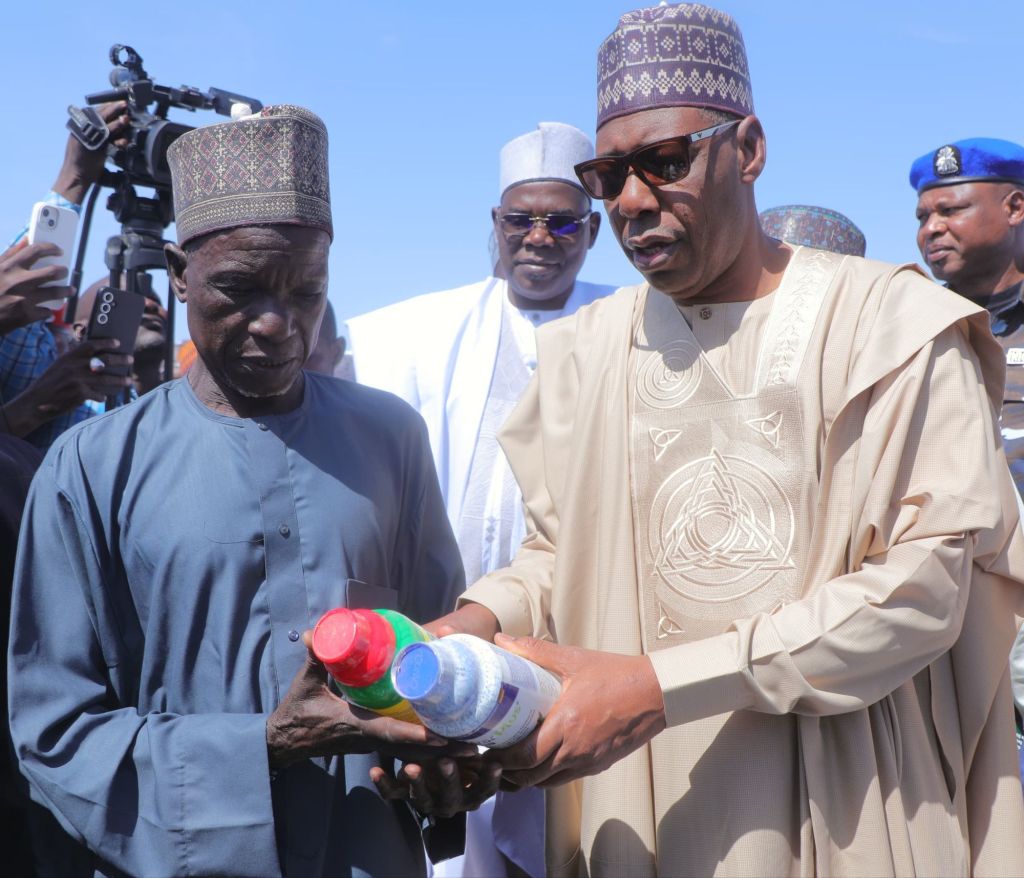
Speaking at the flag off ceremony, Senator Kyari highlighted the enduring impact of the NAGS&AP project, which he described as one of the government’s most effective tools for supporting the smallholder farmers responsible for over 80% of Nigeria’s food production. The project provides critical subsidized inputs and field-level extension services, driving “measurable gains in productivity.”
The flag-off comes after President Bola Ahmed Tinubu’s July 2023 declaration of a State of Emergency on Food and Nutrition Security, a move that mandated all government agencies to accelerate efforts to stabilize the nation’s food system in response to rising food prices, climate change impacts, and global supply disruptions.
The 2025/2026 wheat component is set to cover 16 wheat-producing states, including the recent and significant expansion into the southern region with Cross River State.
The choice of Maiduguri, Borno State, for the national flag-off was noted by the Minister as a reflection of the government’s confidence in the region’s potential and the “remarkable resilience and determination” of its people despite significant challenges. The program allocates 3,000 hectares to Borno State, targeting 6,000 registered wheat farmers in this initial phase.
The Minister specifically commended the efforts of Borno State Governor Professor Babagana Umara Zulum for creating the “enabling environment” necessary for initiatives like NAGS&AP to thrive.
Borno Governor Commits State Resources to Sustain Gains
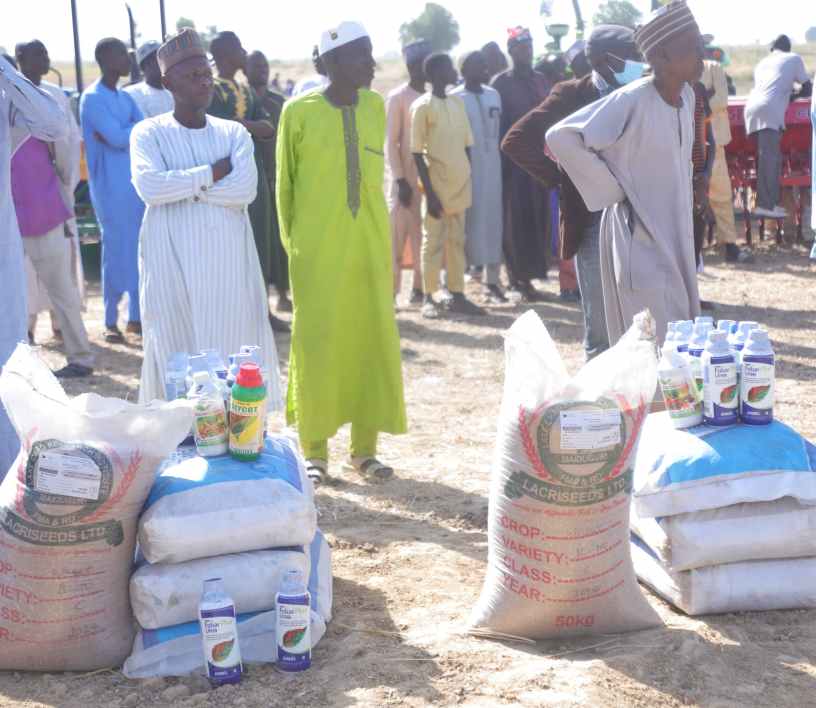
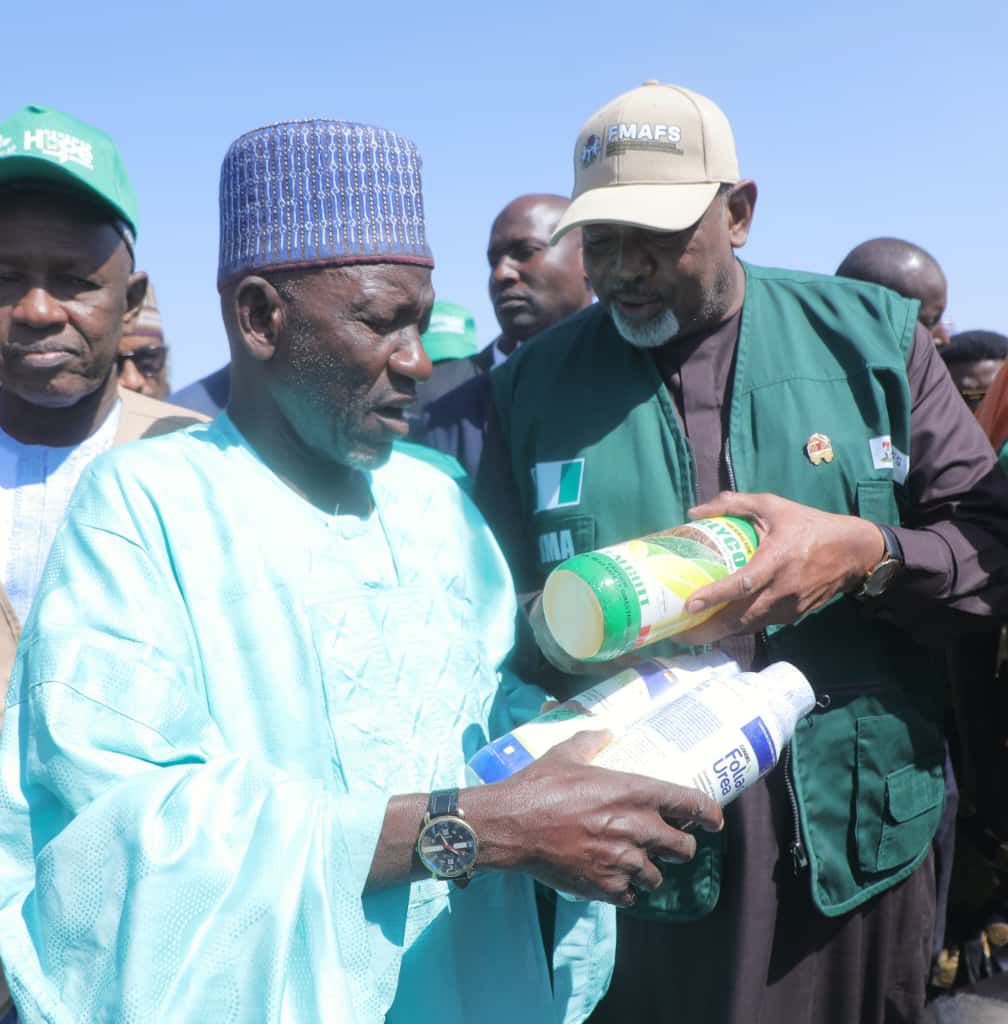
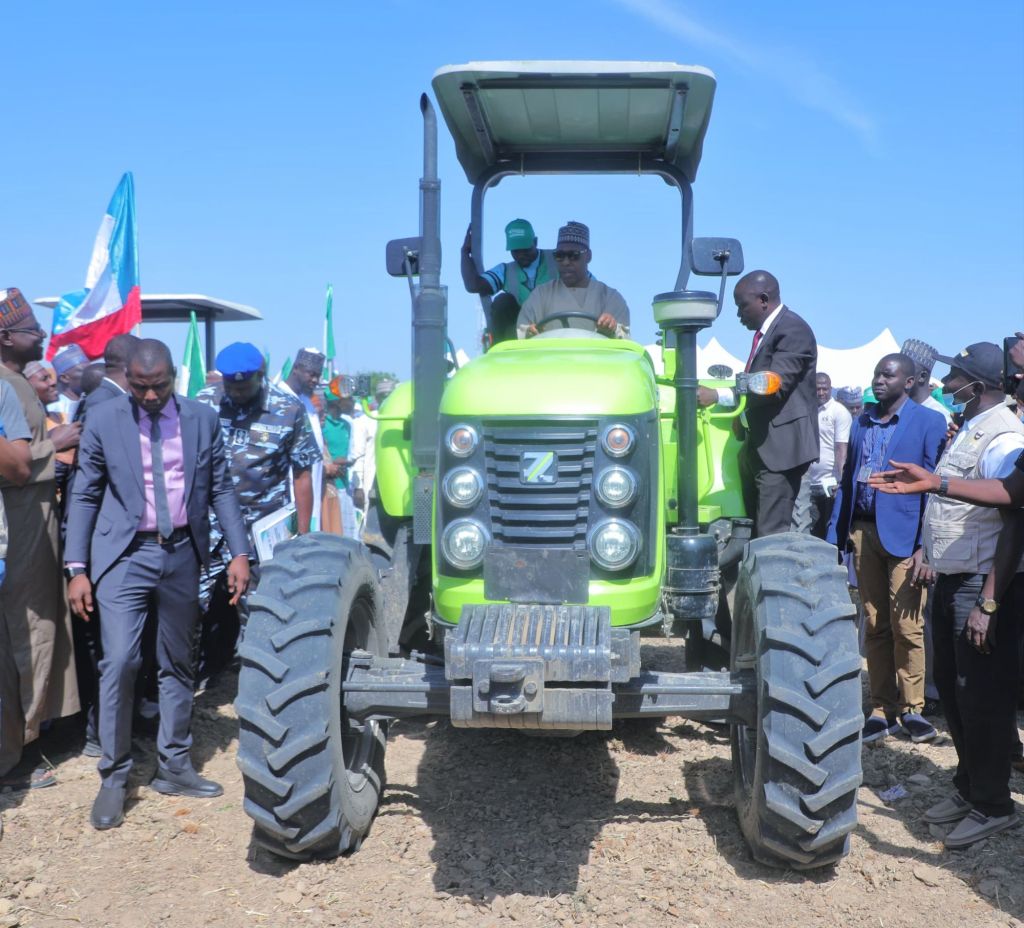
Following the Minister’s address, Borno State Governor Professor Babagana Umara Zulum officially flagged off the local distribution of the inputs, which included high-yielding wheat seeds, blended fertilizers, and modern tractors, in the Jere Local Government area.
Governor Zulum acknowledged the Federal Government’s intervention, stating that the programme provides the foundation for his administration to achieve “remarkable milestones” in agriculture.
“Our input support programmes have reached tens of thousands of smallholder farmers, resettled households, women, and youth, providing improved seeds, agrochemicals, and agronomic guidance,” Zulum noted, reinforcing the state’s commitment to the sustainability of the federal programme and to leveraging it to reduce the country’s reliance on food imports.
The event was attended by key local dignitaries, including The Shehu of Borno, Abubakar Ibn Umar Garbai Elkanemi amongst others. N
 The Humanitarian Times