By Abdulkareem Haruna
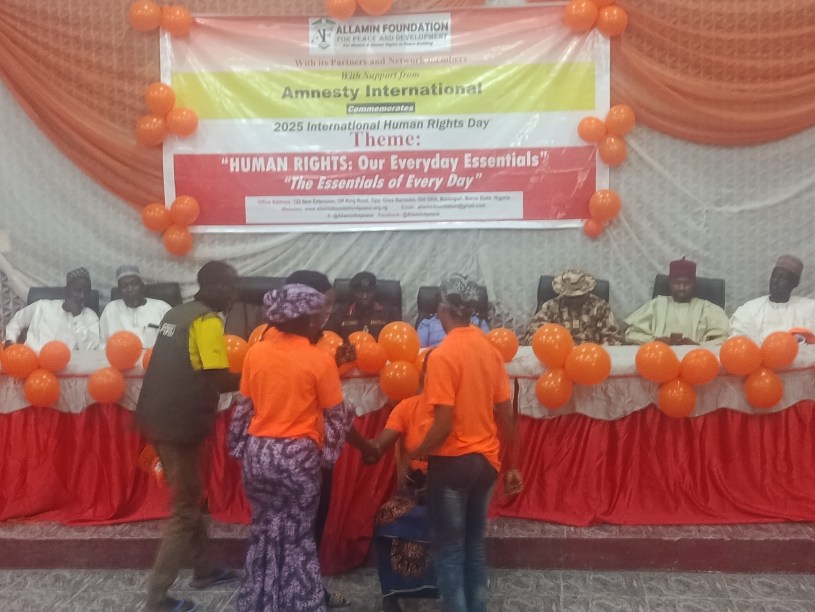
MAIDUGURI, Nigeria — The Allamin Foundation for Peace and Development, supported by Amnesty International, gathered human rights advocates and community leaders on Wednesday to mark International Human Rights Day, issuing a targeted call to safeguard women and children from exploitation as the region navigates its post-conflict recovery.
That urgency defined the gathering at the Women Development Centre on Tuesday, where the Allamin Foundation for Peace and Development, backed by Amnesty International, convened a coalition of survivors, scholars, and activists to mark International Human Rights Day.
While the global theme for 2025 is “Human Rights: Our Everyday Essentials,” the discussion in Maiduguri focused on the distinct fragility of those rights in Borno State. As the region pivots from active combat to post-conflict recovery, local advocates are warning that the silence of “peace” must not obscure the absence of justice.
Hajiya Hamsatu Allamin, the foundation’s Executive Director, opened the assembly with a sharp critique of the evolving threats facing the community’s most vulnerable. Moving beyond general platitudes, she zeroed in on a disturbing trend: the compromise of young girls’ futures by families driven by economic desperation.
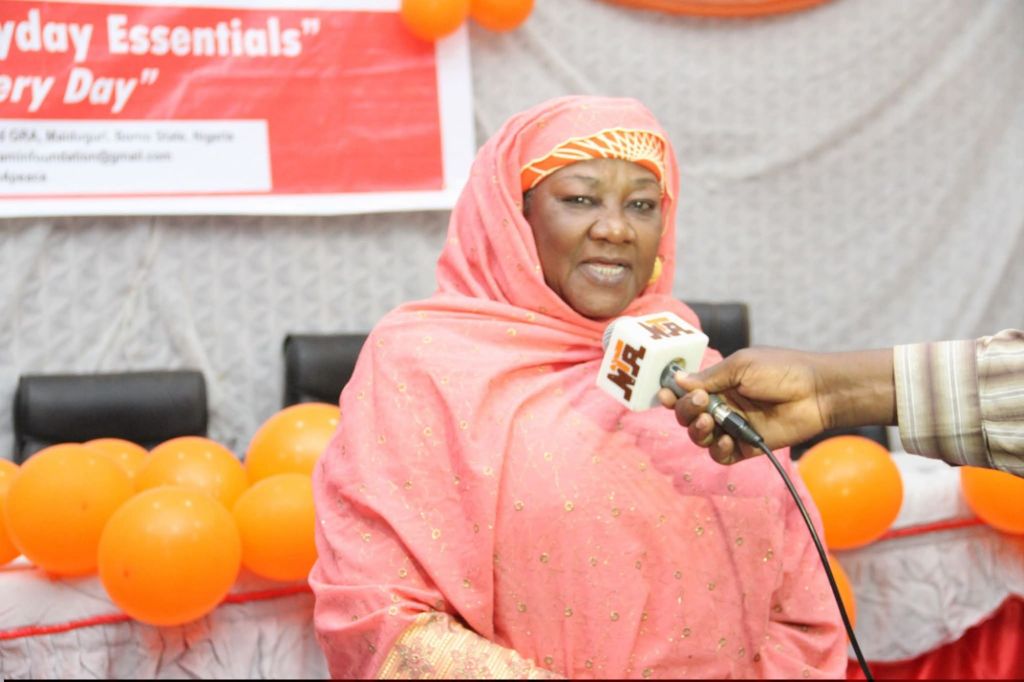
Allamin issued a stark rebuke against the commodification of children, urging the network of advocates to act as a firewall between vulnerable minors and parents seeking material gain at the expense of their daughters’ rights.
“We must remain vigilant,” Allamin told the packed hall, emphasizing that the protection of dignity is a shared burden, particularly for women and children who bore the brunt of the insurgency.
Grassroots Resilience
The event underscored the pivotal role of hyper-local networks in navigating the region’s complex social terrain. The Allamin Foundation relies on specific subgroups—such as the Jire Dole Network (mothers of missing persons), the Community Advocates for Transitional Justice (CATJ), and the Network of Invisible Children—to penetrate areas where government oversight often falters.
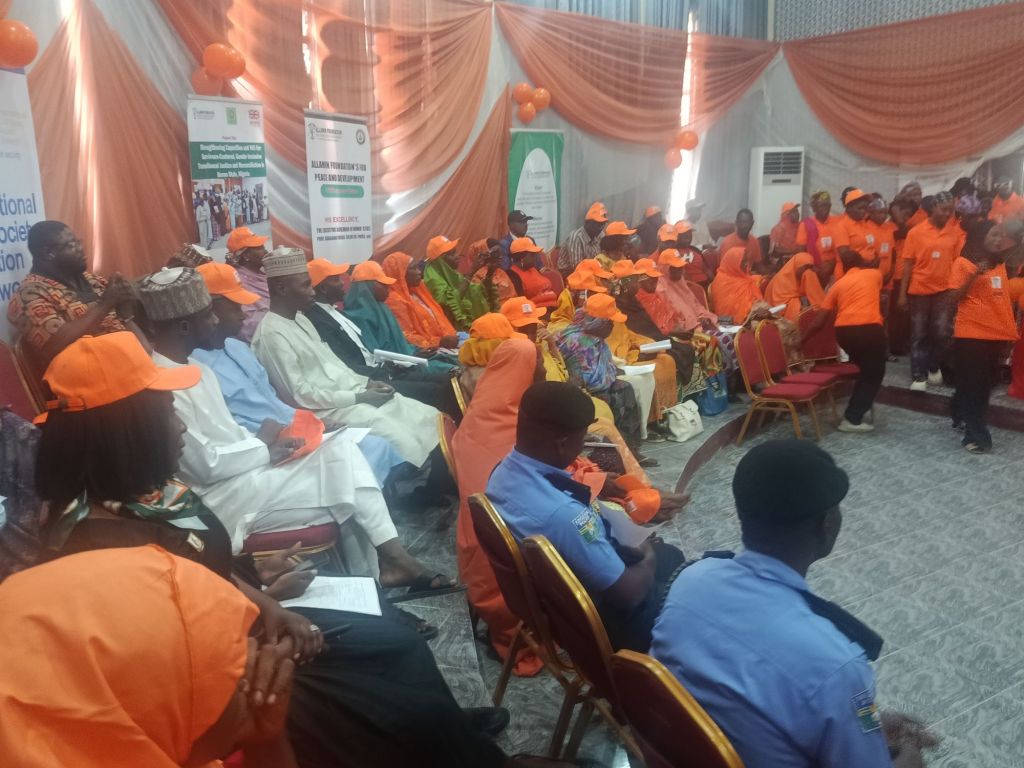
These groups serve as the foundation’s backbone, championing accountability for survivors of violence and demanding answers for the thousands still missing after years of conflict.
The emotional weight of this work was brought to the fore by the Women Peace Builders, whose theatrical performance dramatized the lived experiences of survivors. The re-enactment moved the conversation from policy to reality, illustrating the visceral struggles of reintegration and trauma recovery.
Faith and Rights
In a society where religious interpretation often holds more sway than civil law, the event sought to bridge the gap between theology and modern liberties.
Prominent Islamic scholars Sheikh Ali Mustapha and Shagaba Abdurrahman argued that the protection of human rights is intrinsic to Islamic jurisprudence. Citing Quranic verses, they dismantled the notion that cultural impunity has religious backing, reminding the audience that Islam strictly prohibits harm and upholds the sanctity of individual dignity.
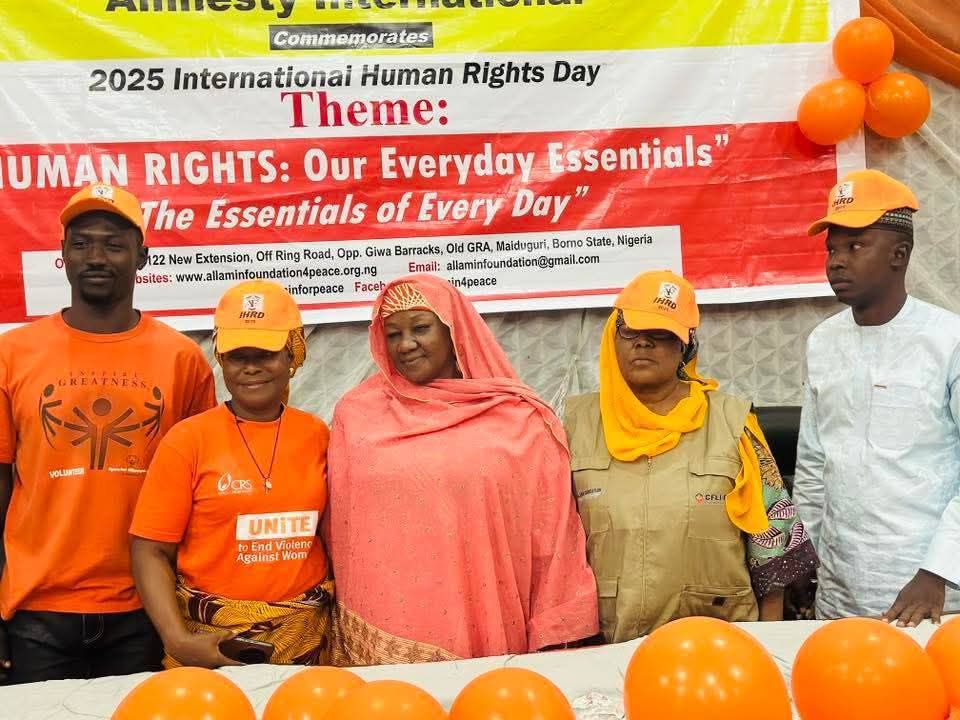
This sentiment was echoed by Christian representatives, who called on law enforcement—specifically the police—to exercise restraint and fairness, framing the unjust taking of life as a violation of divine law.
From Norms to Action
The commemoration pivoted from speeches to strategy during a high-level panel discussion on the safety of human rights defenders. Activists in the region frequently face intimidation, and panelists debated frameworks to move from “theoretical norms” to concrete protection protocols.
The consensus called for a broadening of the tent: greater inclusion of youth in decision-making, stronger legal repercussions for underage criminal involvement, and enhanced protections for peaceful demonstrators.
A key highlight of the event was a thematic drama that depicted and condemned the scourge of child labor, sex slavery, and abuse.
 The Humanitarian Times