By Abdulkareem Haruna
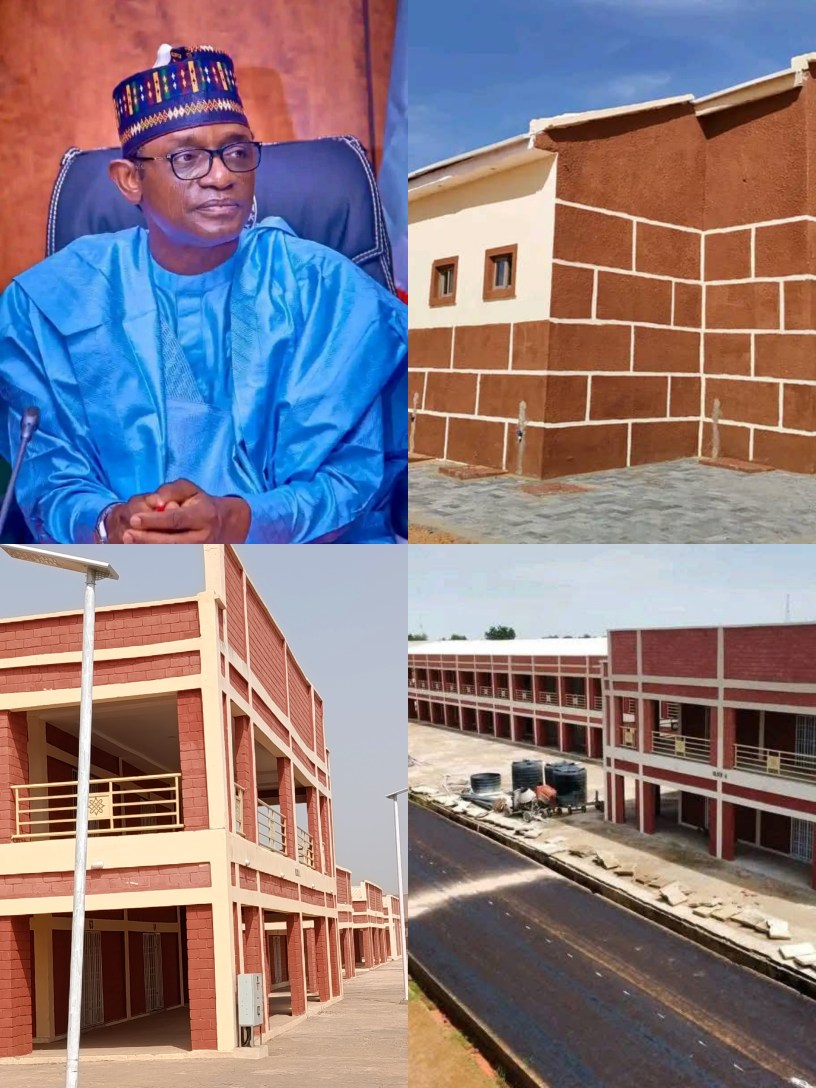
DAMATURU, Yobe – Yobe State government has completed the construction of nine ultra-modern markets across its three geopolitical zones – a bold and ambitious people-oriented project that promises a significant shift from the informal, open-air trading systems that have historically dominated the state’s agricultural economy.
The project, part of a broader initiative by Governor Mai Mala Buni’s administration, aims to modernize the state’s commerce sector following years of disruption caused by the Boko Haram insurgency. By replacing traditional “marketplaces of chance” with structured facilities, officials intend to provide a more secure and weather-resistant environment for the state’s high population of crop farmers and livestock rearers.r4
Upon assuming office six years ago, Governor Mai Mala Buni envisioned a future for the “Pride of the Sahel” and saw an economy trapped in a low-level cadre of subsistence. His administration’s response was a massive, state-wide commitment to revolutionize commerce, aiming to propel everyday citizens from petty traders to “merchants and mogulsl
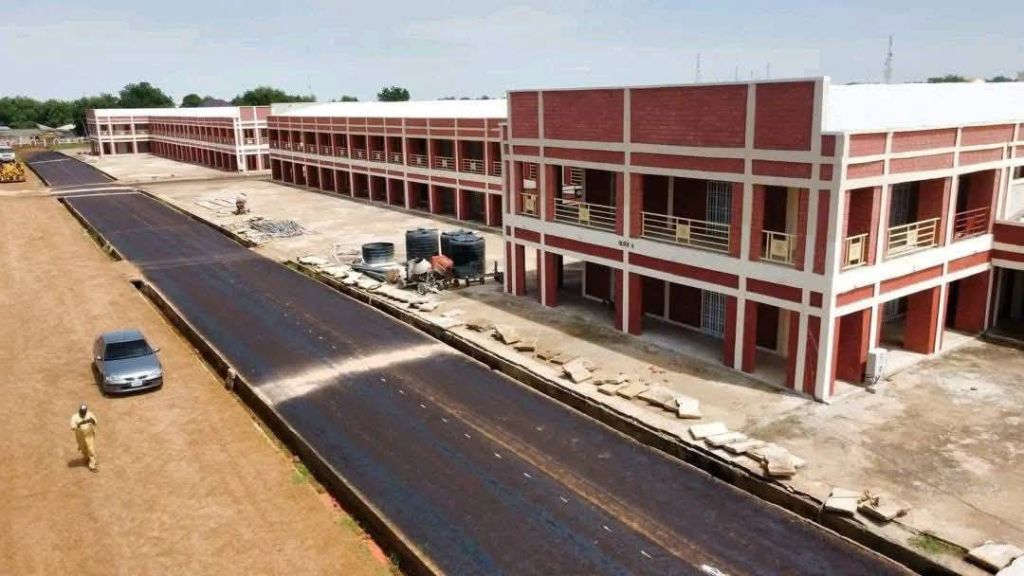
So far, nine of these mega-structures have been completed, dotting the three geopolitical zones of the state. During a recent media tour of the project sites, the sheer scale of the vision became clear. In towns like Damaturu, Gashua, Nguru, Geidam, and Potiskum, the government has moved beyond the basics.
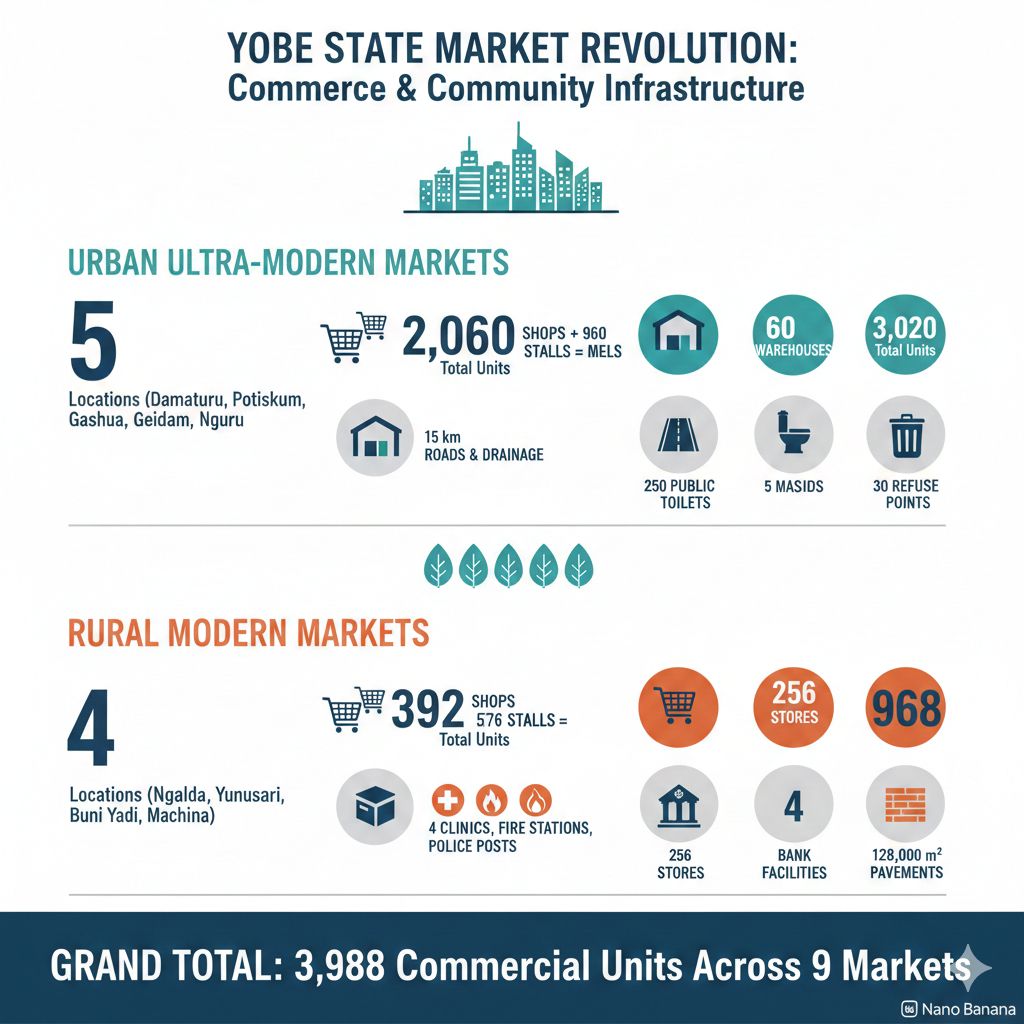
It is amazing to state that our reporter has seen first hand and testify that the mega project has a state-wide impact and has so far delivered a total of 3,988 units of trading spaces (comprising 2,452 Shops and 1,536 Stalls) And a total storage units of about 316 (60 Warehouses and 256 Stores); and a 4 err 454total urban markets road network of 15km, and a total rural pavement that covers 128,000 square meters
The timing of this infrastructure boom is no accident. Following the devastating years of the Boko Haram insurgency, the state needed a “jumpstart” to return to active commercial life.
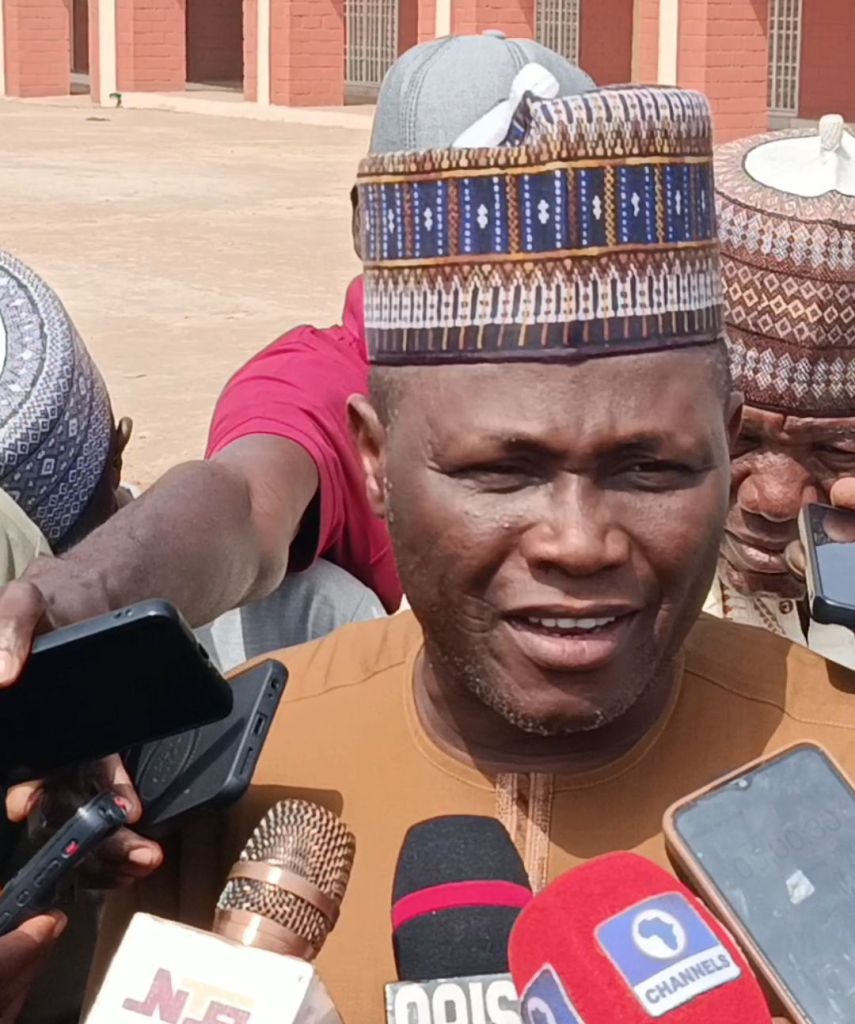
”One of the things His Excellency decided to do was build a market where economic activity can be spurred and restored,” explained Abdullahi Bego, the Commissioner for Information and Culture. Speaking from Yunusari, a remote border community, Bego noted that the Governor’s vision extends to the furthest corners of the state.
“The Governor does not restrict developmental projects to urban towns,” Bego said. “Why we brought the media to Yunusari is to show that even in the remotest rural communities, the administration is touching lives.”
The centerpiece of this transformation is an ambitious construction project that targets thousands of shops and stalls spread across 17 local government areas. These are not nere patches of concrete, but “ultra-modern markets” designed to provide the formal structure that high-level commerce requires.
The strategy is holistic: while the Ministry of Housing builds the structures, the state government provides farmers with agricultural inputs and implements. The goal is to create a seamless pipeline where a “bumper harvest” in the field leads directly to a secure transaction in an organized market.
The road to these nine markets was paved with challenges. The administration had to push forward through a global economic meltdown, the crippling impact of COVID-19, and a drop in the exchange rate that severely strained state resources. Yet, the commitment to these “dreams for modern markets” persisted.
“In line with our commitment to total economic revitalization, we have successfully delivered nine major market projects across the state, strategically divided between urban hubs and rural communities,” said Commissioner of Housing, Architect Ahmed Buba, whose ministry is responsible for the construction of all the markets.
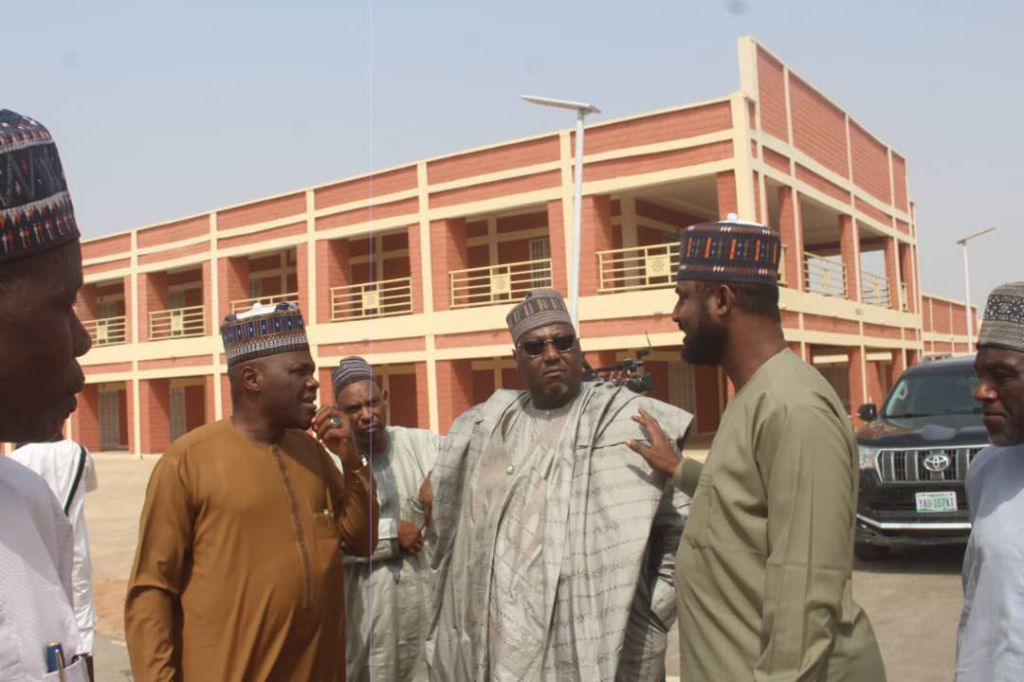
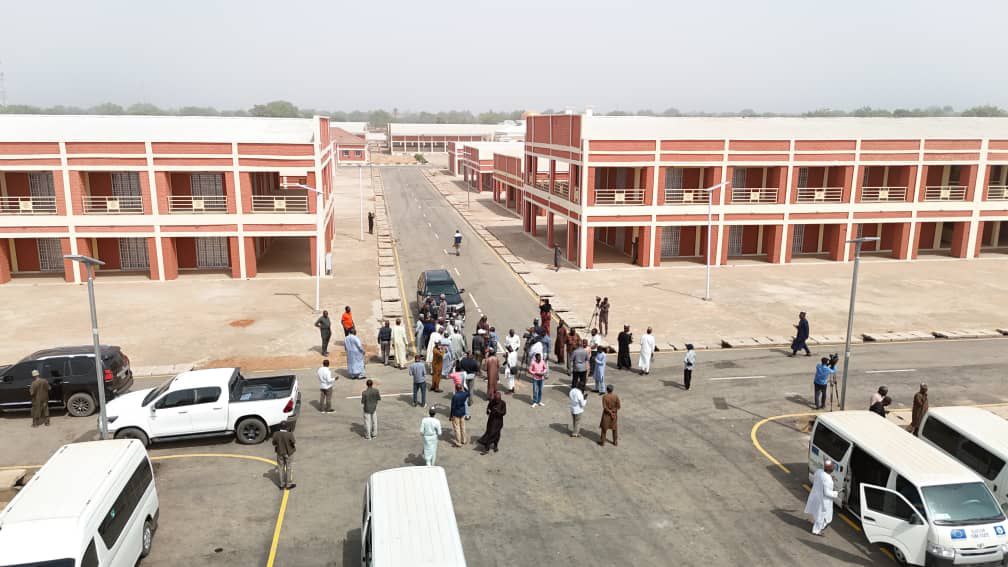
“In our five urban centers—Damaturu, Potiskum, Gashua, Geidam, and Nguru—we have constructed massive ultra-modern complexes. These sites alone provide a combined 2,060 shops, 960 stalls, and 60 warehouses, supported by five administrative blocks and five mosques.
To ensure these markets operate at the highest standard, we have integrated 15 kilometers of roads and drainages, 250 public toilets, and 30 refuse collection points, creating a sanitized and efficient environment for large-scale commerce.”
The Housing Commissioner further noted that these initiatives to bolster trade were born from the recognition that the state’s economic lifeblood begins in the countryside.
“Recognizing that the heart of Yobe’s trade begins in our rural areas,” he stated, “we have also completed four modern markets in Ngalda, Yunusari, Buni Yadi, and Machina.”
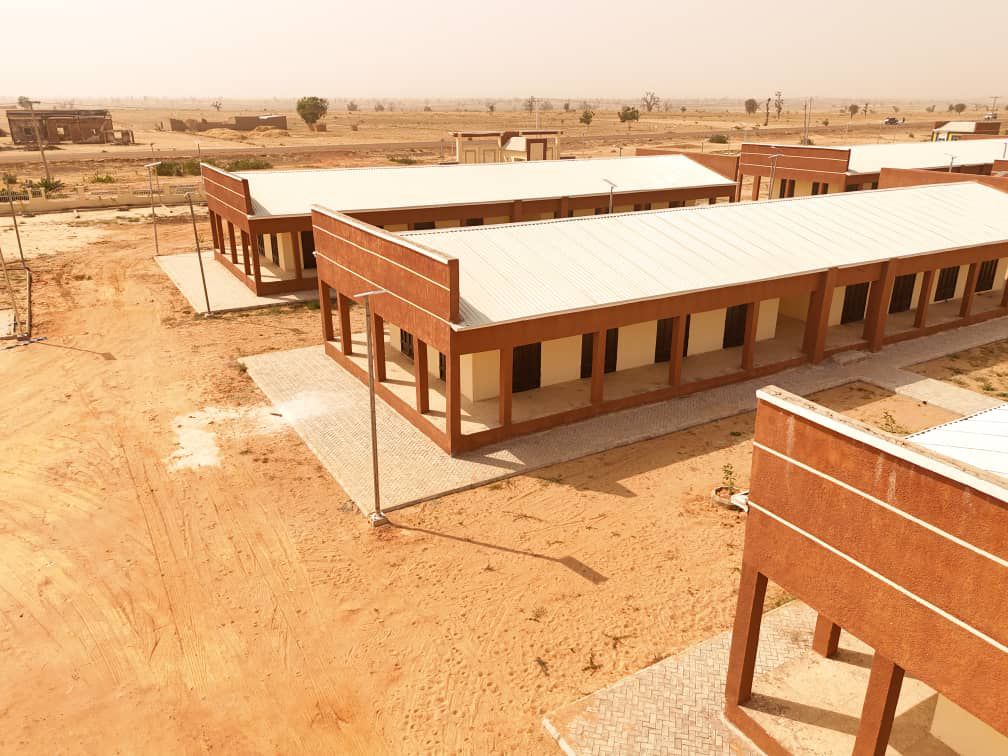
These rural facilities are designed to be self-sustaining community hubs, featuring 392 shops, 576 stalls, and 256 stores. To ensure the safety and wellbeing of our rural traders, we have equipped each of these four locations with a dedicated fire service station, a clinic, a police outpost, and a modern banking facility.
FFurthermore, we have laid over 128,000 square meters of interlocking pavements to ensure that, even in the most remote areas, our citizens can conduct their business with the dignity and comfort they deserve.”
For the people on the ground, the results are more than just statistics. Babakura Yunusari, a community leader in Yunusari, describes the new market as a “blessing and a huge relief.”
“Now our people can do business in a more secured environment without worrying about losses or limited space,” Yunusari said. It is a sentiment that resonates across the state—a promise that the hardship of the past is being replaced by the stability of a structured funw toture.
In Ngalda village, the atmosphere was one of prayer and gratitude as residents celebrated the completion of a new modern market designed to end years of roadside, open-air trading.
Speaking on behalf of the District Head, Village Head Alhaji Ahmadun Kano stated that the multimillion-naira project has deeply moved the community. He noted that the District Head (Hakimi) has directed the village to support the Governor’s future political interests, describing him as the only leader who has “genuinely listened to the cries of the people of Ngalda.”
At the Potiskum Ultra-Modern Market, community leader Mohammed Abdullahi Chiroma stated that the new facility finally fulfills the town’s long-standing need for a commercial center that reflects its reputation as the economic hub of Yobe. Chiroma assured the governor that the multimillion-naira investment would be protected, promising a collective community effort to maintain the infrastructure. He also invited investors and business moguls to utilize the market’s facilities—specifically highlighting the state-of-the-art warehouse, which is large enough to accommodate 140 articulated trucks of goods.
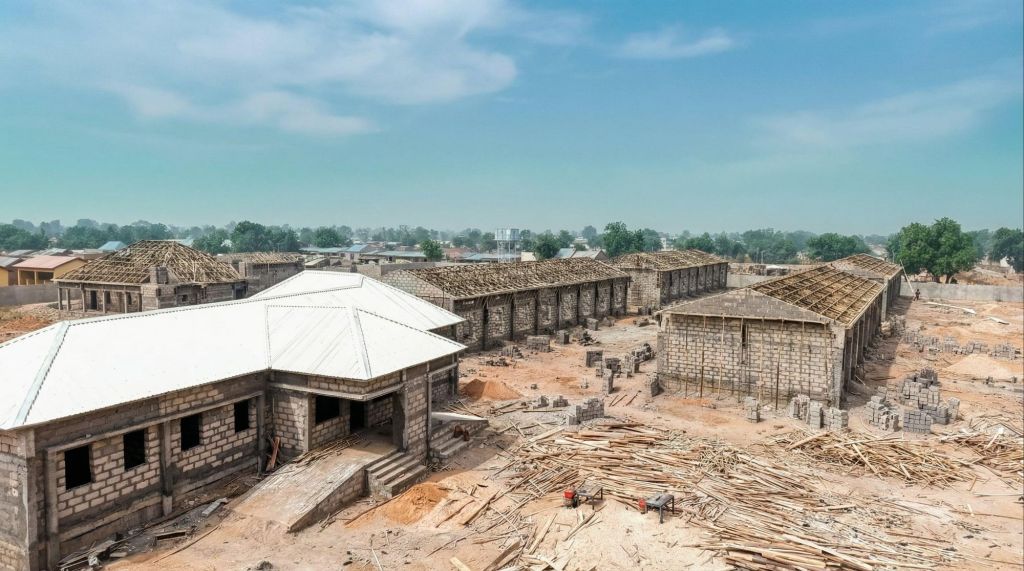
At Buni Yadi, the governor’s home town, a modern market befitting the agrarian and commercial town springs up and was at an advanced stage of completion at the time of visit. When completed, the new market promises to end years of roadside trading in the community.
The chairman of Gujba local government area, Hon Mala hailed the governor’s foresight especially in establishing a new and modern market in Buni Yadi, headwaters of the LgA, an economic development enabler that the community never had in decades.
“We will continue to remain grateful to the Governor for putting the wellbeing of the people first in all his endeavours. This market will be another legacy project that will stand the test of time, and we can only appreciate the governor only by ensuring the maintenance of these facilities.”
By the end of the tour of Yobe’s mega-markets, the depth of Governor Mai Mala Buni’s vision becomes clear: when you move a local merchant from a roadside stall to a modern warehouse, you have provided more than just a roof. You have provided the essential infrastructure for his or her business to scale, the security a community needs to thrive, and a foundation for the state’s future to be built on formal commerce.
 The Humanitarian Times