By Abdulkareem Haruna
The North-East Development Commission (NEDC) board, led by General Paul Tarfa as chairman, and Goni Alkali, as the Managing Director, has been reappointed, ushering in a new phase of reconstruction in Nigeria’s northeast region.
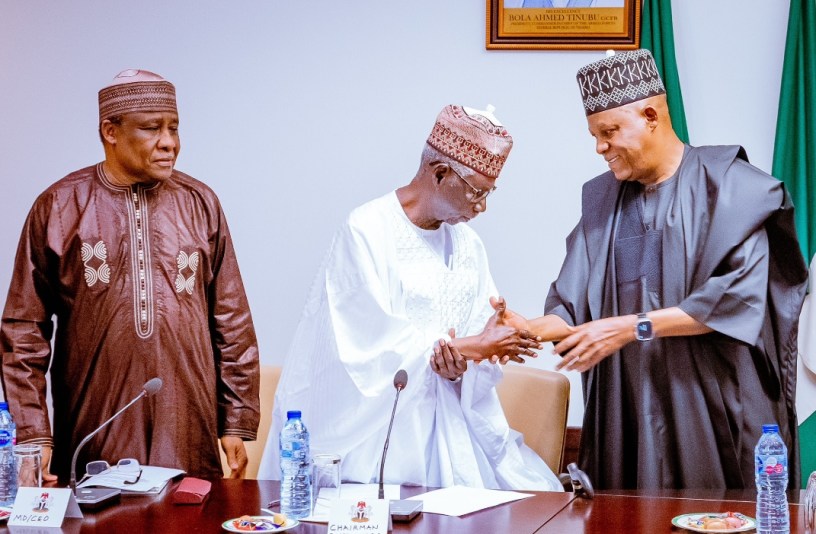
During the inauguration ceremony at the Presidential Villa, Vice President Sen. Kashim Shettima emphasized the crucial importance of the NEDC’s roadmap and outlined key priorities for the commission in the post-conflict reconstruction phase.
Sen. Shettima called on the NEDC to prioritize access to quality education, healthcare, and economic opportunities, highlighting that true development extends beyond mere physical infrastructure. The conflict in the northeast region has resulted in significant setbacks in education, healthcare, and the economy, necessitating focused efforts to rebuild these sectors and ensure the well-being of affected communities.
The Vice President underscored the urgent need to invest in education, as the conflict disrupted educational systems and deprived many children of quality education. Sen. Shettima urged the NEDC to rebuild schools, train teachers, and provide educational resources, emphasizing that empowering the region’s youth with education is crucial for their future and preventing the perpetuation of violence.
Addressing healthcare challenges was another key priority highlighted by the Vice President. The conflict severely strained healthcare infrastructure, leaving many communities without adequate medical facilities and personnel. The NEDC must focus on rehabilitating and constructing healthcare facilities, equipping them with essential medical supplies, and investing in training healthcare professionals. Access to quality healthcare services will not only save lives but also contribute to the overall well-being and resilience of the communities.
Furthermore, Sen. Shettima stressed the importance of creating economic opportunities in the region. The conflict devastated the northeast region’s economy, leading to high unemployment rates and economic instability. The NEDC should prioritize revitalizing economic sectors, promoting entrepreneurship, and providing support for small and medium-sized enterprises. By fostering sustainable economic opportunities, the commission can empower the affected population to rebuild their lives, reduce poverty, and contribute to long-term stability.
In the post-conflict reconstruction phase, the NEDC must also consider the unique challenges faced by the northeast region. It is crucial to involve the local population in decision-making processes and ensure their voices are heard. The commission should collaborate with local and international partners to leverage resources, expertise, and enhance the effectiveness of interventions.
The reappointment of the NEDC board signifies the government’s commitment to sustained efforts in the northeast region. By heeding the Vice President’s guidance and focusing on education, healthcare, and economic opportunities, the NEDC can drive comprehensive and inclusive development. Through strategic investments, collaboration, and participation, the commission has the potential to uplift the lives of the affected population and bring hope to the region.
As the NEDC embarks on this critical phase, it must remain dedicated to its roadmap and work diligently to ensure that development extends beyond bricks and mortar. By addressing the pressing needs of the region and fostering sustainable growth, the NEDC can play a pivotal role in the post-conflict reconstruction of Nigeria’s northeast, promoting stability, prosperity, and a brighter future for all.
The Humanitarian Times’s Verdict
It is the editorial opinion of The Humanitarion Times’ board that the reappointment of the NEDC board, General Paul Tarfa, and Goni Alkali, marks an important milestone in the post-conflict reconstruction phase in Nigeria’s northeast region.
The Vice President’s call to prioritize access to quality education, healthcare, and economic opportunities underscores the need for a holistic approach to development. By focusing on these key areas, the NEDC can address the pressing needs of the region’s population and pave the way for sustainable and inclusive growth.
As the commission embarks on this critical phase, it must heed the words of the Vice President and remain committed to its road map, ensuring that development extends beyond bricks and mortar to uplift the lives of the people affected by the crisis. Through collaboration, participation, and strategic investments, the NEDC has the potential to catalyze positive change and bring hope to the northeast region of Nigeria.
 The Humanitarian Times
Good ine
LikeLike